

This commentary is by Vermont shelter and homeless service providers. Their names are listed below the text of the commentary.

We are shelter and homeless service providers throughout the state of Vermont writing to express our concerns with bill H.91, commonly known as VHEARTH, which was referenced in the VTDigger article on dissolving the motel program.
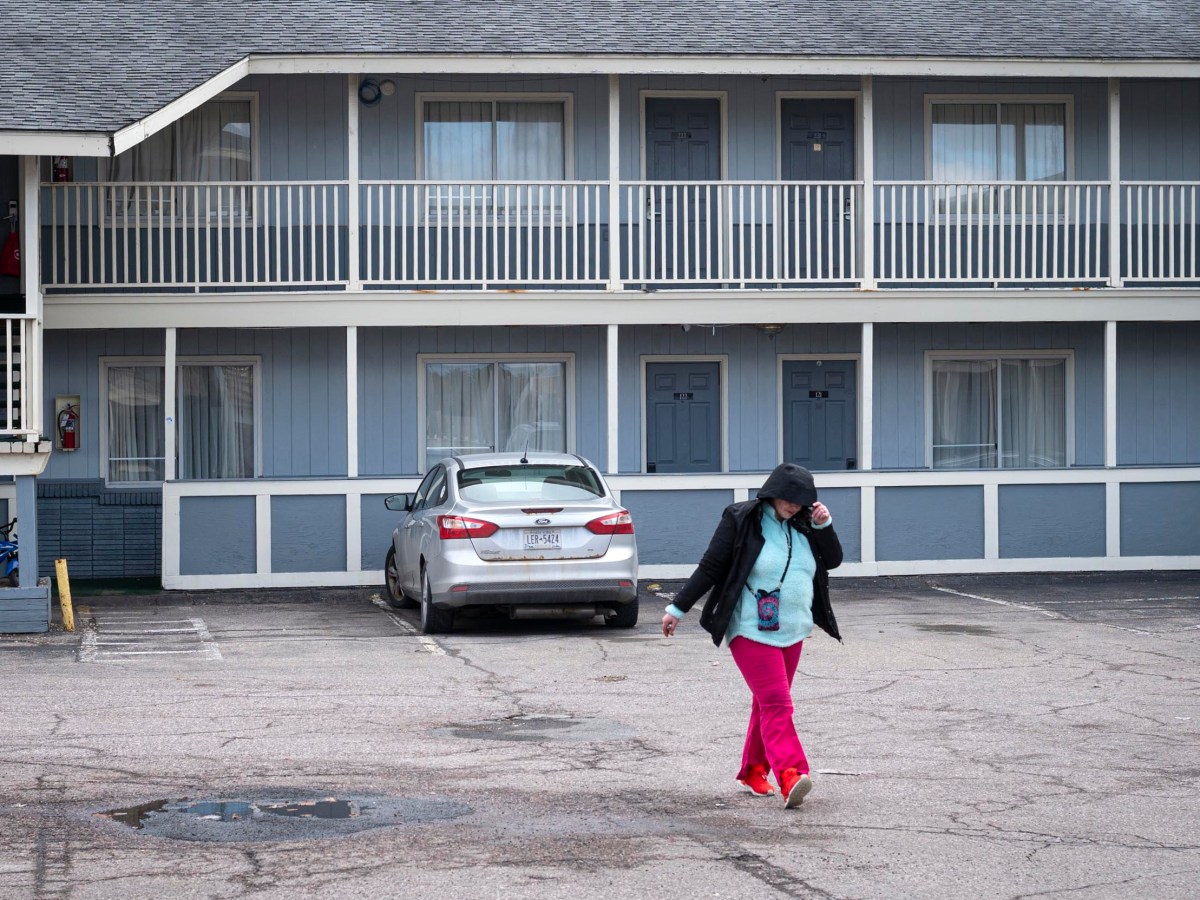
When homelessness is discussed in Vermont the spotlight is frequently trained on the General Assistance program. Some criticize GA — often referred to as the hotel/motel program — for “warehousing” people without a long-term plan. Others argue it provides shelter to vulnerable individuals who would otherwise be on the streets, at risk of exposure. Some feel the eligibility is too lax, others too strict; that it spends too much, that it’s underfunded. For over two decades many of us in the fields of housing, homelessness and anti-poverty work have been pulled into a parade of task forces, advisory groups and councils charged with finding an elusive compromise.
That tension provides context, but it’s not what we’re here to opine on. This session, a House committee is proposing another transformation of the polarizing GA program. It involves the state pulling back from its role as operator and providing block-grant funding to five designated community organizations. The legislation leaves much to be sorted out and creates yet another advisory group for that purpose.
There are pros and cons with a regional alternative to GA. But a few lines in H.91 would simultaneously eliminate a less-well-known program, the Housing Opportunity Grant Program. HOP is a high-performing program that provides the lion’s share of funding for community-based shelters and services for Vermonters experiencing homelessness.
HOP funding keeps shelters open and staffed. It supports case managers working with people along a continuum from crisis, to emergency shelter, to permanent housing. HOP funding pays for security deposits and back rent to Vermont landlords to support tenancies. It’s the program that keeps Vermonters out of GA motels through effective eviction prevention programs. HOP also gets people out of GA motels and into community-based shelter apartments and permanent housing.
Last year HOP funds assisted 39 non-profit organizations in Vermont, allowing them to shelter 3,200 Vermonters. It provided over $4 million in security deposits, back rent and rental assistance to stabilize 2,246 Vermont households who were homeless or at imminent risk of homelessness. HOP does all this and more which is why we are advocating for its preservation.
We ask Vermonters — residents, legislators, landlords, partners — to look closely at this legislation which we feel has the potential to destabilize a network of high-performing shelters and services at a moment it needs to be strong. The chaotic federal landscape is not projected to make things easier for operators or to reduce the need for emergency shelters.
We ask that people not paint with the same brush the GA program and the Housing Opportunity Program. We ask that a proven and high-performing HOP program be held harmless from the next experiment with re-envisioning General Assistance, and that the Legislature affirm and direct the State to uphold and support the State Office of Economic Opportunity and the important role they play in serving our most vulnerable neighbors.
In recent testimony, we heard H.91 described as “bold.” Transitioning General Assistance from a centralized, state program to a regional model administered by select nonprofits might warrant the adjective “bold.” But attempting that while destabilizing Vermont’s existing shelters and services supported through the HOP program would, we believe, be reckless.
We support the Legislature and our community partners in efforts to reimagine GA funding and how it is put to use. As service providers, we would like to be at that table.
We support harnessing the full capacity of the state Departments of Health, Health Access, Mental Health, Disabilities Aging and Independent Living, and Corrections in creating meaningful, transformative support systems for our most vulnerable neighbors. The people we serve day in and day out with severe health issues, debilitating substance use disorders and chronic mental health issues have been pushed from other systems of care in the name of cost savings and driven into our shelters and motels.
We further support the use of GA funds to bolster successful programs such as HOP and others that are helping Vermonters and are not fully funded. This type of action will truly help the most vulnerable in our communities and would be bold.
H.91 as written is not bold, it is reckless. The HOP program must be removed from H.91’s concept for redesigning General Assistance.
Signed,
Angus Chaney, executive director, Homeless Prevention Center
Jonathan Farrell, executive director, COTS
Julie Bond, executive director, Good Samaritan Haven
Kim Anetsberger, executive director, Lamoille Community House
Libby Bennett, executive director, Groundworks Collaborative
Michael Redmond, executive director, Upper Valley Haven
Constance S. Anderson, executive director, Northeast Kingdom Youth Services
Susan Whitmore, executive director, John Graham Housing & Services
Lee Trapeni, executive director, Springfield Supported Housing Program
Jeanne L. Montross, executive director, HOPE
Heidi Lacey, executive director, Charter House Coalition
Russell Bradbury-Carlin, executive director, Interaction Youth Services and Restorative Justice
Mark Redmond, executive director, Spectrum Youth and Family Services
Roxanne M. Carelli, executive director of operational development and shelter services, Bennington County Coalition for the Homeless
Karissa L. Myers, executive director of communications and outreach services, Bennington County Coalition for the Homeless
