
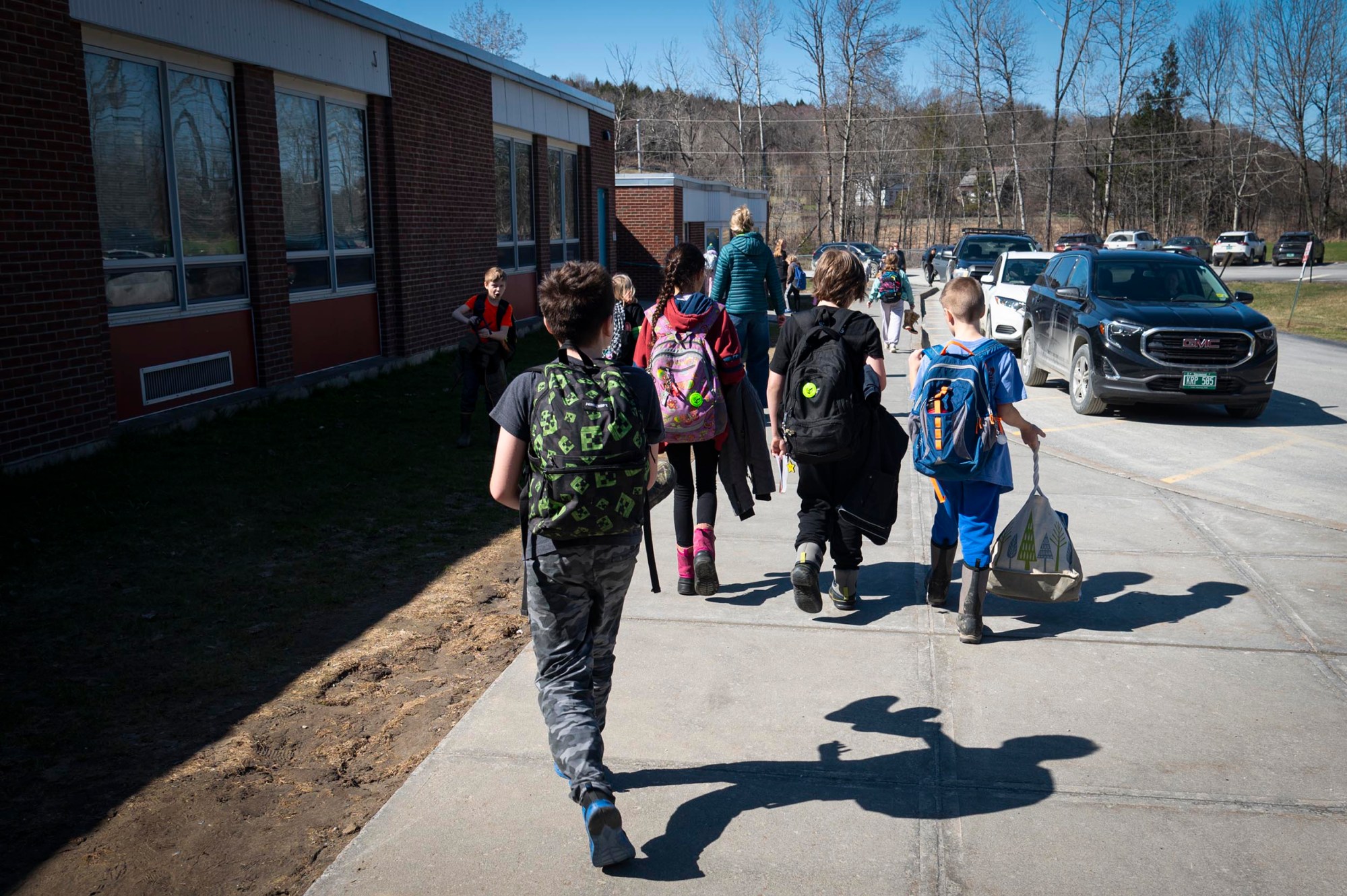


At a public forum held earlier this month in Westford, parents and community members gathered to voice concerns that are being felt throughout Vermont: whether their local schools will still exist in the years to come.
The forum was held to discuss a plan by the Essex-Westford School District that will move grades six through eight out of the Westford School and into neighboring Essex Middle School beginning in the fall, leaving grades pre-K through fifth grade in the Westford School.
The move is meant to consolidate resources at one middle school location and provide a better education experience for the district’s students, said Robert Carpenter, chair of the district school board from Essex.
But the proposal has worried residents and parents about the future of their school, which first merged with Essex to become the Essex-Westford School District in 2017.
Community members like Pat Haller, the vice chair of Westford’s selectboard, suggest the plan is a precursor to the school’s eventual closure.
While school district officials insist they have no intention of closing the school, community members at the forum suggested that with fewer students at the school, and, in turn, higher per-capita spending, the school could be a future target for closure.
The school’s shuttering, Haller said, would be “disastrous” for the town’s future.
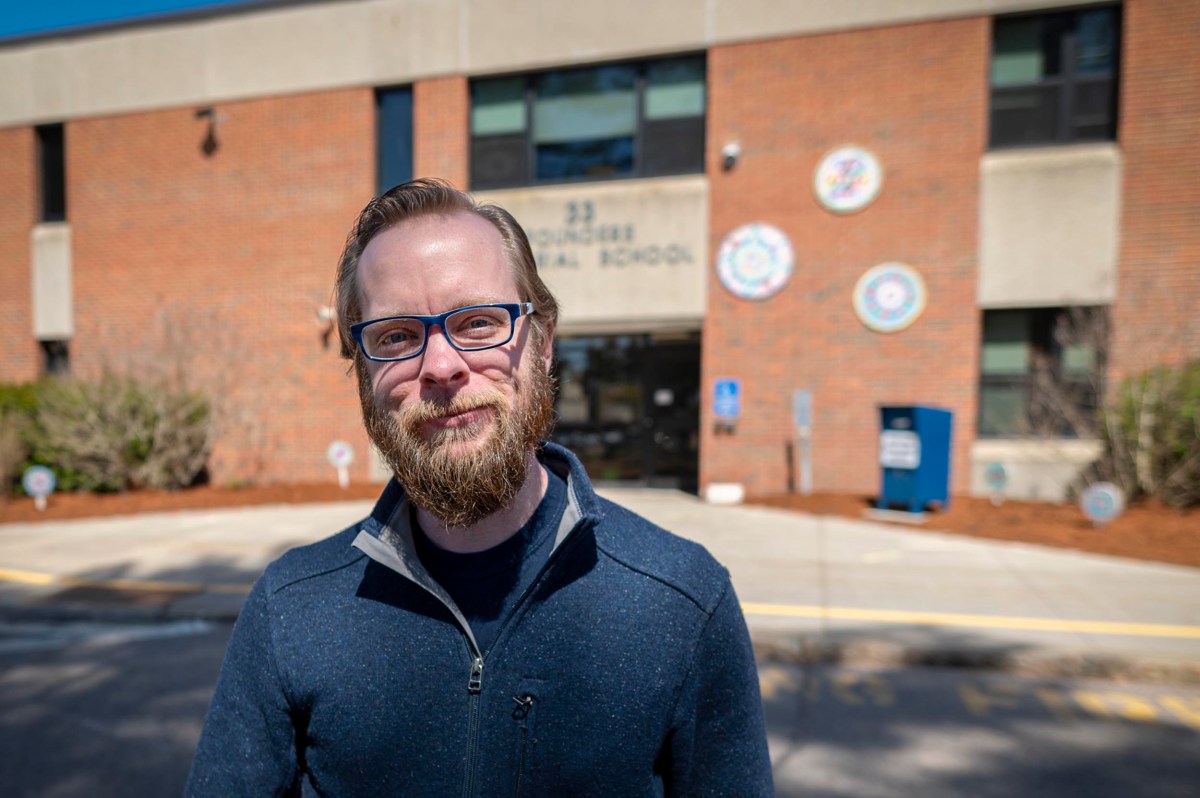
“We know that the attractiveness of Westford for young families is our school, and if we no longer have a school, then Westford won’t be as attractive, and we’re worried that we will lose further population and lose some of our tax base,” he said in an interview. “This just looks like a future spiral downward for our small town.”
As statewide education reform takes shape in the Statehouse, proposals to further consolidate Vermont’s dozens of school districts down to as few as five are fueling fears that small, rural communities could see their schools shuttered.
In many parts of the state, this is already happening.
Last year, the Montpelier Roxbury Public Schools Board moved to close Roxbury’s only elementary school. The school’s closure, made as a cost saving measure, came six years after voters in Montpelier and Roxbury decided to merge the Roxbury School District and the Montpelier School District under Act 46.
The Addison Central School District voted this month to close Ripton Elementary School, moving roughly 20 students to Salisbury Community School this fall. And earlier this week, school board officials in the Grand Isle School District announced they would be shuttering the North Hero School amid declining enrollment.
But in Westford, parents and community members have pledged to safeguard what they say is a precious community asset. Some have even suggested trying to de-merge from the Essex-Westford School District.
“We are preparing for a closure, just because this is what’s happening in Vermont right now,” said Kirsten Tyler, a Westford resident and parent who helped organize the forum. “And so we are pushing back really hard against this.”
Officials in the district insist there are no plans to close the Westford School. Carpenter said the district views it as a valuable asset within the district and is committed to keeping it open.
Still, with budget cuts they’ve been forced to make over the past two years, Carpenter said it is impossible to predict what the district might face in the years to come.
“Many people are saying this is just a precursor of closure. We can say until we’re blue in the face that it’s not our goal to close Westford,” Carpenter said in an interview. “But, unfortunately, with the state landscape, I would feel like I would not have the integrity of making promises about what the next five to 10 years look like in the educational landscape.”

‘The community gathers there’
Timothy Allen and his family have lived in Westford for nearly eight years. Two of their three kids went through the town’s school, so, like other community members, he frequently found himself at the school for events and other community gatherings over the years.
“There’s always something going on in the community that brings parents to that school,” Allen said. “It’s a wonderful time to connect with other people in the community.”
For rural towns like Westford, the local school not only provides an education, but also serves as a community hub, Tyler said.
“It’s where people meet. It’s where you bring your kids to play,” she said. “The community gathers there.”
The possibility of losing the school, Haller said, would mean losing that sense of community and, ultimately, the appeal of Westford for folks looking to raise a family.
“All of my close friends, all of my neighbors, I’ve become friends with because my kids have been friends with their kids,” he said. “We see each other every day. Losing that social connection would be very bad for this town.”

The student population of Westford School has hovered around 200. That number is set to decline, with some 38 students in grades sixth through eighth expected to make the move over to Essex Middle School next year, Carpenter said.
At the community forum, held on Sunday, April 7, parents worried about the consequences of the middle school transition. They invited experts like Nikhil Goyal, a sociology professor at the University of Vermont, to speak.
Goyal, a former senior policy advisor on education for Sen. Bernie Sanders, said in an interview that he views what’s happening in Westford as “a harbinger for what could come if the governor’s consolidation proposal comes to fruition,” with five regional districts “drowning out the voices of small rural towns and communities and potentially even closing their schools in the future.”
Both chambers of the Legislature and Scott have made education reform a priority in response to last year’s double-digit average property tax increases.

Scott’s plan, released in January, calls for “regional comprehensive high schools, central middle schools, local elementaries,” according to his proposal. Schools would further be assessed “based on financial viability and educational quality,” and “schools that fall short of these standards will be offered a range of options, including resource sharing or merging, with support from the AOE.”
Meanwhile, the House last week advanced its own bill that drew Republican opposition because of its slower implementation timeline than Scott’s proposal, but still included plans for consolidation.
The changes being proposed in Montpelier have set off alarm bells for Goyal and other advocates like Margaret MacLean, an education consultant and Peacham resident who is opposed to school mergers and consolidations.
When schools close down in rural towns, “There’s evidence of depopulation, declining home values, eroding social capital and problems with attracting and retaining families,” MacLean said in an interview.
“People are not going to move to a town where you have to put your kids on the bus for 90 minutes one way and 90 minutes on the way home. They’re going to move to the town with the school,” she said. “It’s going to change the landscape of Vermont.”
Both MacLean and Goyal have testified against further consolidating school systems in Vermont, and have pointed to research that shows small elementary schools are associated with higher student achievement, engagement and more meaningful relationships between students and teachers.
“You could easily imagine a scenario where larger towns are dictating on behalf of smaller towns, whether those schools should be kept open, whether programs and services should be kept afloat, and essentially determining the future of those areas,” Goyal said in an interview.


‘Outside of the board’s control’
Still, other experts in education have noted that small, rural schools are already closing, regardless of current efforts to consolidate.
Nathan Levenson, the president of New Solutions K-12, an education consulting group, said he understands why folks would worry that consolidation would lead to the closure of small schools, but said he thinks they have it backwards.
“The history of Vermont has been that as schools shrink, their cost per-pupil increases and available services, supports and offerings decrease,” he wrote in an email. “This amps up the pressure to close what has become a high cost, low service, yet beloved school.”
“In order for small schools to survive the tight budgets of the next 10 years,” he said, district’s must manage financial strategies to maintain low costs at smaller schools.
The double-digit tax increases last year, fueled by several factors, including the state’s education funding formula and ever-increasing premiums for health insurances, are already forcing districts to look for ways to cut.
But, he said, “This is much easier to do as part of a larger district which has an efficient central office, dedicated curriculum specialists, other schools to share staff with, and a savvy business office.”
Carpenter said the move of sixth through eighth grade out of Westford School and into Essex Middle School saves the district roughly $250,000 annually — a fraction of the district’s more than $9 million budget.
But the goal of the move was less about saving money and more about providing a better educational experience for the district’s middle school students.
“By moving those 38 students down to EMS — which almost half of their families wanted to move — we’ve actually been able to consolidate resources into EMS so that we can provide more services for those students and a better experience,” he said.
Carpenter tried to assuage worries about the future of the Westford School.
Those concerned about the school should look at its track record: last year, when the district was looking for ways to cut $4.5 million from the budget, Carpenter said much of the community suggested the board close the Westford School.
“And we stood strong, we didn’t close Westford,” he said. “And this year, cutting $6 million, we stood firm, while having much of the community saying, ‘This is an option, why don’t you just close Westford?'”
The district’s commitment to the school is clear, he said. But it remains tough to predict what kind of state directives will come in the next several years.
In the meantime, the district continues to face rising pressure from health insurance costs. The district was hit with a $1.8 million health insurance increase over the past year, Carpenter said, and since 2017, the district has seen $7 million in increases to health insurance costs.
“At this point, things are moving outside of the board’s control,” he said.
Haller, who first moved to Westford in 2006, said these anxieties are nothing new. The community voted in 2017 to merge with Essex because, he said, residents felt it would stave off a future closure. Now, he’s not so sure.
“And this speaks to Vermont and in general: We desperately need young families to move into our state,” he said, “and these sorts of consolidations, I think, are going to make it less attractive for out-of-staters to come to anything but our larger towns like Burlington, and not find it as attractive to live out in our rural communities, because we won’t have a school.”
