

Helen Argraves is a reporter with the Community News Service, part of the University of Vermont’s Reporting & Documentary Storytelling program.
The federal government’s efforts to cut expenditures have not skipped Vermont.
The Elon Musk–led Department of Government Efficiency, or DOGE, has terminated leases for three federal office buildings here since the second Trump administration’s launch in January, touting claimed savings achieved on its website.
The buildings in question are the National Oceanic and Atmospheric Administration building in Barre, the Department of Housing and Urban Development building in Burlington and the Natural Resources Conservation Service building in St. Johnsbury.
Together the leases account for 8,342 square feet of office space, and as of March 26 DOGE claims $170,306 in savings from the conservation service lease and $13,161 savings from the NOAA one. Terminating the Burlington HUD lease yields savings of $77,079, according to the site. The New York Times has documented a slew of mistakes on the site — and that those inaccuracies have been made harder to find.
In early March, VTDigger reported that the U.S. General Service Administration under the Trump administration had published and then taken down a list of federal buildings that it calls “non-core properties” to be sold or shut down.
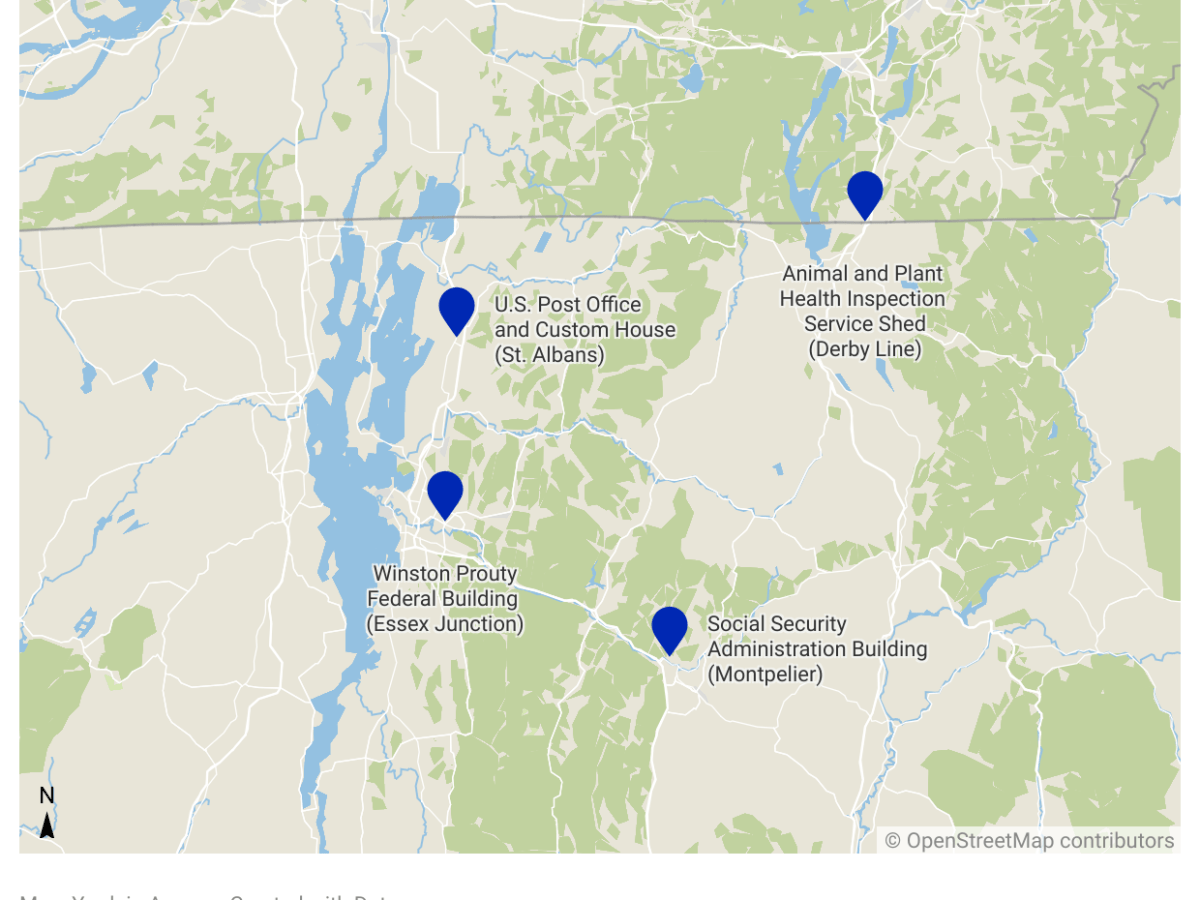
In Vermont, those included the Social Security office building in Montpelier, the U.S. Post Office and Customs House in St. Albans, the Winston Prouty Federal Building in Essex and an Animal and Plant Health Inspection Service shed in Derby Line.
Officials posted a public statement online on March 4, explaining that the administration’s Public Buildings Service had identified 440 federal assets not critical to government operations, mostly office spaces. The statement says the government could save over $430 million in yearly operating costs by closing those spaces.
The Trump administration’s requirement that federal employees return to the office does not seem to be dissuading the building agency from its downsizing initiative. In its statement, the organization said it is “excited to undertake this overhaul of the portfolio and looks forward to delivering the federal workforce world class work environments as they return to office.”
Landlords leasing to GSA across the country are feeling uncertain about the future in a market where office space vacancies are already increasing.
Reactions from GSA landlords in Vermont
Leading real estate experts in Vermont have expressed reactions “all over the map,” according to Brad Worthen, senior vice president of commercial and business brokerage at Pomerleau Real Estate in Burlington.
Many General Service Administration landlords lease multiple properties, he said, allowing them to withstand a temporary vacancy in one while they seek a new tenant. But the back-and-forth nature of recent federal policies, including moves to fire employees in Vermont, seems to have left landlords in the dark about whether their leases will be terminated and the fallout if they are.
Worthen said one landlord he’s spoken to can’t get an answer from the federal government on whether a lease will be renewed. Even legal protections for leases are in doubt. Another landlord told Worthen that if the government wants to terminate a lease, it will.
The future of commercial real estate in Vermont
Commercial office space vacancies were already trending upward before the pandemic, which then sent vacancy rates rising. Worthen noted that according to real estate firm Allen, Brooks & Minor, which puts together regular market reports, office vacancy rates in Vermont sit between 11 and 12%.
Higher interest rates and fewer tenants is also disincentivizing some banks from lending to landlords financing or refinancing their building, Worthen said.
This past October, Reuters reported that banks on both the regional and national scale, from outfits like M&T Bank to Wells Fargo, were feeling the strain of commercial real estate loan exposure. Wells Fargo could lose $2-3 billion in the next three years, the report said.
M&T CEO Darren King, cited office space as a primary concern, according to a 2023 article from Nasdaq. However, the article said, losses will play out over an extended period of time, as loans mature at different times and banks have windows to prepare accordingly.
As for Vermont, Worthen said office spaces under 5,000 square feet are more likely to move than their larger counterparts, as commercial companies seek to downsize but maintain an office presence.
Worthen said the federal return-to-office order is unlikely to affect office vacancies in Vermont, as those buildings were already under lease.
