This story by Briana Brady was first published in the Shelburne News on March 27.
The frogs are coming. Salamanders too.
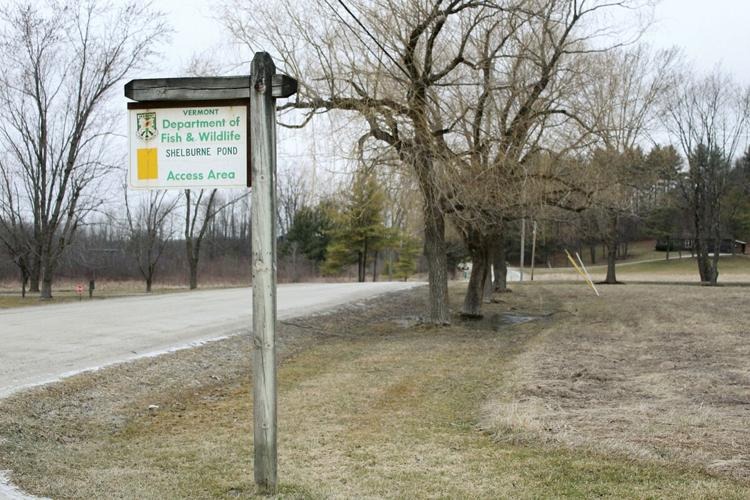
Sometime in the next couple of weeks, there will be what Jon Cocina, Shelburne natural resources committee member, described as an “overwhelming” number of amphibians crossing Pond Road in Shelburne as they return from their forest homes to the pond to reproduce.
In anticipation of the crossing, the town has agreed to close a portion of the road for one night during the frog-pocalypse in order to grant them car-free passage across the road.

Cocina, who has been organizing a community event around the amphibians’ annual trek, said it’s hard to know exactly when they’ll arrive. The conditions have to be just right — warmer temperatures and wet earth. Cocina’s put together an email list so that he can notify the community on the night it’s happening.
Along with inviting people to simply observe the frogs and salamanders, Cocina and Kate Kelly, a herpetologist from Hinesburg who has been helping him plan the event, have another motivation: counting the critters. Kelly works with the Vermont Reptile and Amphibian Atlas, which collects and disseminates data concerning the presence and conservation of different reptile and amphibian species.
Kelly’s planning to greet people as they arrive, educating them not only about why this is happening, but also how to handle the frogs and salamanders so they can help move them across the road and get an idea about how many different species they’re seeing.
“We have four species of frogs that have freeze tolerance, so they can actually overwinter in the leaf litter, or just sort of in the duff,” she said. “They’re like little frog ice cubes.”
Those frogs have special sugars in their blood that prevent their cells from freezing, and while other frogs tunnel underground for the winter, these frog ice cubes on the ground’s surface are the most likely suspects to be crossing the road this early in the spring. In Vermont, Kelly said we’re likely to see wood frogs, common palm sized brown frogs, and spring peepers, tiny inch-long frogs known for their cheeps, at this point in the season.
“Among the salamanders — who are all underground in the winter — at least at this site in Shelburne, we’ve got spotted salamanders, which are probably the most well-known. Some people call them the sexy megafauna of the salamander world,” Kelly said.
Spotted salamanders are about eight inches long, she said, with big bright yellow spots. Kelly said there will probably also be blue spotted salamanders, which are smaller than the spotted salamanders and have light blue flecks and speckles.
Once the amphibians cross the road, the area around Shelburne Pond will become one big singles event, with animals searching for a mate and then laying eggs in the water of vernal pools and the marshy areas surrounding the pond that will develop into larvae.
The hope in protecting the migration is not necessarily to encourage all of the animals’ spawn to make it into adulthood, Kelly said. Instead, it’s about the interactions amphibians have with their ecosystem at each stage of development.
Froglets often eat algae that can develop in ponds and vernal pools. Salamander larvae feed on mosquito larvae, and research shows that they might be an important predator in keeping mosquito populations down. As larvae and as adults, frogs and salamanders also provide an important food source for other animals — birds, racoons and other animals of prey.
“The goal for a spotted salamander over its lifetime of breeding is to be able to replace itself and its mate in the population, to have two spotted salamanders survive to adulthood for each female that’s laying eggs. And each female is laying eggs for 10 or 15 years,” Kelly said.
For Kelly and Cocina, the amphibian migration also stands as an argument for leaving Pond Road unpaved — something that occasionally comes up in town discussions. Kelly said paving could make it likelier that cars will take the road at greater speed and use it more frequently as a pass-through to get between 116 and Spear Street, rather than taking Cheesefactory or Shelburne Falls Road.
Another option, similar to what the Town of Monkton completed on the Monkton-Vergennes Road between 2016 and 2018, would be a special culvert to allow animals to cross below the road. However, Cocina and Kelly acknowledged that would be an expensive endeavor. Kelly suggested Shelburne might consider permanently closing that potion of the road.
While participants might see more common frogs and salamanders at Cocina’s event, Kelly said there are also some more unusual species such as the four-toed salamander or the leopard frog that make their home there.
“Even in a town where, seemingly, there’s a lot of development — you know, it’s not in the mountains — there’s pretty amazing ecosystems and natural phenomena for the people of Shelburne to engage with,” Cocina said.
If you’re interested in attending, maybe picking up a frog or two, and helping them across the road, sign up to receive emails from Cocina here.