

Updated at 6:48 p.m.
Vermont has joined a multi-state lawsuit against President Donald Trump’s administration seeking to stop it from freezing some federal financial assistance to states. A federal judge temporarily blocked the president’s order in response to a separate lawsuit on Tuesday.
Amid the flurry of legal action, Vermont officials have been trying to parse the potential statewide implications of a vague and expansive memo the Trump administration issued Monday.
The memo, signed by Matthew Vaeth, director of the federal Office of Management and Budget, is short — just two pages long. It orders federal agencies to “temporarily pause” all financial assistance “and other relevant agency activities that may be implicated by (Trump’s) executive orders, including, but not limited to, financial assistance for foreign aid, nongovernmental organizations, DEI, woke gender ideology, and the green new deal.”
It was set to take effect at 5 p.m. Tuesday, but a decision by Judge Loren AliKhan of the U.S. District Court for the District of Columbia will delay implementation until at least Feb. 3, according to Politico.
In fiscal year 2024, out of $10 trillion in federal spending, $3 trillion was allocated for the kind of financial assistance that would receive scrutiny from federal officials under the directive, Vaeth wrote.
Vermont Attorney General Charity Clark called the freeze a “brazen violation of the Constitution” in an interview Tuesday. Her office filed suit against the Trump administration Tuesday seeking to halt the order.
Sarah Clark, secretary of the state’s Agency of Administration, said Tuesday that she didn’t yet know what kind of impact the freeze could have on Vermont. The state receives federal funding for everything from Vermonters’ food and rental assistance to clean water initiatives to school lunch programs.
“There is a lot that is coming at us from the federal government, but we really are prioritizing focusing on Vermont and making sure we understand what any sort of federal directive, what that impact will be on Vermont, before we react,” she said.
Gov. Phil Scott did not mention the funding freeze in his budget address, which took place on Tuesday afternoon. In a statement, Amanda Wheeler, a spokesperson for the governor, said his staff was “still collecting information and understanding how this change will impact Vermont.”
In a press conference that followed the governor’s budget address at the Vermont Statehouse, Democratic lawmakers suggested they might be able to backfill gaps in federal funding using state funds.
“We’ve asked the administration and the Joint Fiscal Office to begin a process of stress-testing our reserve funds and our budgets to see what we’re ready for,” said Rep. Emilie Kornheiser, D-Brattleboro, who chairs the House Ways and Means Committee.
“We have only so much revenue in the state,” added Rep. Robin Scheu, D-Middlebury, who chairs the House Appropriations Committee. “It’s just way too early to speculate, but we’re paying attention, and we just continue to see what we can do as we go along.”
State Treasurer Mike Pieciak condemned the order in a statement Tuesday afternoon and said a task force on the federal transition would meet to discuss the action on Wednesday.
“This memo is the presidential equivalent of highway robbery, a direct threat to take money out of (Vermonters’) pockets,” Pieciak said. “I have already heard from Vermonters that this action (has) caused confusion and uncertainty. Our office has been in touch with state treasurers across the country to assess the impact of this federal action and how best to respond.”
Who could it impact?
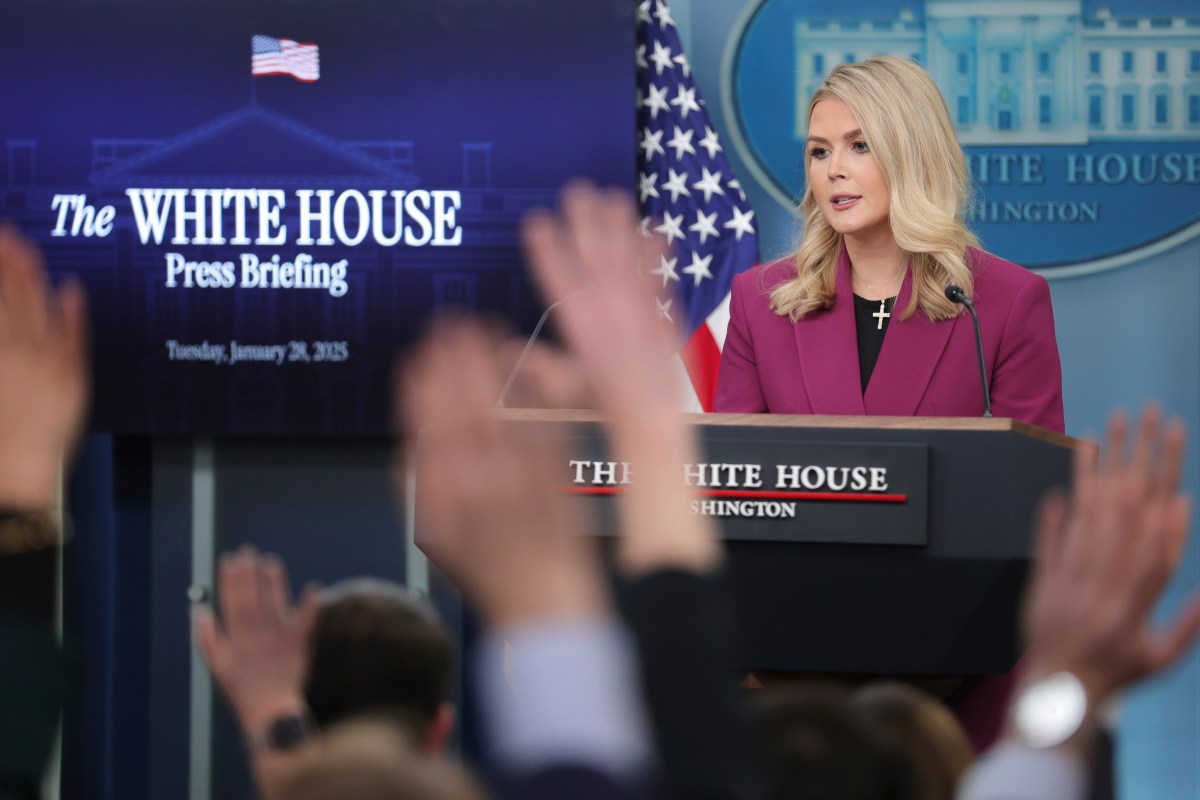
On Tuesday afternoon, Karoline Leavitt, White House press secretary, said during a press briefing that the freeze “is not a blanket pause on federal assistance and grant programs from the Trump administration.”
It does not extend to “Social Security benefits, Medicare benefits, food stamps, welfare benefits, assistance that is going directly to individuals,” she said.
The funding freeze also does not apply to student loans or Pell grants, according to the New York Times.
“So what does this pause mean?” Leavitt said. “It means no more funding for illegal DEI programs. It means no more funding for the green new scam that has cost American taxpayers tens of billions of dollars. It means no more funding for transgenderism and wokeness across our federal bureaucracy and agencies. No more funding for Green New Deal social engineering policies.”
Meanwhile, multiple national news organizations, including the New York Times and the Washington Post, reported that an online system, through which states receive federal Medicaid payments, went down on Tuesday morning. As of August 2024, more than 163,000 Vermonters were enrolled in Medicaid.
As of Tuesday afternoon, Alex McCracken, a spokesperson for the Department of Vermont Health Access, said the state had “not seen any interruptions to access to the federal funding portal for Vermont Medicaid.”
A “Q&A” from the Trump administration that circulated among state officials Tuesday afternoon said that programs “not implicated by the President’s Executive Orders” are “not subject to the pause.” It restated that “any program that provides direct benefits to Americans is explicitly excluded from the pause and exempted from this review process.”
Leavitt did not say how long the freeze would last. In his memo, Vaeth stated that agencies should report their analyses of “programs, projects or activities subject to this pause” by no later than February 10.
Asked whether it would impact Meals on Wheels, Head Start or disaster aid, Leavitt responded that it would “not affect individual assistance that’s going to Americans.”
Julie Moore, secretary of Vermont’s Agency of Natural Resources, said each of the agency’s three departments receive a percentage of their budget from the federal government.
“This has wide-ranging implications for many, many agencies and parts of state government in all 50 states, and so I’m sure there are people throughout the country kind of interested in seeing this work expeditiously undertaken and concluded,” she said.
While she said federal funding is “foundational” to the agency’s work, there shouldn’t be broad program interruptions as long as the freeze ends in two weeks.
“Frankly, the uncertainty is as challenging as any practical effect,” she said.
Meanwhile, Vermont’s congressional delegation blasted the Trump administration over the memo in statements to the press.
U.S. Rep. Becca Balint, D-Vt., said the freeze “hurts every community across Vermont, and in every state,” and added that it could impact “funding for disaster relief, fire departments, child care, food assistance, farms and so much more.”
“It means preschools unsure if they have the funds to operate, disaster victims unable to rebuild, and grants to research cancer are suspended,” she said.
U.S. Sen. Bernie Sanders, I-Vt., said the move would “have a devastating impact on the health and well-being of millions of children, seniors on fixed incomes, and the most vulnerable people in our country” and called it “a dangerous move towards authoritarianism” and “blatantly unconstitutional.”
In a joint statement issued during Leavitt’s remarks, Sanders, Balint and U.S. Sen. Peter Welch, D-Vt., said the “unconstitutional action” could impact thousands of Vermonters. Roughly 1,200 Vermont kids participate in Head Start programs, for example, and “more than 10,000 women, infants, and children in Vermont” use WIC to keep from going hungry. It could impact “countless Vermont communities that are still recovering from devastating floods” and “Vermont firefighters and police officers who put their lives on the line to keep us safe.”
“No president has the right to choose which laws to follow and which laws to ignore,” they said in the statement. “Donald Trump is endangering the health and well-being of Vermonters. We will do everything in our power to see that it is reversed.”
Legal challenges
Vermont has joined 22 other states in filing a lawsuit against the Trump administration, according to Clark, the attorney general.
Those states include Arizona, California, Colorado, Connecticut, Delaware, Hawaii, Illinois, Maine, Maryland, Massachusetts, Michigan, Minnesota, Nevada, New Jersey, New Mexico, New York, North Carolina, Oregon, Rhode Island, Washington, Wisconsin, and the District of Columbia, according to a press release issued by Clark’s office.
The case is distinct from the one brought by nongovernmental organizations, which resulted in the order being temporarily blocked Tuesday afternoon.
Clark said the order violates multiple parts of the U.S. Constitution.
“If I could summarize the overlap between those, the bottom line is that Congress has a job under the Constitution that it does, and the executive branch cannot do that job,” she said. “And in fact, the executive branch is supposed to do the job Congress told it to do.”
The order also violates a law called the Administrative Procedures Act, Clark said.
Asked whether her office could parse the potential impact of the order, Clark said it was likely to be far-reaching. It could impact everything from WIC, a program that helps provide healthy foods and nutrition education for pregnant parents and families, to LIHEAP, which helps offset the cost of heating bills, to programs that support refugees who recently arrived in Vermont, she said.
“Take it from the top cop: Public safety will also be impacted,” she said. “This is domestic violence programs — we have federally granted programs right in my office,” including a task force aimed at fighting child sexual abuse and internet crimes against children.
“My office has heard from Vermonters who are scared that essential services they rely on — and which our federal tax dollars pay for — will be cut off, and that the organizations that serve the most vulnerable in our communities will be hamstrung or shuttered,” Clark said in the press release. “I am fighting for them in filing this lawsuit, and I’m fighting for our Constitution.”
Patrick Parenteau, an emeritus professor at Vermont Law and Graduate School, said the president of the United States “does not have the authority to impound funds appropriated by Congress, full stop.”
To do so would be a violation of the separation of powers, he said: the president can’t cancel funds that Congress has already decided to spend.
That means that anyone who is entitled to funds that have been authorized by Congress could have standing to sue, including cities, states, nonprofit organizations, businesses and individuals, he said.
“What happens in the meantime? I mean, those are all awful, awful questions,” he said.
Parenteau said the memo was both broad and vague, making it hard to understand how it could be felt on the ground.
“We’ve never seen anything like this,” he said. “How can we possibly comprehend this?”
Shaun Robinson and Ethan Weinstein contributed reporting.
