

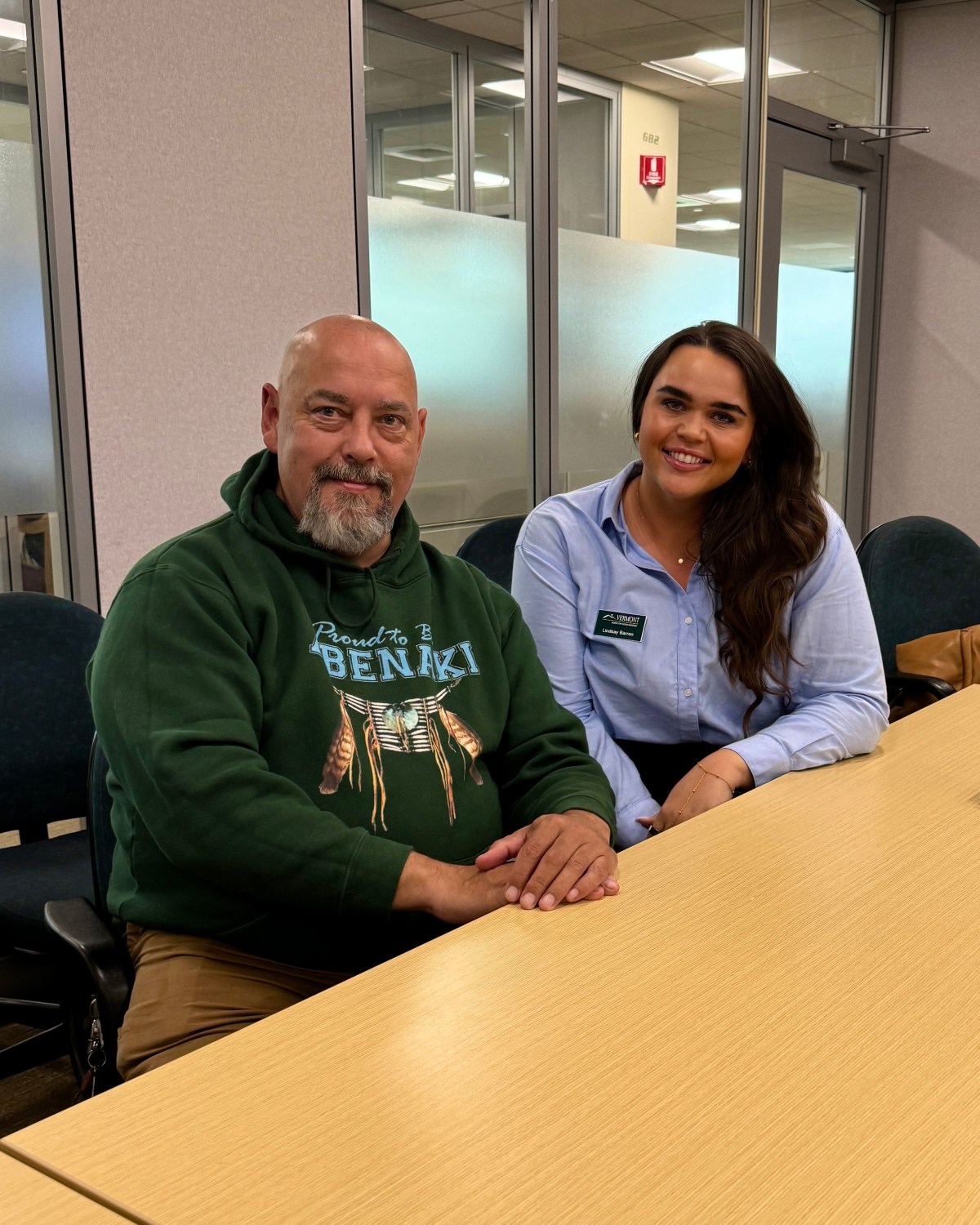
For about a year and a half now, Marshall Rich’s workdays have involved getting in touch with various Native American tribes to determine whether certain Vermont children are affiliated with them.
He has sent out at least 150 inquiries to tribes around the country, following up with calls or letters, and sometimes reaching out to the federal Bureau of Indian Affairs for guidance.
Rich also coordinates with state social service workers and family attorneys in his role as the first Indian Child Welfare Act coordinator of the Vermont Department for Children and Families. His main job is to determine whether children involved in state custody cases are members of federally recognized Native American tribes or if they’re eligible to become members. These cases are called a child in need of care or supervision, or CHINS.
The Indian Child Welfare Act, a 1978 federal law, aims to keep Native children under the care of relatives or tribe members, whenever safe and possible. Determining whether a minor is a tribal member or has eligibility is an important factor in these custody cases.
Because the federal law only applies to members of federally recognized tribes, the department has not had to wade into an increasingly pitched debate over the legitimacy of Vermont’s four state-recognized Abenaki groups. While the U.S. government has recognized 574 Native American tribes as of January, Vermont is one of 11 states that have devised their own — and in many cases less stringent — criteria to recognize additional tribes.
Rich, a member of the state-recognized Abenaki Nation of Missisquoi, had just retired from the state Department of Corrections when he took the part-time position with DCF in November 2022.
“The ability to impact the needs of children and the safety of children and really connect them to kinship care with a tribal foundation is really what interests me the most,” he said in a recent interview.
Between February 2023 and last month, according to department data provided to VTDigger, 104 children involved in state custody cases were reported by their families to be either a member of a federally recognized tribe or eligible to register.
Some families claim to be affiliated with multiple tribes, ranging from state-recognized ones to international tribes, according to Lindsay Barron, policy and planning manager with the department’s family services division.
Within the past three to four years, Barron said, the state has confirmed tribal affiliation for just nine children.
DCF found that families involved in Vermont child custody cases often claim affiliation with the following four tribes: Blackfeet Tribe of the Blackfeet Indian Reservation (Montana), Cherokee Nation (Oklahoma), Eastern Band of Cherokee Indians (North Carolina) and United Keetoowah Band of Cherokee Indians (Oklahoma). But these claims have led to very few confirmations from the tribes.
Department staff speculate this might be related to the Blackfeet and Cherokee tribes’ popularity in contemporary society.
“Most people, when they think of Native American tribes, the most common ones that come to mind are Cherokee,” Rich said. “The Blackfeet is just a really common tribe, as well.”
Verifying families’ tribal affiliation claims has taken up most of Rich’s hours, especially when families provide limited information on their tribal links. Some families, Barron said, cannot identify which tribe they might be affiliated with.
“We follow up on a lot of tribal claims with very limited or vague information that really don’t produce any results,” she said. “We’re happy to follow up on every claim that comes to us, but it does produce a lot of volume of work for limited outcomes.”
In addition, Barron said, tribes usually don’t have the structure to handle a large volume of claim verification requests and have “a lot fewer resources than your typical child protection system.”
In one case, Rich said, a tribal representative told him they had not responded to his letters because they did not have much funding. At the person’s suggestion, Rich began including self-addressed, stamped envelopes in his letters.
Most of the children’s confirmed tribal membership or ongoing verification claims are with four tribes in the north-central United States: Cheyenne River Sioux Tribe of the Cheyenne River Reservation (South Dakota), Lac Courte Oreilles Band of Lake Superior Chippewa Indians (Wisconsin), Leech Lake Band of Ojibwe (Minnesota) and Oglala Sioux Tribe (South Dakota).
Among Vermont’s CHINS cases since 2023, Barron said, no tribes have intervened or taken custody of a child.
Where a child is not affiliated with a federally recognized tribe but is a member of a state-recognized tribe, this connection still informs DCF’s approach to the custody proceedings.
“We’re trying to treat that as kinship care and sort of thinking about the child’s natural support network,” Barron said. “Who’s connected to the parents? Who’s connected to the child? How can they offer support or resources and just rally together around the needs of the child?”
