



Winooski Deputy Mayor Thomas Renner announced his bid for the lieutenant governor’s office Thursday.
Renner will seek the Democratic nomination and will challenge Lt. Gov. David Zuckerman, a Progressive/Democrat from Hinesburg who announced he would run for reelection earlier this month.
Gregory Thayer, a Rutland accountant and former local GOP committee chair, is seeking the Republican nomination for the seat.
Speaking outside of Winooski’s Onion City Chicken and Oyster restaurant, flanked by supporters, Renner said that he sees Vermont “at a crossroads,” facing an affordability crisis, a housing emergency and the continued impacts from climate change.
“Both long standing residents and newcomers alike grapple with the same daunting reality: moving here and staying here have become too difficult for people,” he said. “But I know that together as Vermonters we can create an economy that works for all and that fosters the opportunities and growth that we need.”
Renner was first elected to public office in 2022, winning a seat on the Winooski City Council. He was appointed deputy mayor of the city of roughly 8,400 last year. Both the mayor and deputy mayor also serve on the city council, setting policies that are then implemented by the city manager and other staff.
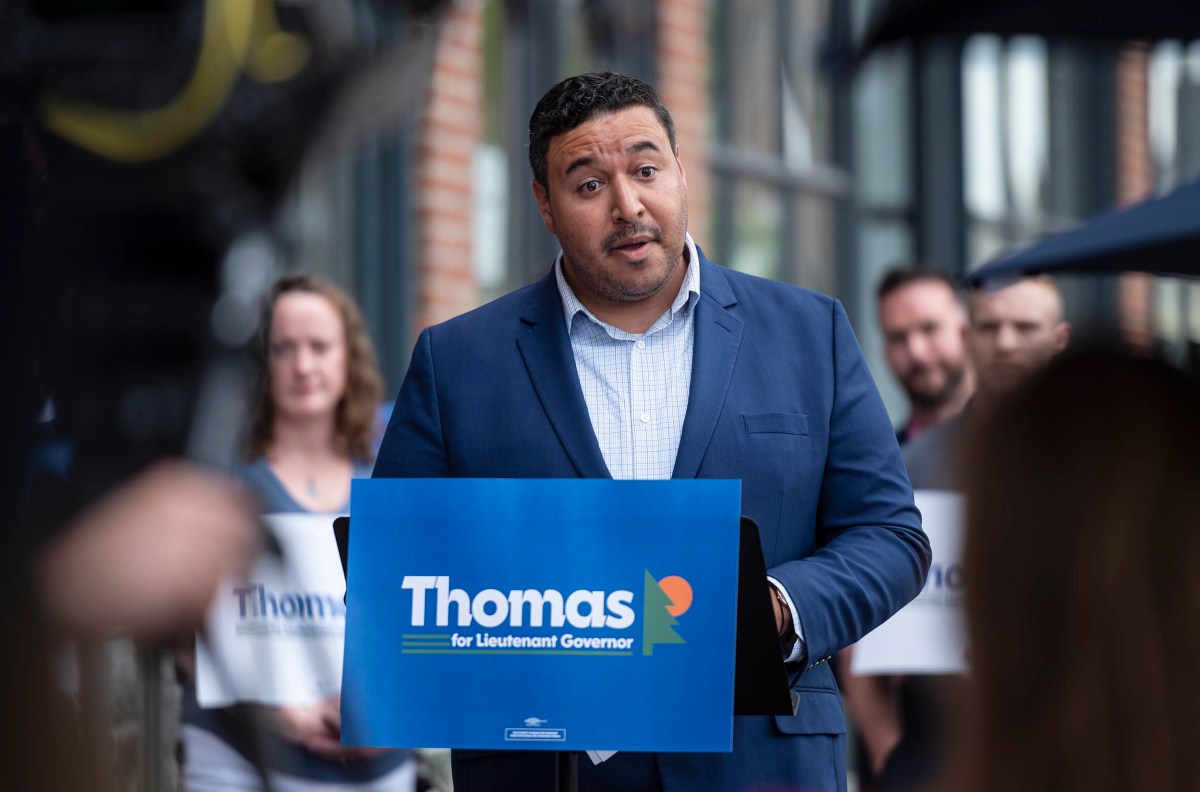
Winooski Mayor Kristine Lott, speaking at the press conference, said Renner has “brought a pragmatic approach to decision making and problem solving and he’s been very focused on helping… our efforts here to address housing access, infrastructure needs.”
She added, “I’m excited to support him in his next chapter.”
The state’s second-highest executive office is a largely ceremonial role. During the legislative session, the lieutenant governor presides over the Vermont Senate, only able to cast tie-breaking votes. They step in as acting governor when the governor is out-of-state or unable to serve.


Those who have held the seat, often seen as a stepping stone to higher office, have generally used it to act as a liaison between state government and residents, conducting on-the-ground listening tours on a variety of topics.
Thayer, who called himself “life-long Vermonter and Conservative” in a press release announcing his bid, sought the Republican party’s nod for the office in 2022 but lost to former state Sen. Joe Benning, R-Caledonia.
Renner said the role would allow him to “message the values of Vermonters, where we can speak about things that are concerning Vermonters every day.”
Zuckerman served in the role for back-to-back two-year terms from 2017 to 2021, before leaving the post to unsuccessfully challenge incumbent Republican Gov. Phil Scott for the state’s top job. He stepped back into the role of lieutenant governor in the last election cycle.
Asked how his approach would differ from Zuckerman’s, Renner said that he has always been “a consensus builder.”
“I build relationships, I bring people together — it doesn’t matter to me what party you’re in, (or) what your beliefs are,” he said. “At the end of the day we all need to work together for Vermonters and that’s what I’m interested in doing.”
