

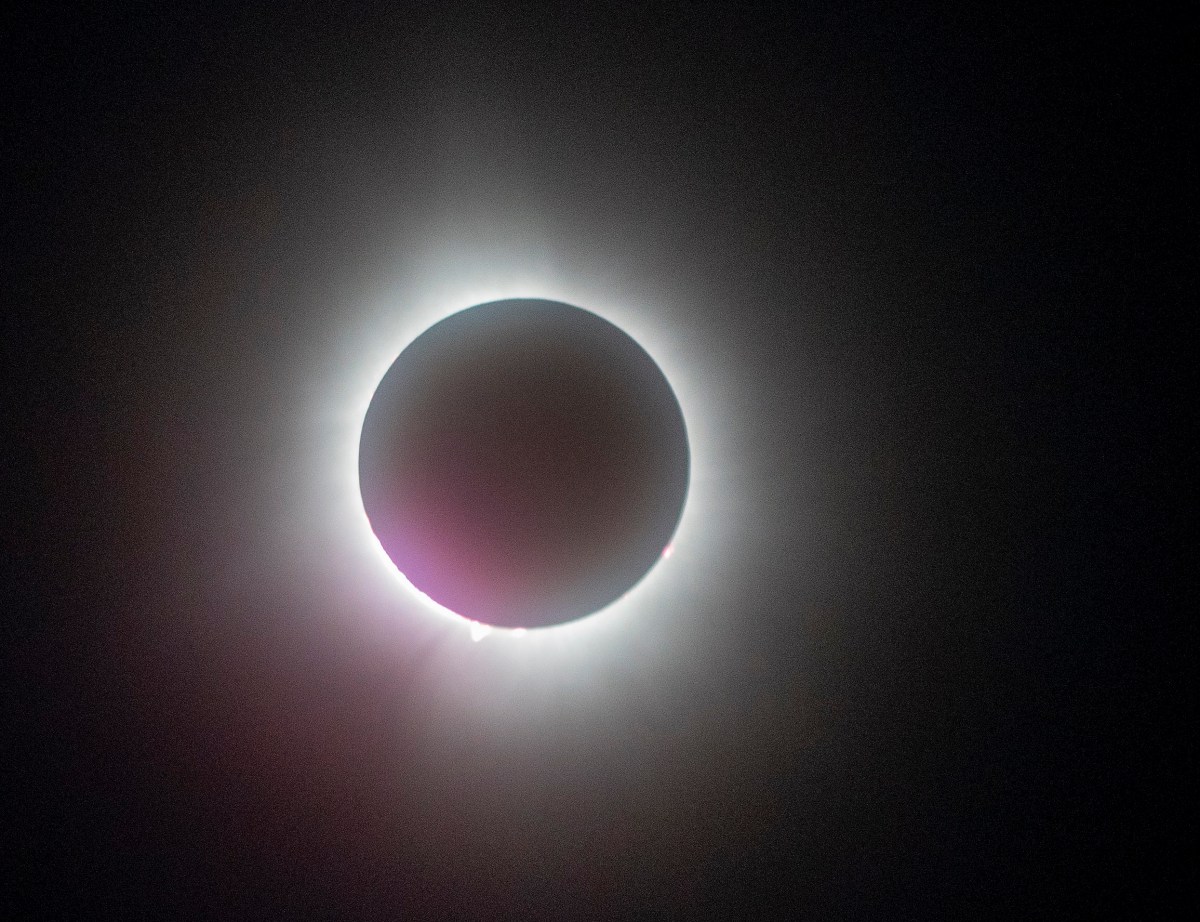
National Weather Service meteorologist Scott Whittier is one of a lucky few. Monday’s total solar eclipse, which he viewed from South Burlington, was actually the second he’d seen in person.
Yet somehow, the moment of totality still felt like a surprise, he said, in part because it came so suddenly.
“For many folks, and me included, it was not long enough,” he said. “I could have taken at least another double of the time just to be able to try to observe everything that was available.”
Local conditions were slightly different than those the last time Whittier saw an eclipse, making for a unique viewing experience. High clouds scattered across the Champlain Valley created a halo effect, and enhanced solar activity appeared as a bright pink spot, called a prominence, visible along the sun’s corona at the moment of totality.
Vermont was lucky all around during the first total solar eclipse visible from the state since 1932. Sunny, warm weather like Monday’s is an “infrequent” occurrence this time of year, Whittier said. The weather service had reported that early April has a typical cloud cover of around 80 to 90%, based on historic weather patterns.
Meteorologists nervously watched cloud forecasts going into the day. “Cloud cover is one of the harder weather elements to forecast,” Whittier said. He said he worried that the wet weather expected Wednesday could have made an earlier appearance.
“This time of year — late March, early April — is a transitional time of the year where you can get those pesky closed storm systems like we witnessed late last week,” he said. “We could have easily been underneath those systems, and instead we were in between those two storm systems.”
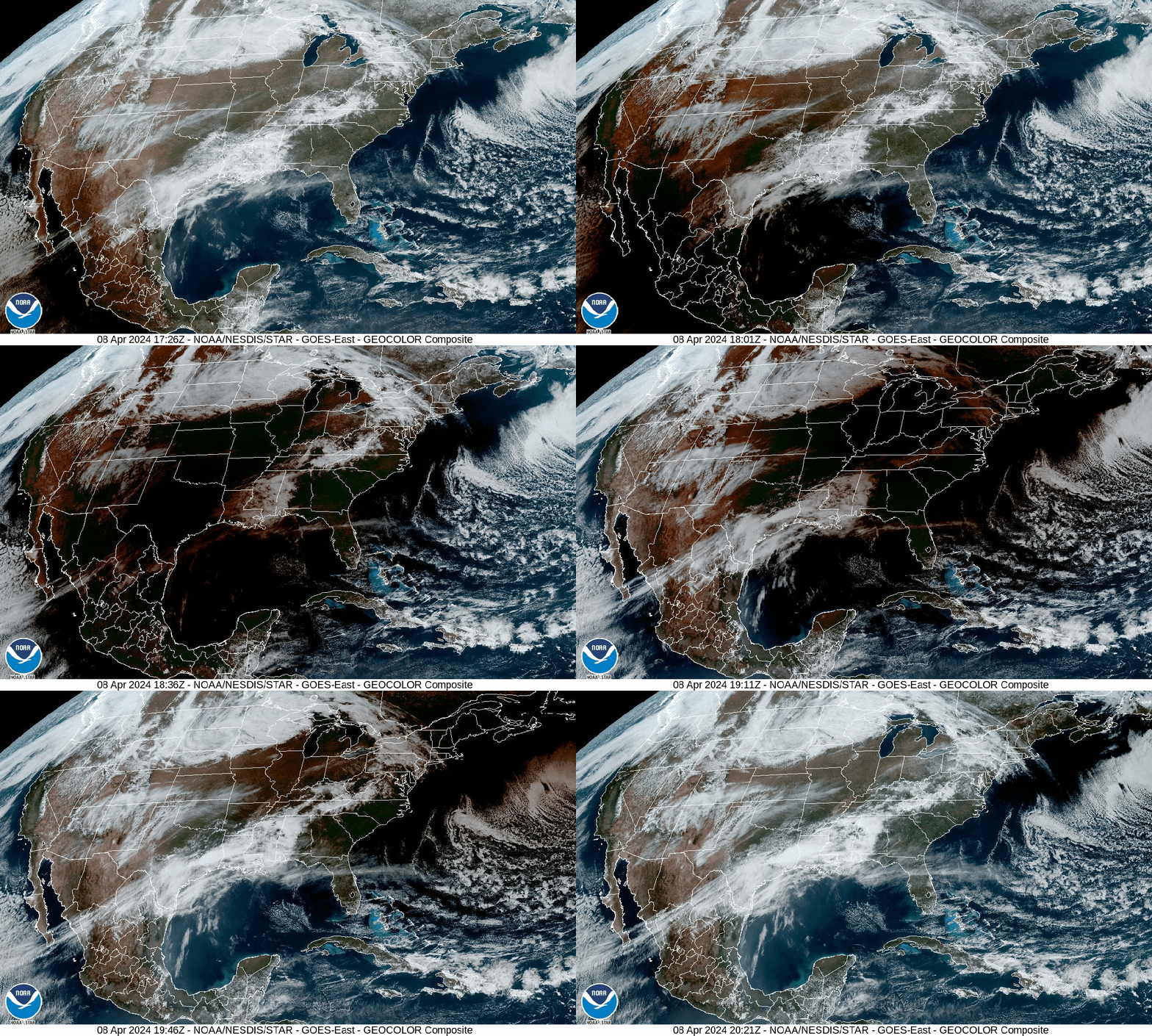
In the days before the eclipse, Vermont appeared to be primed for a better view than most places in the path of totality. Southern and midwestern states in the path of totality were expected to have cloudy weather. The Texas Eclipse Festival in Burnet was canceled due to severe weather concerns.
But Whittier said that, shortly before the eclipse, the worst of the clouds in the Lone Star State moved ever so slightly to the east, giving many eclipse watchers a better-than-expected view. The Texas Tribune described the clouds parting at the last possible minute, allowing people to see totality.
The region around Buffalo, New York, still had high cloud cover and missed most of the effects of totality, Whittier said.
He watched the eclipse from the roof of the Patrick Leahy Burlington International Airport in South Burlington with other weather service employees. The elevated view allowed him to see the glowing edges of the horizon, he said.
The temperature dropped 5 degrees in the area as totality occurred, Whittier said, and about 8 to 10 degrees in some locations.
The last time Whittier had witnessed a total solar eclipse was by accident, while visiting Aruba in 1998. But he’s already thinking ahead to the next one.
“If you want to catch another one, two years from now, it’s going to be in Iceland and Greenland in August,” he said.
