



At the University of Vermont Medical Center, administrators grade the hospital’s capacity based on color.
Green means no problem; the hospital has plenty of room to accept new patients. Yellow means “it’s pretty darn full, but we’re gonna get through,” Stephen Leffler, the president and COO of UVMMC, told VTDigger in an interview Tuesday.
And red means the hospital is effectively at capacity — meaning likely longer lines in the waiting room, longer stays in the emergency department, and overall fewer beds to go around.
“Honestly, over the last couple of years, we’re red almost every day,” Leffler said.
It’s not that the hospital has been dealing with a sudden influx of sick patients every day for years (although a recent surge of respiratory illnesses is not helping). The more pressing issue, Leffler said, is the presence of patients who don’t actually need to be in the hospital.
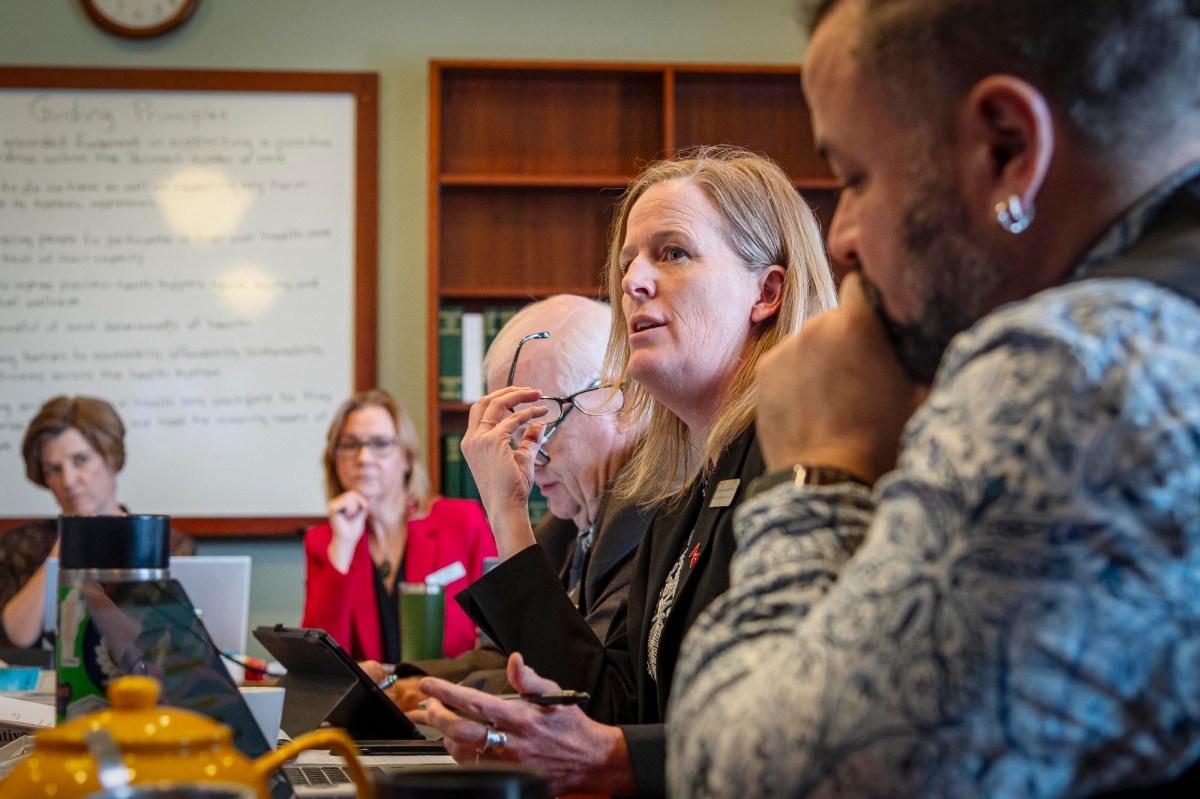
On Wednesday morning, the Vermont House committees on health care and human services heard from Leffler and other health care administrators about this phenomenon — called, in health care lingo, “boarding.”
Hospitals around the state and country are housing patients who no longer need hospital-level care, but are unable to leave because they have no place to go to receive the (lower-level) care they still need.
Instead, patients — roughly 70 at UVMMC alone this week — languish in the hospital for days or weeks or even months, taking up precious medical resources. It’s a far from ideal setting for patients too: Hospitals can be stressful, uncomfortable and far from family and friends, and can put patients at greater risk of infections.
So why can’t they leave? These patients still have health care needs that must be met — at a rehab facility or skilled nursing facility, for example. But those facilities have a very limited capacity to take new patients.
That’s largely because of workforce shortages, nursing home administrator Suzanne Anair told lawmakers Wednesday. Amid a nationwide shortage, nursing facilities are struggling to hire and keep nurses and health care workers on staff.
“Workforce is one of our biggest issues,” said Anair, an administrator who works with Allaire Health Services and Bennington’s Center for Living & Rehabilitation. “At (the center), we have not rebounded from Covid.”
That can force facilities to rely heavily on travel nurses — who are “significantly” more expensive, Anair told lawmakers.
Even so, beds in nursing facilities are still sitting vacant because they lack the minimum staff required to safely care for their occupants.
“There are still beds that are going unused,” Megan Tierney-Ward, the interim commissioner of the Department of Disabilities, Aging & Independent Living, told committee members. “And, obviously, still people in hospitals unable to find the right placement for their care needs.”
So what should lawmakers do? Leffler, of UVMMC, said that he was not asking for anything specifically for his hospital or any UVM Health Network hospitals.
“My ask is to basically make investments into the continuum of care, make investments so we have more nursing home capacity, more beds for patients with high acute needs, and more opportunity for people to get care in their home when they need it,” he said.
— Peter D’Auria
In the know
So long, farewell to the Senate — at least for a few days. The upper chamber will not gavel in on Thursday, and on Friday, only for a token session. Any bill action slated for the rest of the week will be taken up next week.
Why? Well, you see, while Gov. Phil Scott attends the National Governors Association winter meeting in Washington, D.C., on Thursday through Saturday, Lt. Gov. David Zuckerman will be acting governor. And while Zuckerman is acting governor, he cannot preside over the Senate. Senate President Pro Tempore Phil Baruth, D/P-Chittenden Central, would typically hold down the fort in the upper chamber in the meantime, but coincidentally, he, too, will be traveling.
I asked his chief of staff Ashley Moore: Will the two Phils travel to D.C. together to bro out at NGA? Nay, she said: Baruth is jet-setting for a research conference, a duty of his day job with the University of Vermont.
But perhaps they will fly on the same plane, she pondered to me in a text. “Maybe they will share earbuds and listen to T Swift together.”
— Sarah Mearhoff
The powerful chair of the Senate Judiciary Committee is pitching what he called a “compromise” with Gov. Phil Scott’s administration that would further delay the implementation of the next stage of Vermont’s Raise the Age law until April 2025.
Sen. Dick Sears, D-Bennington, on Wednesday introduced an amendment to S.58 — which his committee is crafting into an omnibus public safety bill — that would task the Department for Children and Families with producing regular reports, between July 2024 and April 2025, on its progress toward seven specific goal posts leading to implementing the controversial law.
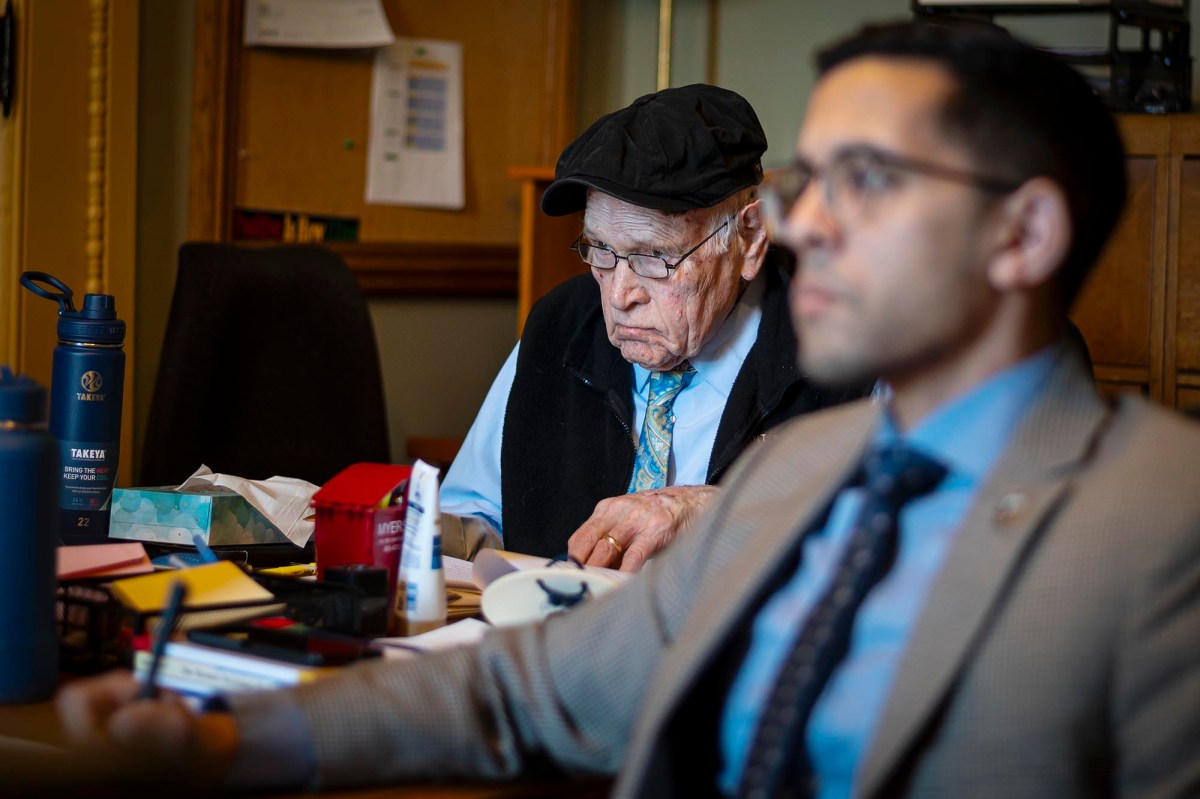
Chris Winters, the department’s commissioner, told the judiciary panel Wednesday that he was largely on board with Sears’ proposal. But when pressed, Winters said that even if the department met many of those goals, he couldn’t guarantee that it would have the funding and resources to implement the next stage of Raise the Age next April. That stage centers on shifting 19-year-olds into the juvenile system for many offenses.
Another member of the judiciary panel also expressed concern with that response.
“I don’t want to create a report for reporting’s sake, to only be sitting here again in the future saying, well, we didn’t do any of that,” said Sen. Tanya Vyhovsky, P/D-Chittenden Central, at the hearing.
The committee is slated to take more testimony and a possible vote on S.58 — which also includes measures, among others, that stiffen penalties for certain drug offenses — on Friday morning.
— Shaun Robinson
On the move
The Senate on Wednesday expedited its passage of a bill that would allow school boards to postpone their budget votes, while also repealing and replacing a controversial property tax rate increase cap.
Property taxes are projected to rise an average of 20% this year, driven by a nearly 15% expected increase in education spending.
Lawmakers called the “time-sensitive” bill, H.850, a “band-aid” in addressing property taxes. But in a spirited floor session Wednesday, many acknowledged the changes wouldn’t be enough.
Senate President Pro Tem Phil Baruth, D/P-Chittenden Central, said the legislature would need to come up with “groundbreaking” new ways to contain public education costs this year.
— Ethan Weinstein
It was a busy morning in the Senate Judiciary Committee. In addition to finding common ground with the Department for Children and Families, senators greenlit three of their priority bills for the session:
- S.278 would eliminate Vermont’s contributory negligence standard, a method of issuing judgments in civil cases in which victims take partial fault, in sexual assault cases litigated in civil court. It now heads to the Senate floor for action.
- S.209 would outlaw so-called “ghost guns,” which are often untraceable firearms built using disparate parts or 3D printed materials without serial numbers. Vermonters could still build their own guns if S.209 is signed into law, but would be required to take their assembled gun to a licensed firearms dealer, where the Vermonter would be subject to a background check and a serial number could be lasered onto the body. The committee approved the bill by a 4-1 vote, with Sen. Robert Norris, R-Franklin, the lone ‘no’ vote. The bill can now be debated on the Senate floor.
- S.163 would establish and pay for two additional Vermont Superior Court judge positions in an attempt to address the state’s court backlog. The committee approved the bill by a 5-0 vote. Before it can hit the Senate floor, the bill has to first head to the Senate Appropriations Committee for its blessing on the additional expense.
— Sarah Mearhoff
Visit our 2024 Bill tracker for the latest updates on major legislation we are following.
On the fifth floor
In hopes of expediting the distribution of $100 million in flood hazard mitigation funding, the governor’s office announced on Wednesday that it is simplifying the application process for municipalities affected by last summer’s catastrophic flooding to receive state assistance.
The state has tallied more than $1 billion in total damages sustained statewide from the summer floods. With two federal major disaster declarations approved by the White House (and another requested), the feds have funneled millions in recovery dollars from Washington to help Vermont rebuild and brace itself for its next natural disaster.
— Sarah Mearhoff
What we’re reading
UnitedHealthcare reaches deal with UVM Health Network to maintain coverage, VTDigger
As mental health awareness increases, first responders still face inadequate care across Vermont, Vermont Public
Correction: An earlier version of this newsletter misstated one of Stephen Leffler’s positions at University of Vermont Medical Center.
