


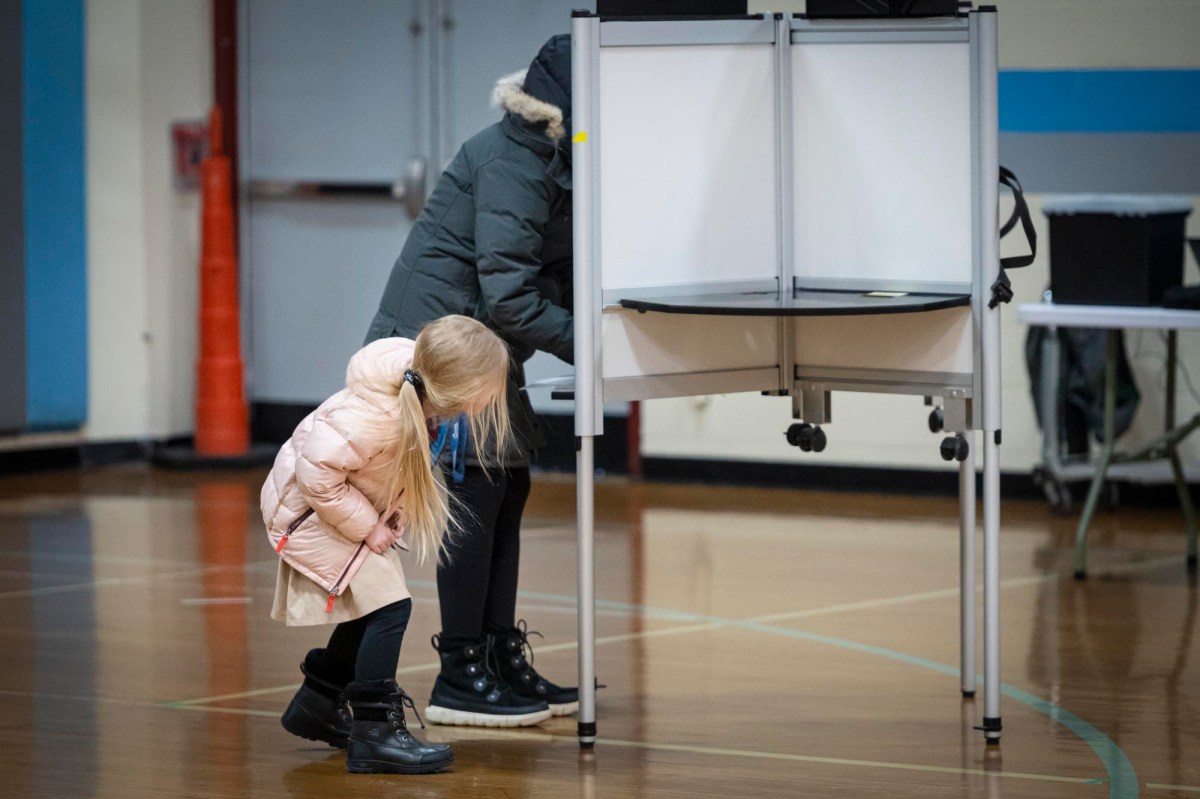
In Vermont, March 5 is going to be a busy day. Not only are most municipalities scheduled to host Town Meeting Day, but the state is also set to host its quadrennial presidential primaries.
Vermont is one of 15 states slated to take part in Super Tuesday, during which roughly one-third of the delegates to the Democratic and Republican national conventions are allocated. Of course, Vermont doesn’t send that many delegates to either convention, where the parties pick their presidential nominees. California, which also votes on Super Tuesday, will send 169 delegates to the Republican convention, compared to 17 from Vermont.
Not every municipality holds Town Meeting Day on the first Tuesday of March — and this year, due to a last-minute debate over education funding, some school districts may delay their budget votes. But all presidential ballots are due to local clerks by 7 p.m. on March 5.
“We have such an interesting mosaic of the way communities vote on their municipal budgets, the way they vote on their school budgets, and so the only consistency across the state is in the presidential primary,” said Secretary of State Sarah Copeland Hanzas in an interview with VTDigger.
Vermont voters will be able to choose from a dozen presidential candidates in the 2024 primaries, half of whom are seeking the Democratic nomination and half the Republican nomination. They include the parties’ frontrunners — President Joe Biden, a Democrat, and former President Donald Trump, a Republican — along with a number of ex-candidates. Former New Jersey Gov. Chris Christie, Florida Gov. Ron DeSantis and entrepreneur Vivek Ramaswamy all dropped out of the Republican contest after Vermont’s ballots were finalized. Former United Nations ambassador and former South Carolina Gov. Nikki Haley is also on the ballot.
Vermont does not have party registration, so voters can choose to cast a Republican or Democratic ballot — and can decide which one on the spot. “Just because you asked for the Republican ballot, doesn’t mean that you are declaring yourself a Republican,” Copeland Hanzas said.
Although March 5 is weeks away, some Vermonters have already voted. The state is required to make ballots available 45 days before the election, which was the third week of January. There’s still time to request ballots via the state’s voter page portal, contacting one’s municipal clerk directly or showing up at the clerk’s office.
Given widespread delays in postal delivery, Copeland Hanzas recommends returning ballots as early as possible. Clerks must have them in hand by the end of Town Meeting Day for them to be counted. Those who request ballots in advance can still drop them off in person until the polls close at 7 p.m. on March 5.
Vermonters don’t need to provide identification to vote if they’re already registered. Those who are not registered can do so as late as the day of the election, though they will need to provide identification and take the Voter’s Oath.
According to Copeland Hanzas, due to the primary presidential elections, there will likely be a higher turnout for Town Meeting Day. It’s the local elections, however, that Copeland Hanzas says are particularly important.
“While we get jazzed up about the presidential race, because there’s lots of advertising dollars that put that in front of us and in lots of different media sources, it’s really the decisions that are being made at your local level that are more impactful on your life,” she said.
Clarification: This story has been edited to note that former United Nations ambassador and former South Carolina Gov. Nikki Haley is also on Vermont’s GOP presidential ballot.
