


MONTPELIER — As word got out last week that Sen. Dick Mazza, D-Grand Isle, had returned to the Vermont Statehouse, a steady stream of friends and colleagues ducked into the first-floor committee room he has occupied for the better part of four decades. They told familiar jokes, dispensed hugs and wished him well.
“It’s like home,” Mazza said with a laugh. “Like home.”
Until last month, the dean of the Vermont Senate had rarely missed a day — or a vote — since he joined the body in 1985. But a series of health problems have conspired to keep him out of the building for much of this year’s legislative session.
Mazza, 84, was diagnosed last fall with pancreatic cancer. Then he broke a hip. Then he fell at the Statehouse in the early days of the session, injuring a knee. He uses a walker now to get around and looks a bit smaller than he once did — his face gaunt and his hair mostly claimed by chemotherapy treatments.
But Mazza retains the mischievous smile and easy laugh that have long won him friends in the halls of the Statehouse and the aisles of Dick Mazza’s General Store, the Colchester institution his family has owned for nearly 70 years. He still sports his trademark loud ties, with a matching pocket square and carnation. He remains as stubborn and private as ever, refusing to concede that his cancer might slow him down — and sharing details of his diagnosis with few, if any, of his colleagues.
“I’ve got a little bit of cancer,” Mazza said in an interview late last month in the office he frequents most, tucked away in the back of the Colchester store. “At this point it’s just a touch of it,” he said in typical understatement. “So we’ll see how it goes. It’s fine, you know. We’ve all gotta go through something.” He laughed.
Even now, Mazza refuses to ruminate about surrendering his Senate seat before his term expires next January. Asked whether he would run again this fall, he answered elliptically — surely aware of the risk of becoming a lame duck.
“I don’t know. We’ll see how I feel. I’ll play it by ear,” he said. “It’s something I enjoy, but I know there comes a time when you’ve gotta decide what you wanna do. It’s certainly been a good run.”
And a long one. According to Senate Secretary John Bloomer, whose late father was first elected to the Senate the same year as Mazza, the grocer from Colchester has served in that chamber longer than all but one person in state history. (That person is former Sen. Bill Doyle, who served for 48 years before retiring in 2017.)
Even before Mazza joined the Senate, he represented Colchester in the Vermont House from 1973 to 1976, succeeding his own father, Joseph Mazza, Sr., who held the seat for a dozen years before that.
Mazza’s friends — among them Vermont’s four most recent governors, Democrats and Republicans alike — describe his tenure in historic terms.

“He’s been one of the greatest senators in the history of the state, in terms of what he’s been able to deliver for his constituency,” said former Gov. Howard Dean, who recruited Mazza to run for Senate in 1984. “He’s incredible and relentless.”
During his years in office, he has set “a cultural tone” of respect and collegiality, according to U.S. Sen. Peter Welch, D-Vt., who served with Mazza in the Vermont Senate before decamping for Congress.
“I think Dick Mazza’s the most impactful member of the General Assembly of the last 40 years,” Welch said.
According to Welch, when more progressive members of the Democratic caucus push the policy envelope, it’s often Mazza — ever aware of the feedback he hears from customers at the cash register — who “tempers” their ambitions.
“When Dick Mazza spoke, we listened,” he said.
That’s true of governors, too. Since 1991, when Dean assumed the office, Mazza has had a direct line to the fifth floor of the Pavilion Building.
“For me, he was always a barometer of what most Vermonters are going to think on an issue,” said former Gov. Peter Shumlin, who also served alongside Mazza in the Senate. “I didn’t need to poll. I could go to Mazz.”
To family members and neighbors, Mazza has distinguished himself as more than a politician. They describe him as a relentlessly hardworking business owner who puts his family and community first — contributing generously to those who need it and never forgetting his Colchester roots.
The town recently honored his service by renaming the road to its new recreation center — a project that, naturally, he helped advance — “Dick Mazza Drive.”
“I feel like he’s a quiet leader, and he leads by example,” said his daughter, Melissa Mazza-Paquette. “He’s one in a million. There’s nobody like him.”
‘Everything’s fine’
The 30-member Vermont Senate is a quirky institution.
“I think people who’ve been around here for a long time, even if it sounds corny, they think of the Senate as a family,” said Senate President Pro Tempore Phil Baruth, D-Chittenden Central. “I honest to God feel that way.”
And, like any family, the Senate has rallied around Mazza in recent months — picking up his work as chair of the Senate Transportation Committee and scheduling key votes so that he can take part in them.
Mazza’s colleagues have also been careful to respect his privacy.
Sen. Jane Kitchel, D-Caledonia, who has served with Mazza for nearly two decades and is among his closest colleagues in the Senate, said he has shared little with her about his illness.
“He’s not one to reveal. Some people just love to emote, and he’s not one of them,” she said. “He’ll say, ‘Everything’s fine. I’ll be there tomorrow.’”
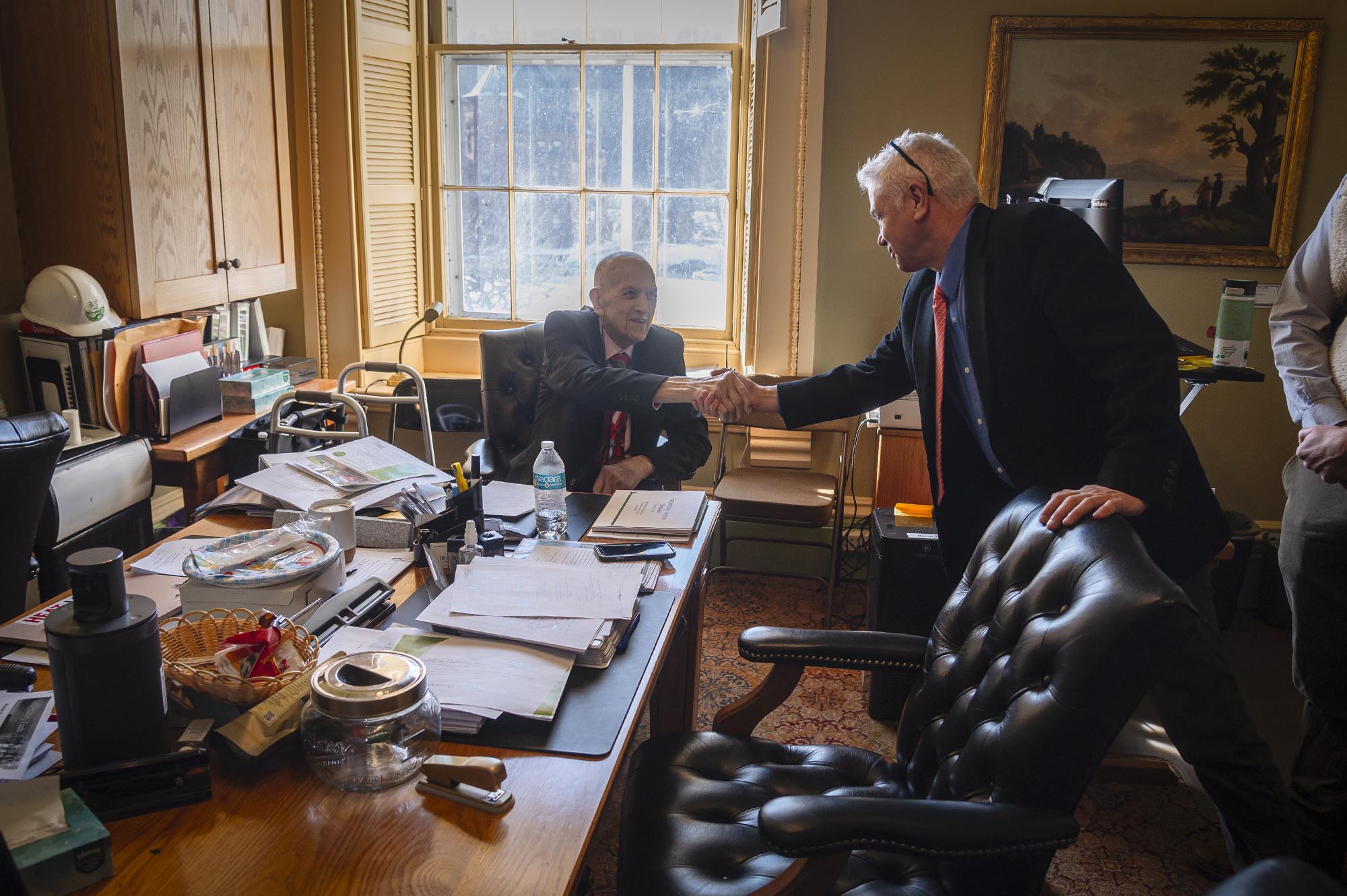
Despite a wave of retirements in 2022 that ushered in a class of younger members — by the Senate’s geriatric standards, at any rate — there remain eight senators who have served for more than 20 years. Like Mazza, Sen. Bobby Starr, D-Orleans, was first elected to the House in the 1970s, while Sens. Richard Westman, R-Lamoille, Dick McCormack, D-Windsor, and Mark MacDonald, D-Orange, first joined the Legislature in the 1980s.
Such long tenures mean the chamber has seen its fair share of late-life difficulties, including illnesses among senators and deaths of their spouses.
Sen. Dick Sears, D-Bennington, who joined the Senate in 1993, said he can empathize with the challenges Mazza faces. Sears has wrestled with skin cancer for years and had an episode of heart failure in late 2022 that left him depleted the following legislative session. He was also drawn away from the chamber to help care for his ailing wife, who died late last year.
“It’s trite to say cancer sucks, but it sure does,” Sears said. “I think (Mazza’s) doing the best he can in terms of the ability to still serve in the Senate.”
It’s helped that, since the Covid-19 pandemic, the Senate has relaxed its rules to allow for remote participation and voting when members are grappling with major health issues. When the Senate last month considered overriding Gov. Phil Scott’s veto of a controversial update to the bottle bill — one that Mazza strongly opposed — he appeared by Zoom to vote against it. (Mazza’s side prevailed, sustaining Scott’s veto by three votes.)
And at the start of this session, when it became clear that Mazza would not be present every day, Sen. Andrew Perchlik, D-Washington, was elevated to vice chair of the transportation committee so that he could help steer the annual transportation bill through the panel. (Perchlik noted in an interview that Mazza has helmed the committee since around the time Perchlik, now 55, graduated from high school.)

As to whether Mazza should continue serving despite his frequent absences, his colleagues say there’s only one person who can make that call.
“I think it’s 100 percent Dick’s choice,” Baruth said. Despite what Mazza is facing, Baruth said, “Dick has continued to pull his oar.”
“He feels a tremendous amount of guilt when he hasn’t been able to come in,” said Scott, a former senator who is among Mazza’s closest friends. “I can’t recall him missing a day in all the time I was (in the Senate). I just don’t recall that. So he deserves some flexibility. He’s earned it — and he won’t let his constituents down.”
‘Dick would take care of it’
Mazza’s first encounter with the Statehouse was very much outside of its doors.
In the final years of his father’s tenure in the House, Mazza would drive him from Colchester to Montpelier throughout the legislative session.
“It’s funny. I never came in the building. I’d sit in the car and wait for him,” Mazza recalled last week in the transportation committee’s meeting room, which is decorated as if it were his own private office, with photos of him and his colleagues through the years. “If I knew he’d be in here for four or five hours at a time, I’d drive downtown and go to a store.”

According to Scott, Mazza “idolized his father.” When Joseph, Sr., retired from the House in 1972, Mazza followed him into office, serving two terms in that chamber before stepping back to focus on the store.
In 1984, as the legend goes, Dean drove through an ice storm from Burlington to Colchester to convince him to run for the Senate seat that includes Mazza’s hometown and Grand Isle County. “I knew who he was and I knew what his store was,” Dean said, explaining his recruitment decision.
Mazza has always served on the same two committees: transportation and the Senate Institutions Committee. Neither is policy-heavy. Rather, they’re the panels that settle such questions as which bridges will be built and where prisons will be placed.
“You’re dealing with culverts. You’re dealing with plowing. You’re dealing with salt,” Mazza said of the transportation committee. “You’re dealing with things that I can relate to.”
He’s used his perch to push for projects in his district, including extending the Burlington Bike Path to Colchester by building a bridge across the Winooski River.
“Anytime Colchester has needed anything with our roads, he’s been right there to help,” said Selectboard member Charlie Papillo, a close friend of Mazza’s who used to co-host the “Charlie and Ernie in the Morning” radio show on WVMT. “He’s always had the ear of the governor — whoever the governor was. So if there was an issue that needed to be looked into further, you’d go to Dick and Dick would take care of it.”
Mazza’s colleagues describe him as fair to a fault. Perchlik, who is considerably more liberal, said that when he joined the transportation committee, he was surprised to find Mazza receptive to taking up matters outside his comfort zone, such as promoting electric vehicles.
“I did not feel like he was political in his running of the committee,” Perchlik said. “He cared more about fairness and giving people the opportunity to make their case.”
Scott, who served with Mazza on both the institutions and transportation committees, said the senator always sought consensus. “I just can’t remember a time in my history on the (transportation) committee that we ever had a vote that wasn’t unanimous,” the governor said.
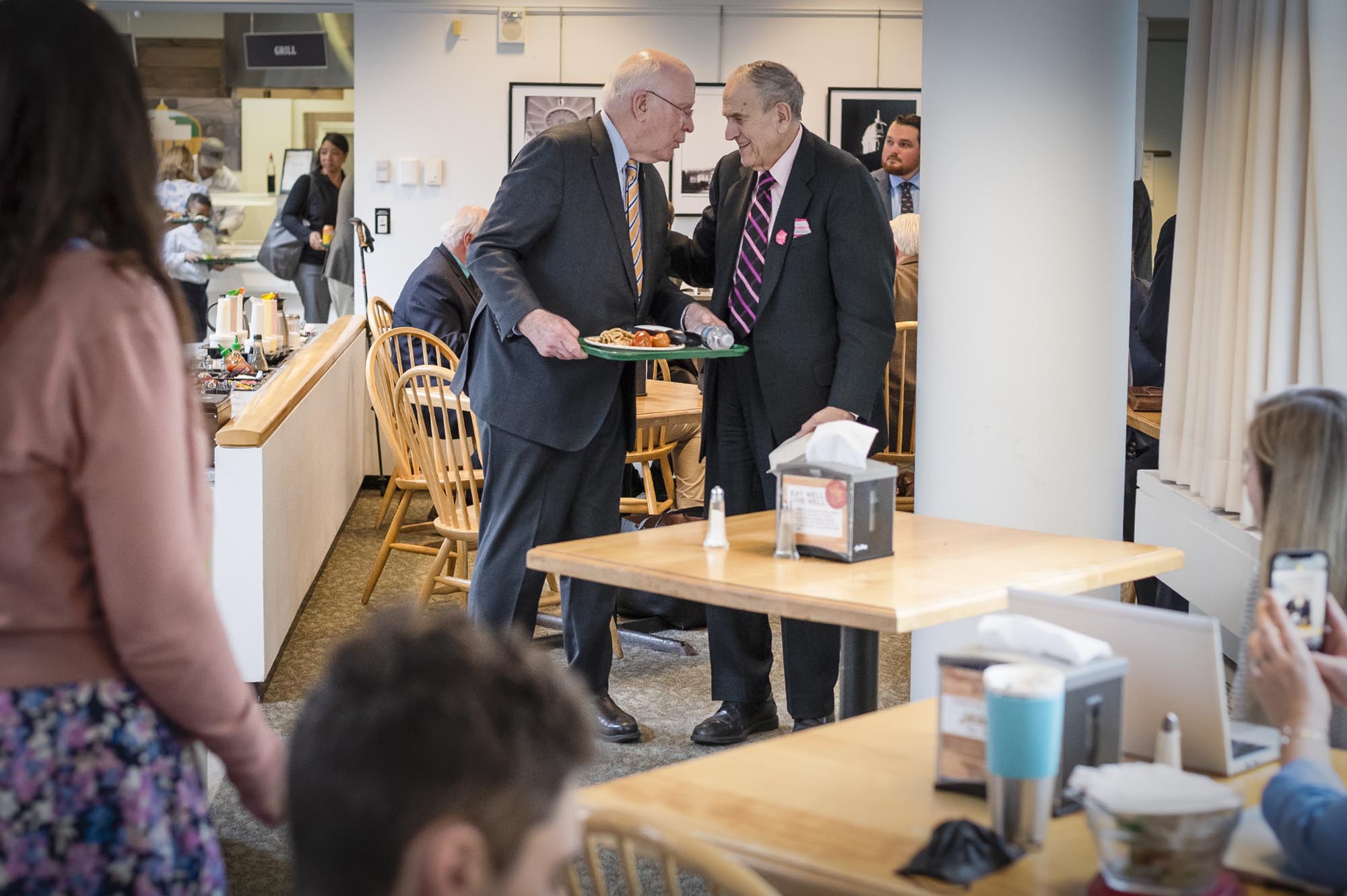
It’s a lesser-known committee that has conferred Mazza’s true power in the Senate: the somewhat redundantly named Committee on Committees, a three-member panel that decides which senators serve on, and lead, each committee. Since 1997, Mazza’s Senate colleagues have elected him “the third member” of that committee, which also includes the pro tem and the lieutenant governor.
It’s the kind of position that could be used to steer policy outcomes, by stacking a committee with those who might vote one way or another. But that’s not how Mazza approaches the role, colleagues say.
“He’s sympathetic to people’s bottom-line needs and he will defend their needs,” said Baruth, who currently serves on the committee with Mazza and Lt. Gov. David Zuckerman. “Dick is a very people-oriented person, and he keeps humanity in the equation at all times.”
According to Sears, “Obviously behind the scenes he has a lot of power, but he’s very quiet about it — never flexes his muscles, let’s say.”
‘Finger on the pulse’
Mazza’s politics are decidedly centrist.
“I would describe him as sort of like myself: an old Vermont moderate Democrat,” said Kitchel. “Certainly, fiscally, he’s right out of Howard Dean’s playbook, but so am I.”
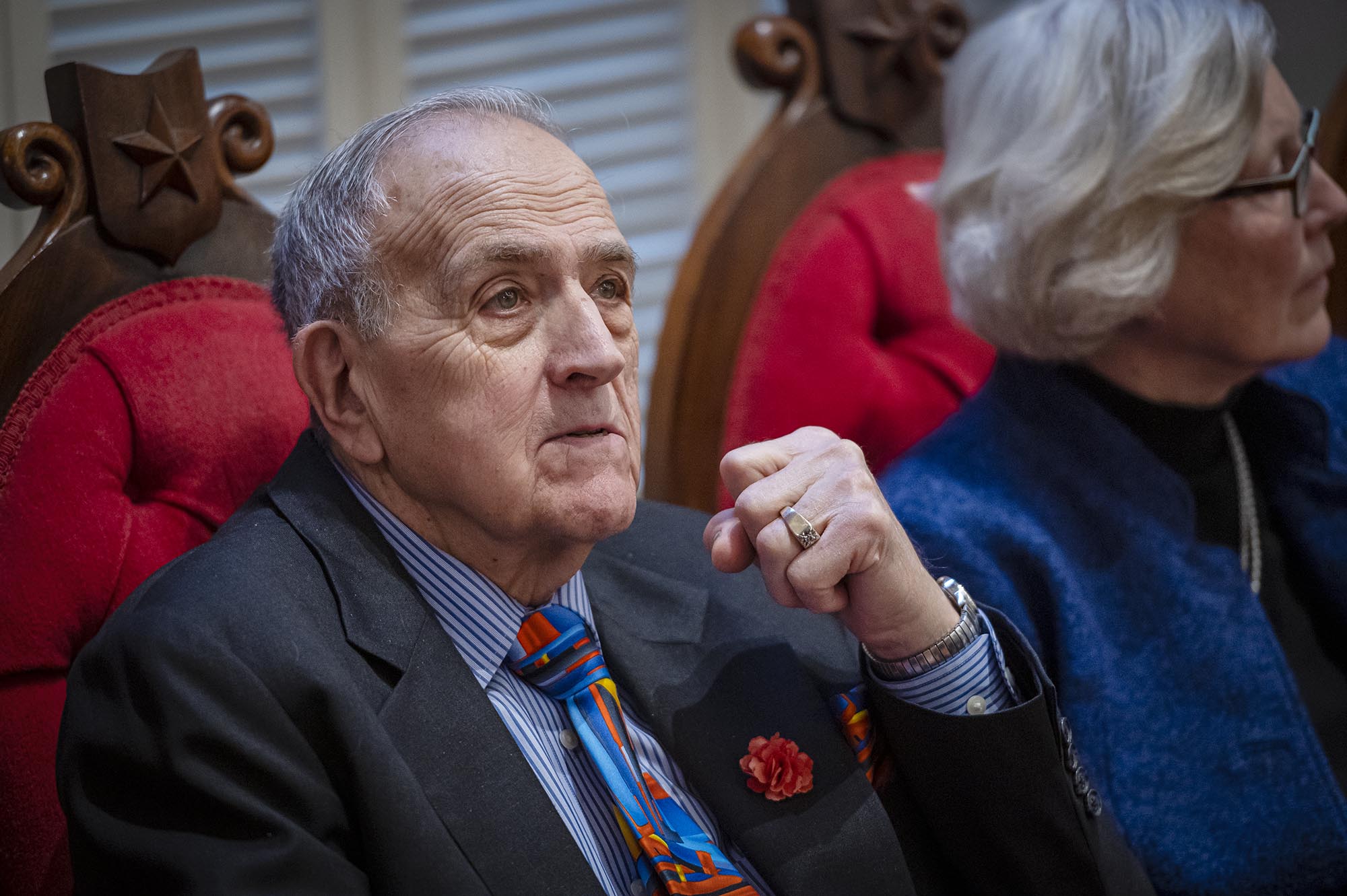
Mazza’s views haven’t changed much over the decades, but as the Democratic Party’s ranks have grown in the Legislature, Mazza has found himself at its right flank — likely to oppose new government programs or higher taxes and equally likely to sustain Scott’s vetoes. He and Scott both see themselves as standing up for a forgotten Vermont.
“He’s truly, truly blue-collar to his core,” Scott said. “He has his finger on the pulse of his community.”
According to Mazza, his politics are informed by the scuttlebutt he picks up at the store, where constituents buttonhole him as he restocks the shelves. If a customer mentions a problem with the Department of Motor Vehicles, he’ll pick up the phone and find just the right person to resolve it.
“Every day I’m here with the public in the store, so I hear a lot of comments,” Mazza said. “They know they can reach me.”
Similarly, executive branch leaders looking to win legislative support for a top priority and aspiring statewide candidates looking for an endorsement know it’s wise to pay Mazza a visit at the store.
“It’s almost like office hours,” Dean said. “If somebody has a problem, they can go to the store and buy a pound of hamburger meat and he fixes their problems.”

Mazza isn’t always predictable. In 2000, when the Legislature was considering establishing civil unions for same-sex couples, Mazza, who is Catholic, came under considerable pressure to vote no.
“He struggled with it,” Shumlin said. “Literally his priest at church spoke directly to him from the pulpit to outline how destructive this would be.”
At one point, the bishop called a meeting with Mazza, Shumlin, Sears and a couple other top legislators to try to persuade them to scuttle the bill — but it didn’t work, and Mazza ultimately voted in favor of civil unions.
“I thought, what courage did Dick Mazza have meeting with the bishop of his own church,” Sears said. “It was something I’ll never forget — and that’s the type of guy Dick Mazza is.”
More than politics or policy, Mazza believes in process. He thinks fellow legislators should play by the rules, treat each other with respect, keep their promises and avoid grandstanding. He loathes partisanship and seems to enjoy endorsing Democratic and Republican candidates alike.
“I think it’s the Vermont style,” he said. “People in Vermont — you may disagree on an issue, but as far as friendships and relationships, it’s never nose to nose.”
Former Gov. Jim Douglas, another confidante, joked, “If we had 180 legislators like Dick Mazza, we wouldn’t have any problems because everyone would get along, everyone would be congenial, everyone would be centrist and we’d arrive at good policy decisions that would do well for the state.”
‘A nice little business’
Mazza doesn’t get out much and never has.

Since his parents opened the store on the first floor of their home, in 1954, Mazza has lived and worked in the same building. Back then, he recalled, few people lived year-round on Malletts Bay. After a strong summer season fueled by camp owners and boaters, customers would disappear.
“We struggled through,” Mazza recalled. “I’ve got the books. Some days sales were 30, 40 bucks. It was crazy.” But eventually, the business grew. “Every time we had a few thousand dollars (in savings), we’d add on another 10 feet, 10 feet, 5 feet” to the building, he said. “I think there’s 12 additions to this place.”
The youngest of five boys, Mazza graduated from Winooski High School in 1957 and contemplated enrolling at Saint Michael’s College — as his father hoped he would.
“But I was the only one home with him at the store,” Mazza said of his father. “The morning I was supposed to go sign up, I came downstairs and said, ‘No, I’m going to stay here with you. … So from that day on, I never left. That was 69 years ago.”
Mazza points to his lack of a college diploma as a reason he never considered running for higher office. “I never felt qualified to do that,” he said. “Just being a high school graduate, I was so pleased to be elected to the Senate.”
He met his wife, Dolly, at the root beer stand across the street, and they raised their children — Mike is now 57 and Melissa 54 — next to the store, which had its pluses and minuses.
“It was a fishbowl. No walking around in your pajamas,” Mike said. “But it was a heck of a pantry for snacks.”

In the early days, his kids recalled, Mazza opened the store at 6 a.m. and closed it at 10 p.m. — often waking up in the middle of the night to receive a delivery of beef.
“I don’t think there’s ever been a sick day that I can remember,” Mike said. “He’s always been there, never slept in.”
Mazza does not take vacations and hates to travel, according to his kids. The last time he left the state, they said, was for a family wedding in Maine in 2019 — and only then begrudgingly. “Why would you leave?” he would say, according to Melissa.
“He never took on any hobbies,” Mike said. “Between politics and the store, that’s it. No other interests.”
Mazza does love cars and for many years coveted a Corvette, Mike said, but he was too frugal to buy one. Eventually, after much prodding, he did. And then he bought another. And another. Now, he owns about a dozen classic cars and keeps them in a building behind the store. Known as “the museum,” it also features a room full of vintage tractors and a replica of a 1950s diner.
The museum has been a site of much political intrigue over the years, hosting meetings with power players and fundraisers for Mazza’s favored political aspirants. But there’s a little-known secret about his love of cars: He doesn’t know the first thing about how they work.
“If I asked him to go get me a three-eighths ratchet with a nine-sixteenths shallow-well socket on it, he’d come back with a ball-peen hammer,” said Scott, an auto aficionado. “I don’t even know if he can put air in the tires.”
Mazza spends much of his time in the office at the back of the store. It’s a modest affair, with a worn leather chair, filing cabinets and a window looking out on the store’s kitchen. Nearly every square inch of wall is covered with Mazza memorabilia: models and photos of classic cars; state license plates (#1, #2, #25); newspapers and magazine covers featuring his face; class pictures of the House and Senate from his father’s day and his own; photos of his friends and allies.
“A lot of memories in here,” he said. “A lot of memories.”

It’s hard to imagine Dick Mazza’s General Store without Dick himself, but he has begun to consider what will come of it when he’s no longer able to run it. Neither Mike nor Melissa is interested in taking over, so it will likely be sold.
“I would like to see it go on, if at all possible,” Mazza said. “It’s a nice little business.”
‘Family is first’
Despite the long hours at the store and the Statehouse, Mazza has always prioritized his family, which now includes two grandchildren and two great-grandchildren.
Dinner was sacrosanct — and Thursday and Sunday afternoons were reserved for the kids. Holiday gatherings remain mandatory, including an annual anniversary outing to Al’s French Fries, where Mazza and Dolly went on one of their first dates.

“Family is first,” Melissa said. “He’s always talked about how he can have all the success in the world, but what matters most is family.”
Fortunately for him, his family hasn’t strayed very far. Mike opened his own business, Mike’s Auto Parts, across the street from his father’s store in 1988. “I’ve seen him almost every day of my life,” Mike said.
And Melissa has joined her father’s other line of work. Since Scott became governor in 2017, she has served as private secretary to his secretary of administration. These days, she’s playing the role Mazza once did for his father: driving him to Montpelier whenever he has the energy to make it to the Statehouse.
“I cherish the time,” she said. “It’s awesome to have that alone time in the car. Not very often do you get to have your father’s undivided attention for 45 minutes.”
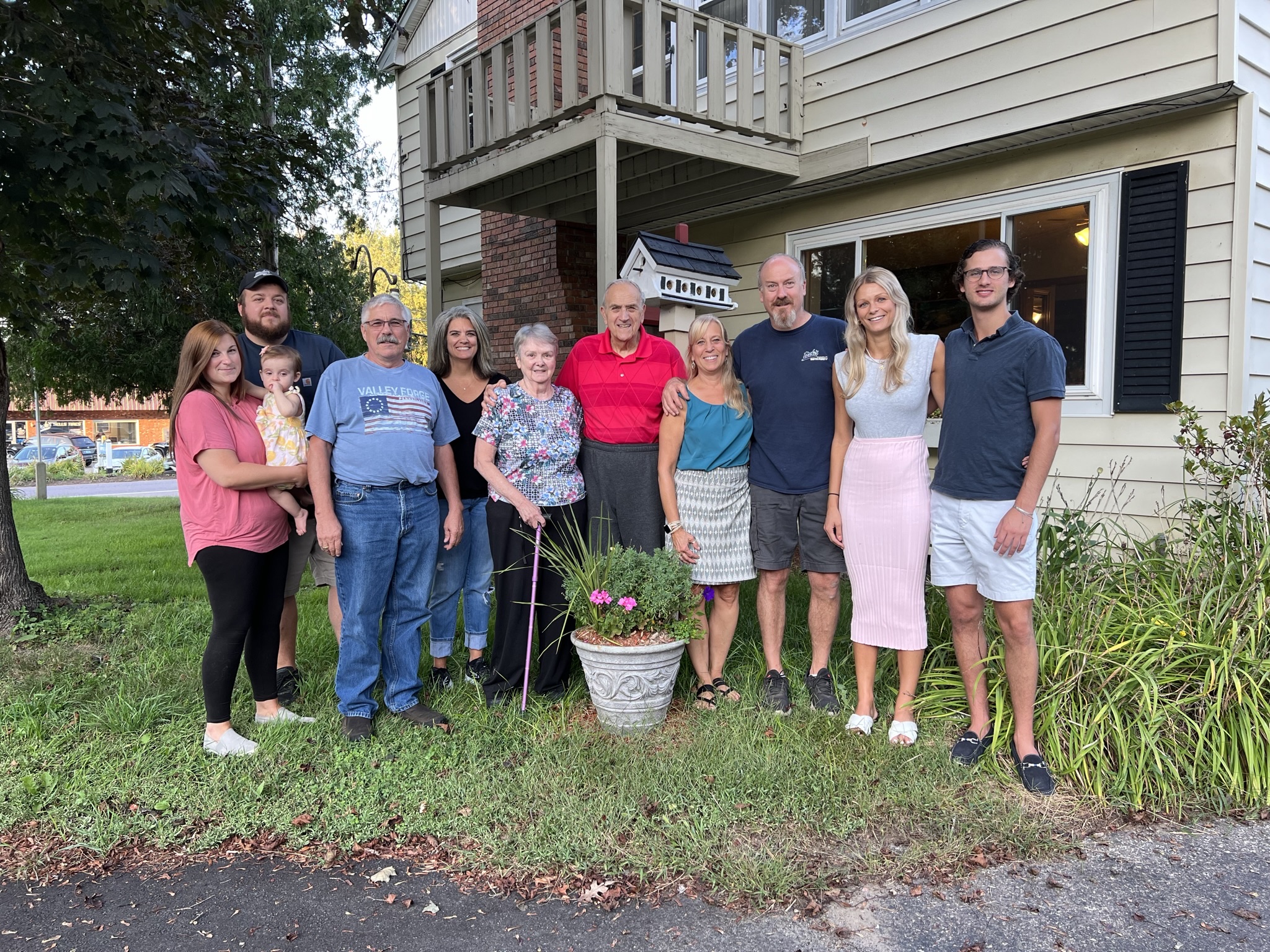
Mazza’s family extends beyond blood relations. His relationship with Scott, who is 19 years his junior, can be hard to categorize — but it goes well beyond what is typical in politics.
“They wear many hats in that relationship,” Melissa said. “They’re best friends. They’re mentors to each other. They’re like father and son in some respects.”
Scott, whose own father died when he was young, befriended Mazza when he joined the Senate in 2001 and landed first on the institutions committee and then the transportation committee. They eventually spent most of the legislative day together.
“We hit it off almost immediately. He made it feel so comfortable, and he was there to show me the ropes and put me under his wing, so to speak,” Scott said. “He hasn’t left my side since. Once you become his friend, you’re his friend forever.”
As Scott began to wind down his car-racing career and ramp up his political endeavors, he recalled, he bought “a glorified house boat” with a friend and kept it on Malletts Bay. Though Mazza had spent his entire life across the street from the bay, he had never been on a boat — in part because he’d never learned how to swim. Scott eventually convinced him to go out for a spin.
“We got him a little sailor’s hat,” Scott said.
The future governor would spend weekends on the boat and help Mazza open the store early on Sunday mornings.
“I’d go out and sweep the parking lot — things that weren’t getting done that I could do. He taught me how to grind meat,” Scott said. “We double-grind at Mazza’s, because that’s what makes it so good.”
One morning, according to Scott, the president of the University of Vermont pulled up to the store to buy a cup of coffee and noticed Scott sweeping or washing the windows. The president turned to Mazza and said, “Is that your employee out there? You know, he looks a lot like Senator Scott.”
During an interview in his ceremonial Statehouse office, Scott teared up when he was asked to describe his relationship with Mazza.
“He is absolutely family to me,” the governor said. “He would do anything for me, and I would do anything for him.”
Though Kitchel is right that Mazza is “not one to reveal” or emote, it’s clear that he feels the same way about Scott.
“He and I have been close from Day One,” Mazza said during the interview in his office at the store. “We’re very, very, very good friends. We get along so well.”
After 45 minutes of being prodded to reveal and emote, Mazza did what he often does at the end of an interview: signaled, somewhat brusquely but certainly not rudely, that he was done talking.
“Well, it’s quarter of 11,” he said, standing up and turning toward his walker. “I have something at quarter of 11.”
