



As the Vermont Senate launches into its work on this year’s budget adjustment, passed last week by the House, the Scott administration has weighed in on the bill, which proposes to increase the state’s spending by tens of millions before July 1.
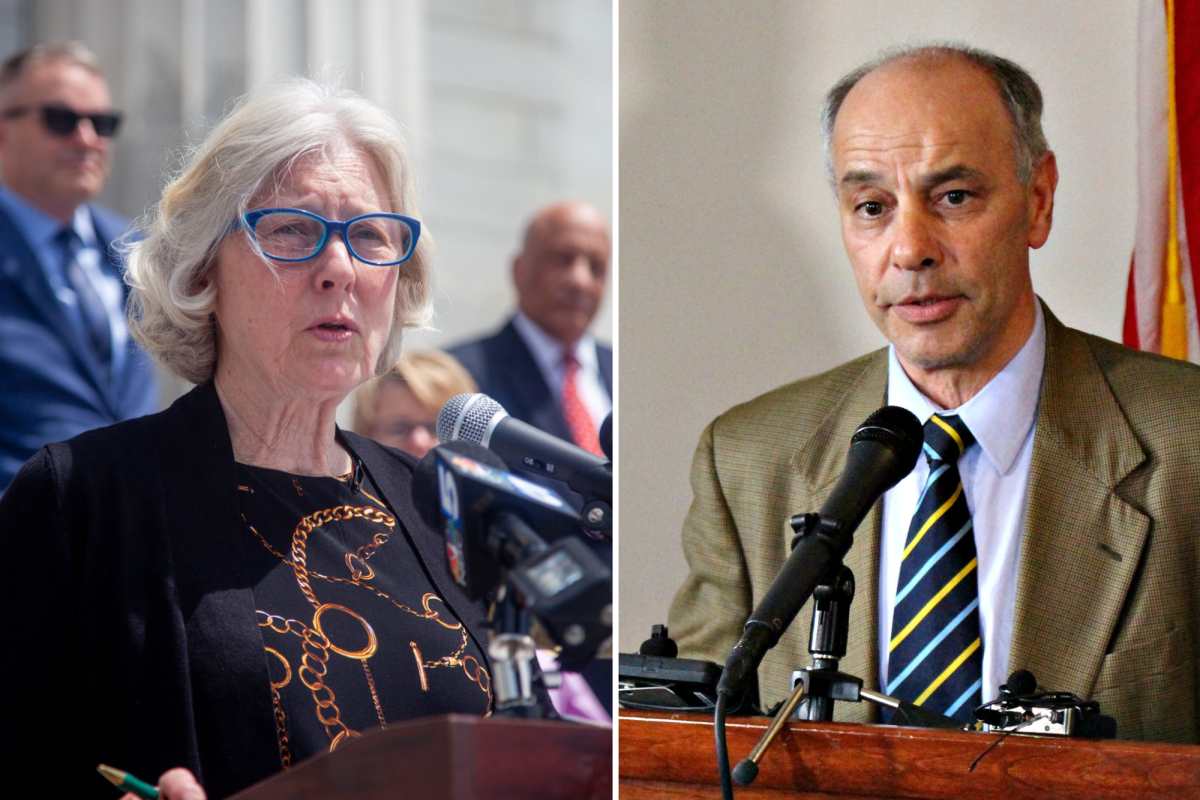
“The Administration appreciates that the House included most of the recommended adjustments to (Fiscal Year 2025’s budget) and accepted the Governor’s priorities,” wrote Secretary of Administration Kristin Clouser to Sen. Jane Kitchel, D-Caledonia, who chairs the Senate’s appropriations committee, this week.
“The Administration is concerned, however, with House additions to the Governor’s recommended budget adjustment which, in aggregate, spend $29.2 million more from the General Fund in FY24,” she wrote.
The administration’s so-called “Dear Jane” letter to the powerful budget-writing chairperson is an annual affair, kicking off three-way negotiations between the House, Senate and Governor’s Office over the mid-fiscal-year budget adjustment. The House’s proposal indeed exceeds the Scott administration’s own plan by roughly $30 million — a spending increase that, according to Commissioner of Finance Adam Greshin, Vermont cannot afford right now.
“Unlike in the recent past, where we’ve had, I would say, enough money to fund virtually everything… this year, we have a finite amount of money,” Greshin told VTDigger in a Thursday interview. “As we kind of reenter what I would call the traditional budgeting that we did pre-pandemic, we find that we have limited resources and we have to direct those resources toward the highest priorities.”
High among the administration’s concerns with the budget adjustment bill is its current language extending the state’s emergency motel housing program for Vermonters experiencing homelessness through June. The pandemic-era program has been a source of major contention in Montpelier — even, at times, among Democratic lawmakers. The Scott administration has been arguing since last year that it’s time to wind down the multi-million dollar program.
“I think the Governor’s message would be that we need every resource we can bring to bear to solve the problem long-term, which is building more housing and providing more opportunities for people to transition into long-term, secure housing,” Greshin said. “We are working day and night feverishly on building out our housing stock and that is a long-term, arduous and expensive process.”
Legislative leaders have insisted that they, too, want to increase Vermont’s overall housing stock long-term. But in the meantime, Rep. Theresa Wood, D-Waterbury, chair of the House Committee on Human Services, told her House colleagues on the floor last week that there are hundreds of vulnerable Vermonters relying on the motel program, including children and people with disabilities. She posed the question: Where are they to go until new housing is finally built?
“Those are individuals I’m not willing to say at this point in time that, ‘You’re out on the street, and you must find your own way,’” Wood said last week before the House voted 112-24 in favor of the budget adjustment. “So while this bill is not perfect, and we recognize that we do not want to have an ongoing reliance in the way we have had for the last several years on hotel and motels, we do not have an option for these individuals at this point in time.”
Also of concern to the Scott administration is $10 million devoted to grants for municipalities hit by this summer’s catastrophic floods. That pot of money is but one subset of millions of dollars in the budget adjustment bill that representatives have dubbed a “life raft” for flooded communities. Often passed into law by the legislative session’s midpoint, the budget adjustment is lawmakers’ first and fastest way to dole out disaster relief funds.
But on this $10 million, Greshin said the administration is not so sure. The language in the bill is vague, he said, and doesn’t specify how exactly the money will be distributed and for what purpose.
Responding to Greshin’s critique of the $10 million allocation as vague, Rep. Diane Lanpher, D-Vergennes, who chairs the House Appropriations Committee, told VTDigger on Thursday evening, “He’s not wrong.”
Lanpher explained that her committee put the finishing touches on the bill in just a day and a half after state economists issued their updated revenue forecast. There wasn’t enough time to hear hours of testimony from stakeholders, she said. All her committee knew was that flooded communities needed money, and they needed it fast.
“We had some information from the city of Montpelier, writing to us, saying what they thought they needed, Barre writing what they thought they needed, didn’t know from some other towns,” Lanpher said. She had a hallway conversation with the Vermont League of Cities and Towns to hear their input.
The idea with the $10 million pot, Lanpher said, was not to be prescriptive. Now, she said, the Senate Appropriations Committee can step in and hammer out the details.
Greshin argued that lawmakers should instead dedicate that money to federal natural disaster match obligations in order to leverage more funding from the Federal Emergency Management Agency.
FEMA match dollars are especially critical, Greshin said, because they will leverage federal funds to be used for future hazard mitigation work, to hopefully improve Vermont’s infrastructure and soften the blow of future natural disasters.
“There again, you’re looking at solving the long-term problem — or mitigating the long-term problem — versus spending money up front,” Greshin said. “We’re trying to mitigate that.”
But Rep. Jonathan Williams, D-Barre City, said on the floor last week that the $10 million can’t wait. Municipalities like Barre City are trying to write their upcoming budgets, due this spring, and are “in real trouble” with million-dollar-plus shortfalls, Williams told his colleagues.
On the other hand, Williams said, the FEMA match dollars could wait until this year’s “big bill,” or fiscal year 2025 budget, which should pass at the end of this legislative session and take effect in July.
“We have done the research. We have done the math,” Williams said. “This money was needed last week and yesterday and will be needed tomorrow.”
