


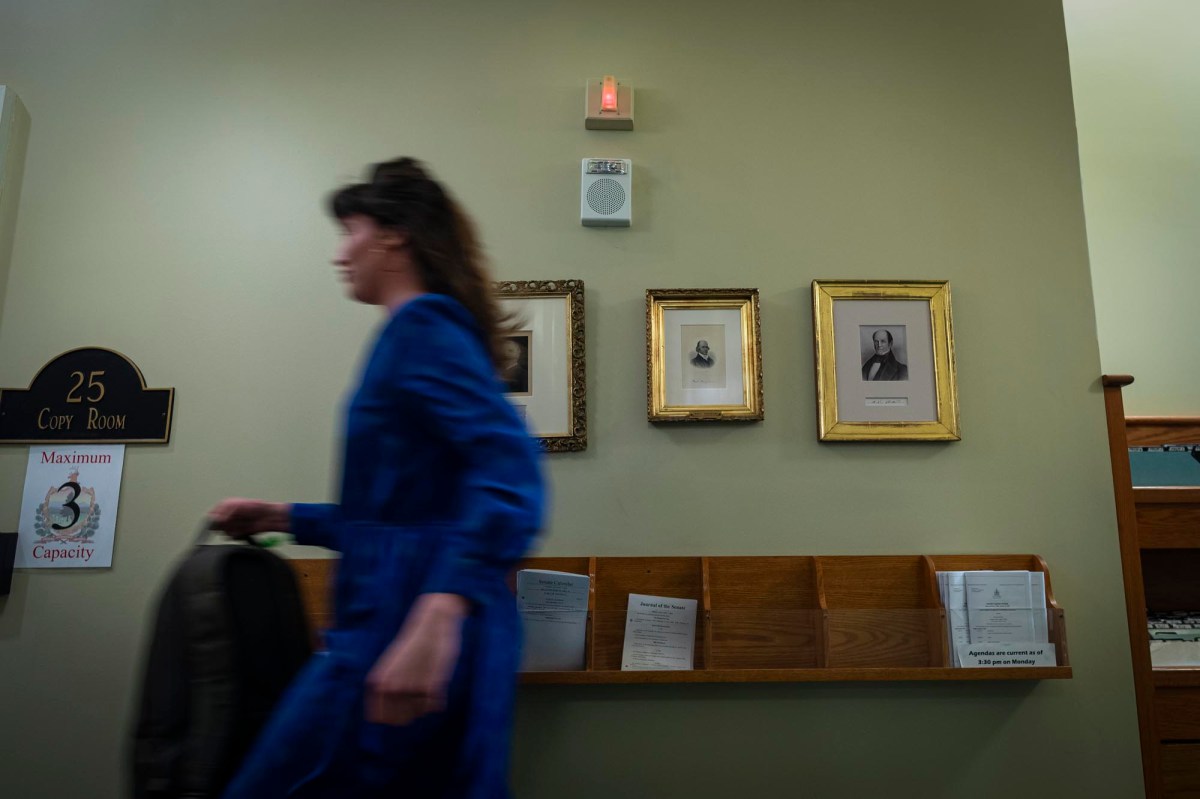
If you’ve spent enough time in the Statehouse, you have certainly heard the bells that ring throughout the building. And you have probably noticed the lights — sometimes red, sometimes green — flashing in the building’s many hallways and rooms.
It’s all a bit reminiscent of high school. But what do the bells and lights actually mean? It has come to our attention here at Final Reading that inquiring minds would like to know.
So I did what any good Statehouse scribe would do and sought out Senate Secretary John Bloomer and House Clerk BetsyAnn Wrask. Despite having, I’m sure, plenty of official business to attend to, they were excited to explain.
Here goes: The House and Senate employ different combinations of lights and sounds to warn of an imminent floor session or roll call vote. (Roll calls, unlike the more typical voice votes, put lawmakers’ individual votes into the record.)
The Senate employs a single sound pattern to summon members to the chamber: a quick double chime, the second tone slightly higher than the first. It is accompanied by a green light, intended to match that chamber’s furnishings, according to State Curator David Schutz.
Meanwhile, the House uses two sound patterns. One — a single tone — warns that the body is about to gavel in. The other — three quick notes in a row, all the same pitch — signals a roll call is underway. The House bells are accompanied by a red light that, again, matches that chamber’s decorations.
Wrask said this combination is designed to catch lawmakers’ attention no matter where they are in the building, or however deep they’re buried in their work (or their lunch). And the warnings are particularly useful in the final weeks of the legislative calendar, Bloomer said, when there can be multiple floor sessions, in both chambers, on the same day.
The bell and light system as we know it was installed in the mid-1990s, Schutz said, during a major Statehouse renovation.
These days, Bloomer and Wrask are typically the ones sounding the bells and switching on the lights for their respective chambers, from small black panels built into each of their desks. (I’ve been told that well-behaved pages can sometimes also have a go.)
Do Bloomer and Wrask feel powerful summoning elected officials with the mere press of a button? Ever humble, they brushed aside the question. I get it — they do it every day. But consider what happened when Bloomer sounded the Senate bell at my request, at a time the body was definitely not scheduled to be in session.
Within 30 seconds, several people — including at least one member of the press corps (I won’t name names) — began to file into the chamber to some confusion. Two pages came running — literally, running — into the room, only to find that their services were not at all required.
Like moths to a flame, am I right?
— Shaun Robinson
In the know
As the Vermont Senate launches into its work on this year’s Budget Adjustment Act, passed last week by the House, the Scott Administration has weighed in on the bill, which proposes to increase spending significantly before July 1.
“The Administration appreciates that the House included most of the recommended adjustments to (Fiscal Year 2025’s budget) and accepted the Governor’s priorities,” wrote Secretary of Administration Kristin Clouser to Sen. Jane Kitchel, D-Caledonia, who chairs the Senate’s appropriations committee this week.
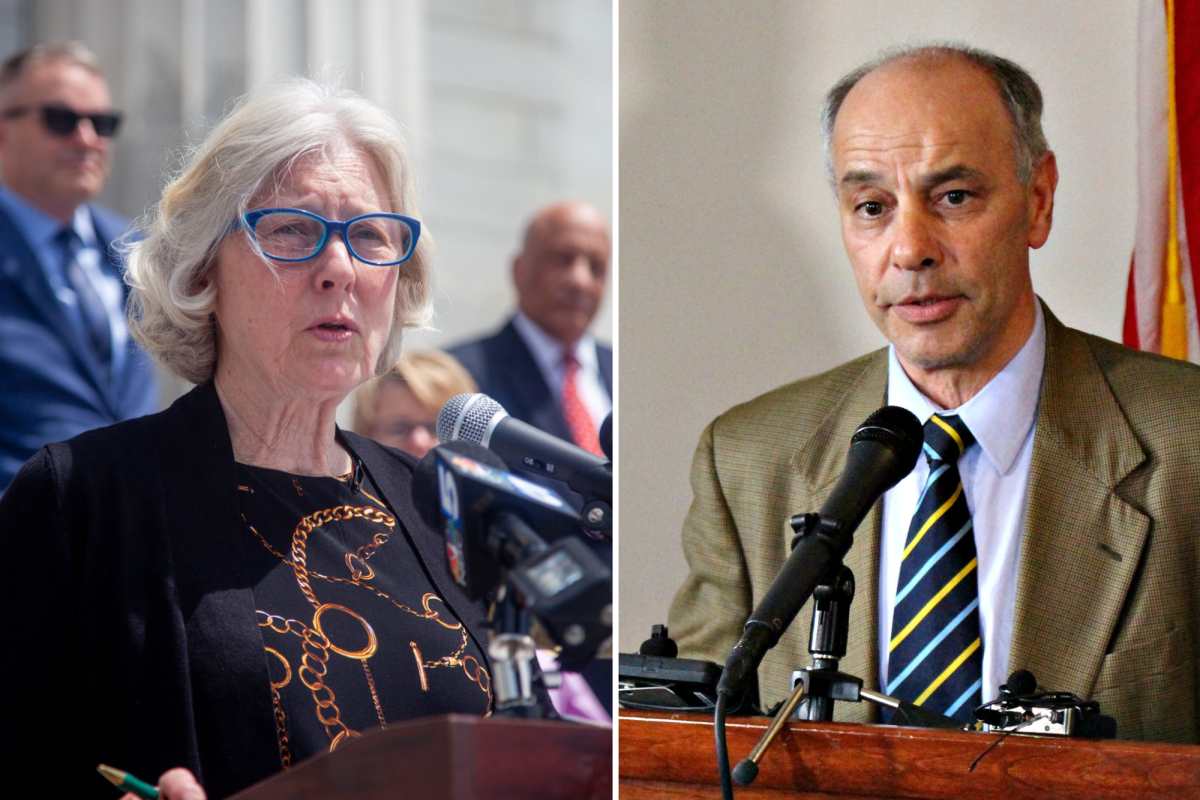
“The Administration is concerned, however, with House additions to the Governor’s recommended budget adjustment which, in aggregate, spend $29.2 million more from the General Fund in FY24,” she wrote.
The administration’s so-called “Dear Jane” letter to the powerful budget-writing chairperson is an annual affair, kicking off three-way negotiations between the House, Senate and Governor’s Office over the mid-fiscal-year budget adjustment.
— Sarah Mearhoff
Two years ago, a group of lawmakers considered banning the use of a class of pesticides called neonicotinoids, at least until state officials developed a set of required best management practices. Later, lawmakers removed the ban from the bill before it passed.
Meanwhile, those best management practices, drafted after more than a year of meetings, were published earlier this month by the state’s Agricultural Innovation Board. Developing the practices has been the 16-member board’s main charge, but the board’s recently released report largely recommends additional research.
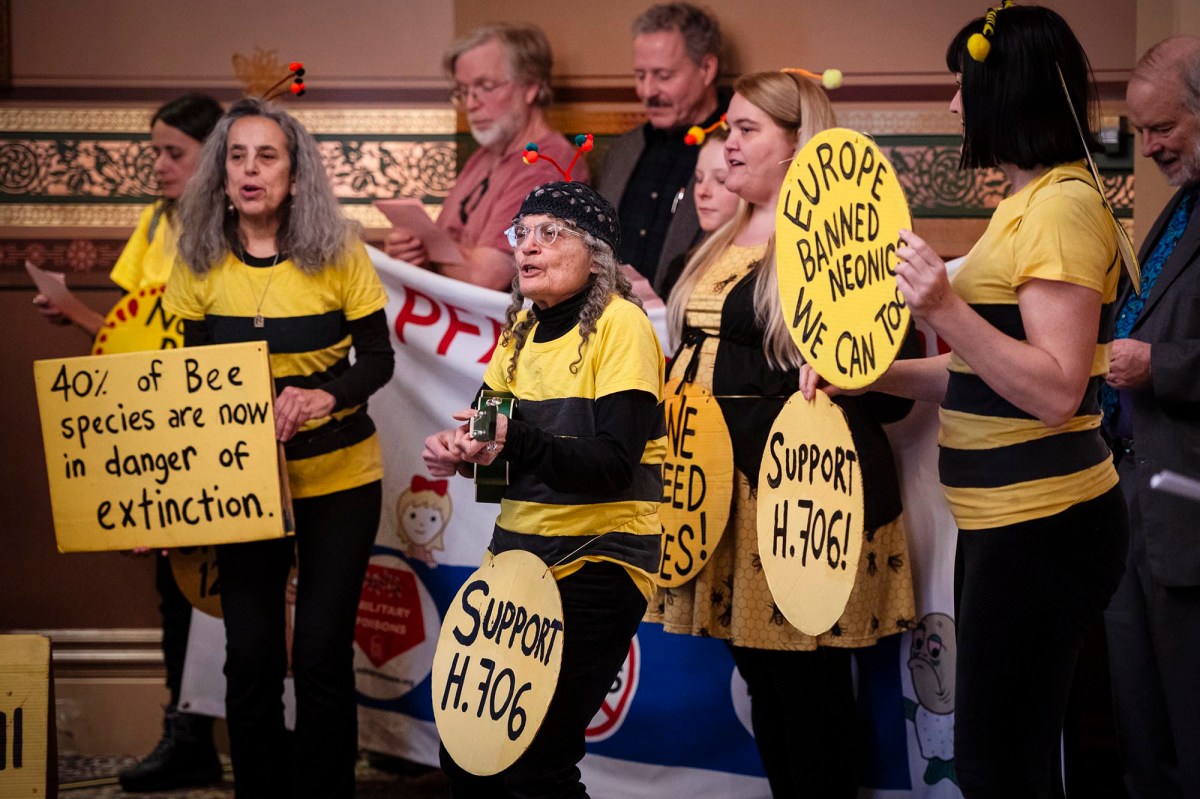
This year, however, new research about insects’ exposure to neonicotinoids in Vermont and a new law in New York State that restricts their use have laid, perhaps, a sturdier foundation for a new bill, H. 706, that proposes banning them altogether.
“I think there’s more information available, and then that could end up translating to more support,” Rep. David Durfee, D-Shaftsbury, who chairs the House Agriculture, Food Resiliency and Forestry Committee, told VTDigger
— Emma Cotton
On the move
A bill that will relieve municipalities of paying state property taxes for certain properties damaged in last year’s floods is expected to be among the first new laws enacted in 2024.
On Wednesday, the Vermont House approved S.160, which legislators hope will ease some of the financial burden of flood-impacted municipalities facing dozens of potential property tax abatements.
Gov. Phil Scott has indicated his support for the measure and is expected to sign the bill as early as next week. But how much will it help?
— Erin Petenko
The House Committee on Agriculture, Food Resiliency and Forestry unanimously voted to support H.614, a bill that focuses on eliminating timber trespass, on Thursday afternoon. The bill would establish land improvement fraud as a crime.
— Emma Cotton
Visit our 2024 Bill tracker for the latest updates on major legislation we are following.
Free thinking
The Vermont Statehouse is a beacon of democracy, free thinking and spirited debate.
One such debate erupted outside the Senate chamber Thursday when former Senate candidate and current Vermont Daily Chronicle social media director Paul Bean approached an eighth-grade page — whom VTDigger will not name because she’s a minor — and asked her to print something for him. One thing led to another and she accused him of being a “men’s rights activist.”
Bean engaged. Feminism used to be about equality, he said, but now it can be chalked up to, “We hate men.” The page asked if Bean knows any feminists, to which Bean replied, “I have met thousands.”
The page asked Bean if he was aware that women could not take out loans without a man’s co-signature until the 1990s (not quite accurate, but the spirit was there). Bean was incredulous. They fact-checked the claim online. In fact, that ended in 1974 with passage of the federal Equal Credit Opportunity Act. (In fairness, it is my understanding that kids these days think of any year before 2000 as “the 1900s.”) “That’s still pretty late,” she said.
Bean then turned to the Bible. “Are you familiar with the Book of Genesis?” he asked and launched into the whole Adam, Eve, rib, serpent, apple thing. “That’s the way this world is,” he said.
That’s when the debate was abruptly cut short by none other than Vermont Democratic Party Executive Director Jim Dandeneau, who interjected and asked the page, “Is this free thinker bothering you?” Bean never got his print-out.
You may be wondering: How did I hear this entire exchange? I hear everything 🙂
— Sarah Mearhoff
What we’re reading
Narcan is now available to every school in Vermont, Vermont Public
What’s a mobile home park? A Vermont House bill could change the definition, Community News Services
