


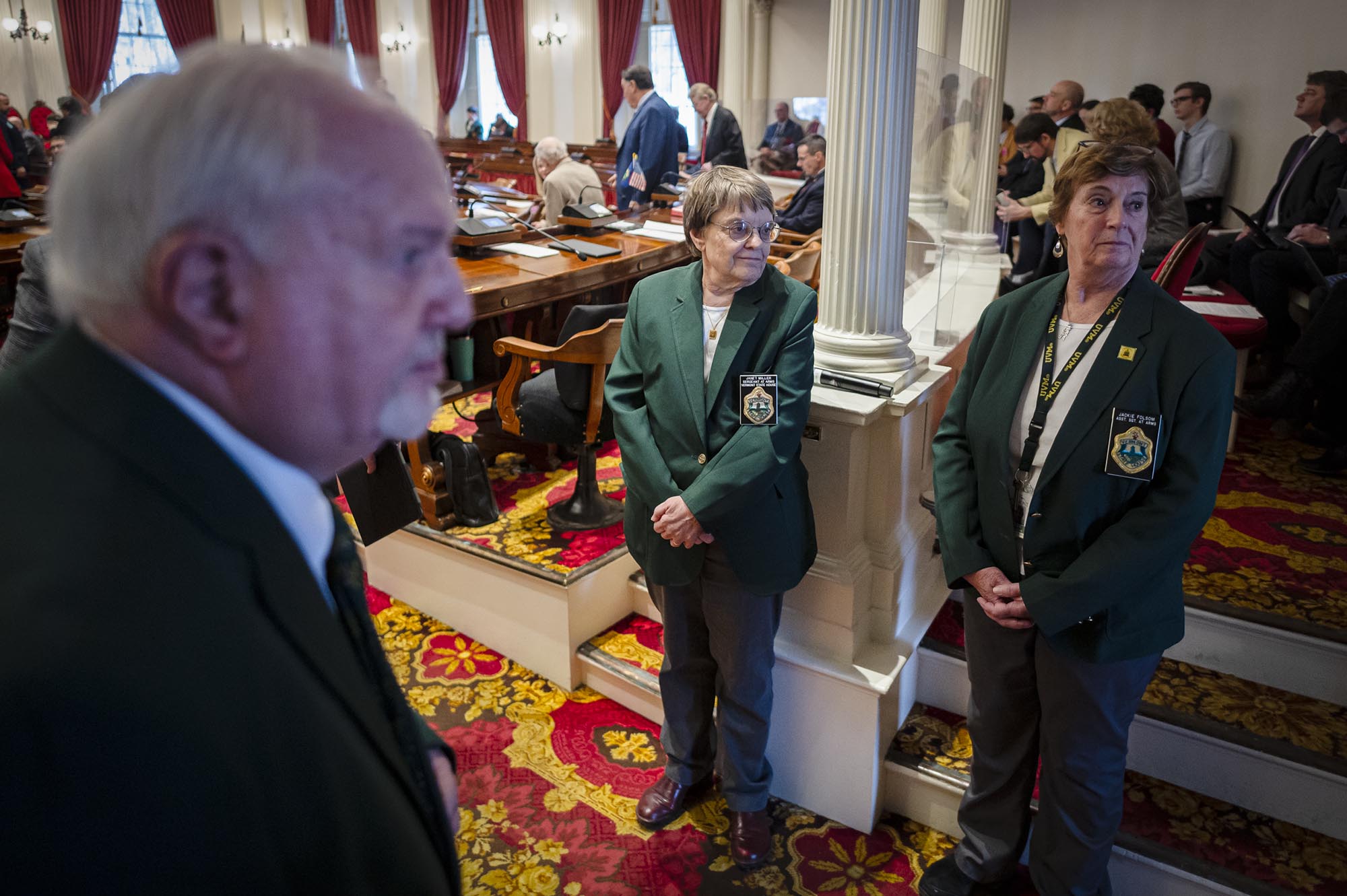
As many lawmakers were gearing up for yet another stern talking-to from Gov. Phil Scott on Tuesday, Democratic members of the Senate gathered at lunchtime to ponder something entirely different: who should they elect to be the Statehouse’s next sergeant-at-arms?
Janet Miller, who has held her post for nigh on nine years, plans to retire on March 1. That same day, members of the House and Senate are slated to convene a joint session to vote for her replacement.

Two people are vying for Miller’s job, which includes both ceremonial duties and a wide range of practical responsibilities, including overseeing both the Capitol Police Department and the Legislative Page program.
One is Agatha Kessler, the deputy director of the state’s Office of Professional Regulation. The other is Mike Ferrant, who heads up the Office of Legislative Operations — an office tasked with providing administrative support to the many legislative committees and their chairs.
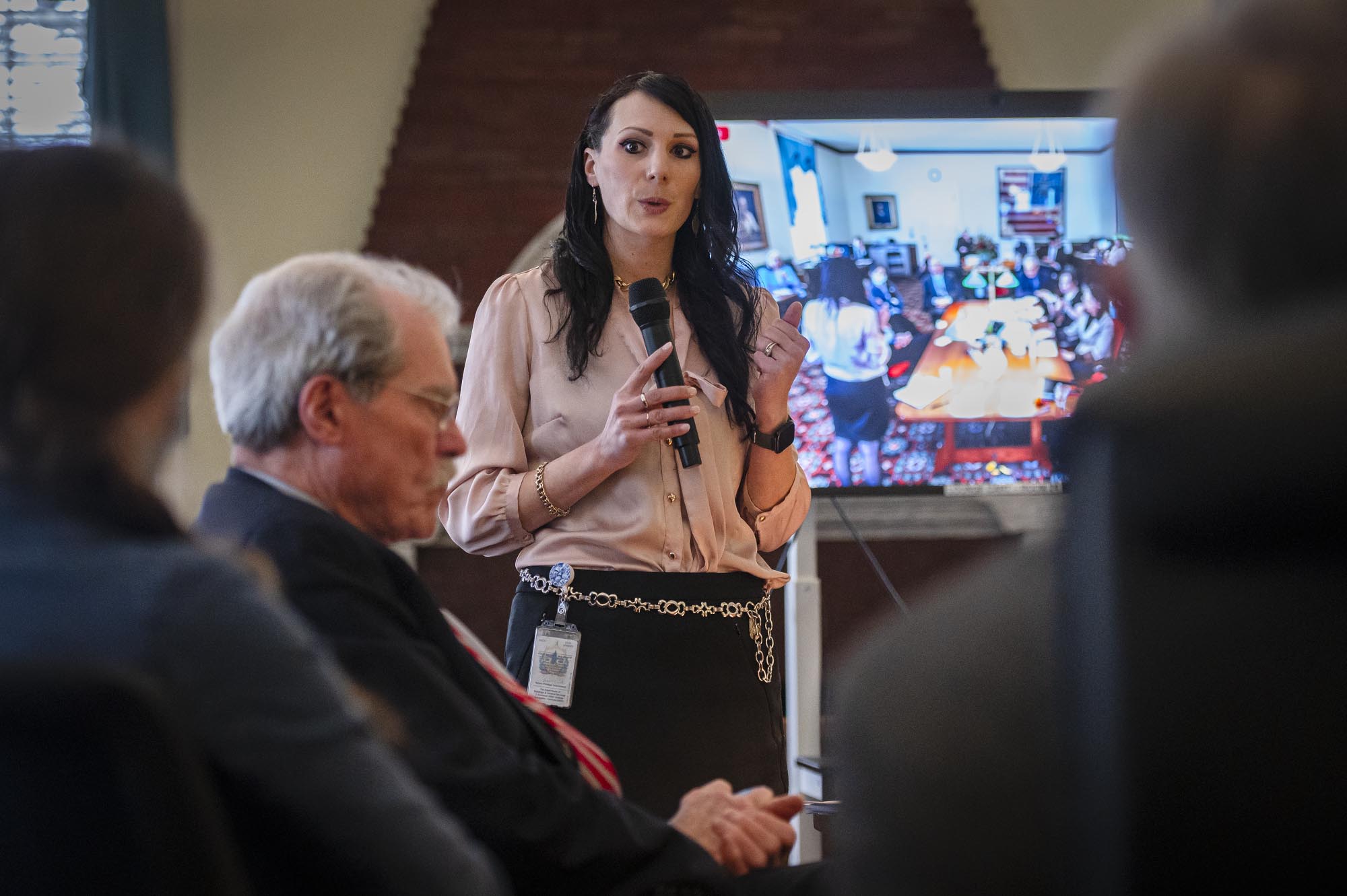
Not unlike a high school debate for student council president, Kessler and Ferrant had about 15 minutes each on Tuesday to make their pitches.
Kessler talked up her experience working in the Office of Legislative Counsel for almost a decade before she took her current job. She said she’s interested in making changes to the Legislative Page program to account for a steady decrease in paper communication in the building, and would consider installing new security features there such as metal detectors.
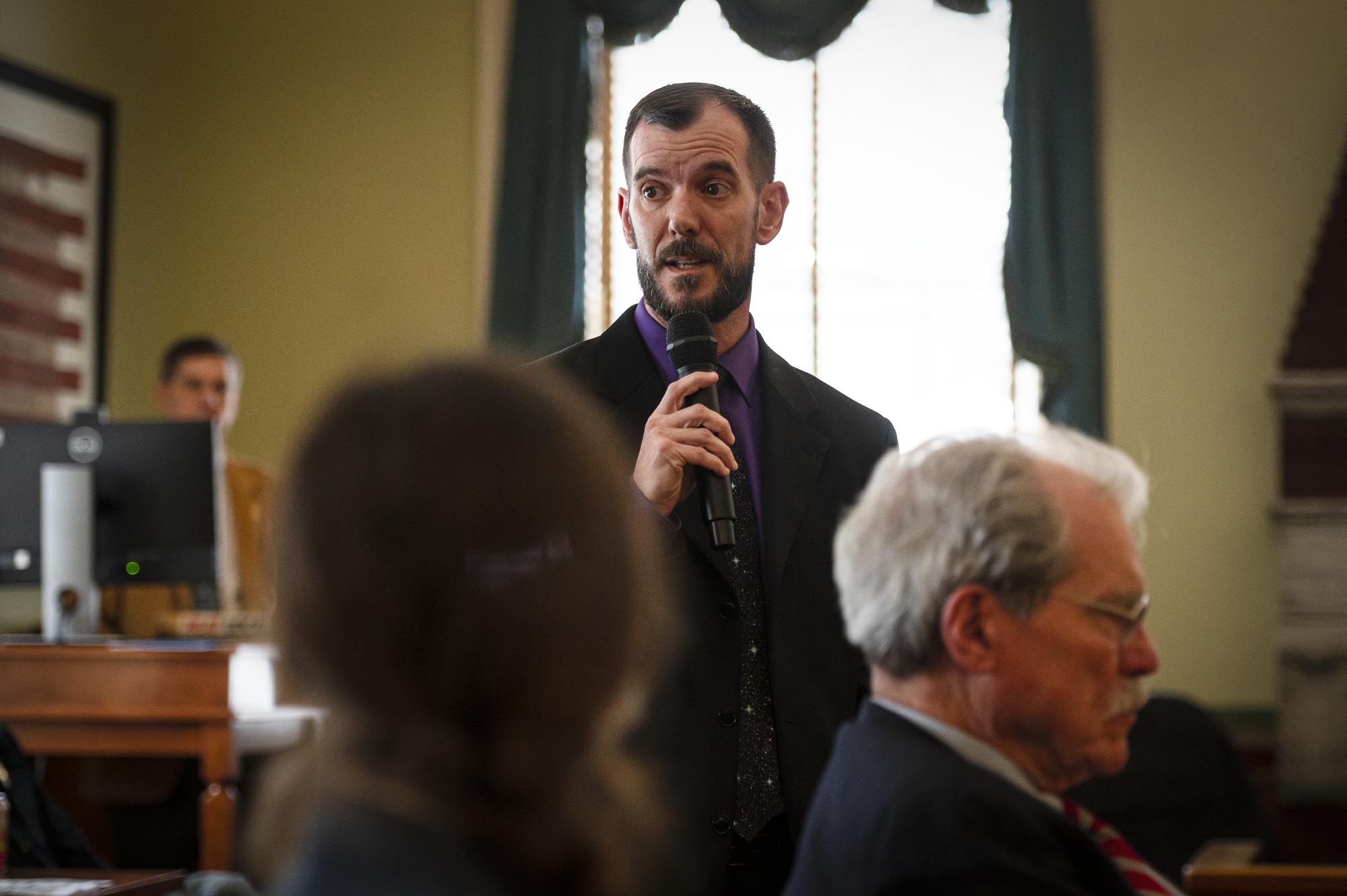
Ferrant, meanwhile, pointed to his longtime past experience as an engineer in the U.S. Army Reserve, which he said would make him a good candidate to be sergeant-at-arms during a planned expansion of the building over the next decade. He said he’s also open to some security changes but emphasized that “I do not want to lose the accessibility of this place.”
Both candidates encouraged lawmakers to find them in the building over the next few weeks if they have more questions about the ways that they’d make the gig their own.
— Shaun Robinson
In the know
In his budget address delivered to the Legislature on Tuesday, Republican Gov. Phil Scott once again implored lawmakers to refrain from increasing state taxes and fees on Vermonters, and keep state spending within current revenues.
And similar to his State of the State address earlier this month, Scott again threw up his hands, conceding that Democrats hold theoretically veto-proof majorities in both the House and Senate, “which means you don’t have to listen, or even consider, my priorities or objections.”

Hard feelings over last year’s budget showdown — which ultimately resulted in Scott’s veto and the Legislature’s overwhelming override — loomed not only over Scott’s speech, but also Democratic legislative leaders’ reactions immediately afterward.
Speaking to reporters afterward, House Speaker Jill Krowinski, D-Burlington, criticized the governor for his tone and, according to her, lack of concrete policy solutions to the issues he raised.
— Sarah Mearhoff
A bill that would have expanded Vermont’s bottle deposit law, often called the “bottle bill,” has failed after state senators declined to override Gov. Phil Scott’s veto Tuesday morning.
Seventeen senators voted in favor of the bill and 13 voted against it. The bill would have needed two-thirds of the senators present, or at least 20 on Tuesday, to successfully override the veto.
Vermont passed its original bottle bill in 1972, before people commonly used single-use containers for beverages such as energy drinks, hard cider and water. The law requires an extra five cents to be added onto certain beverage containers, and consumers can redeem that cost if they take the containers to a redemption center.

H.158 would have marked the law’s first major update, expanding it to include additional types of beverage containers, such as plastic water bottles and glass wine bottles, with a goal of keeping more containers out of the landfill.
— Emma Cotton
On the move
A key House panel has voted to give a temporary reprieve to hundreds of Vermonters sheltered in motels and hotels who are set to lose their state-sponsored rooms this spring.
On Monday afternoon, the House Committee on Appropriations advanced a mid-year budget adjustment bill that provides funding to keep the expanded pandemic-era version of the state’s motel housing program going through the end of June. The program is set to sunset on April 1.
The bill also includes provisions to keep people currently sheltered in motels and hotels under the state’s winter weather policy in emergency housing through June 30. As of now, unhoused Vermonters can get state vouchers for rooms in 30-day increments until March 15.
Proponents of the emergency housing extension emphasized the need to eliminate “artificial” distinctions dictating who gets access to shelter.
— Carly Berlin
VTDigger has launched its 2024 Vermont Legislative Guide to help readers stay up to date on all the Statehouse happenings.
This is your one-stop hub for the latest news on Vermont’s 2024 legislative session: Learn more about how the Legislature works with our “starter kit” articles, track key bills of the biennium as they move through the legislative process with our 2024 Bill Tracker, look up your legislator by entering your address and read our legislative coverage in one convenient place.
— VTDigger Editor
What we’re reading
Vermont becomes latest state to propose wealth taxes, New York Times
Once touted as ‘the world’s best known small town,’ Putney faces a question of identity, VTDigger
