


Now that the countdown to Christmas is in full force, less-organized shoppers who celebrate the holiday may still be searching for this year’s Christmas tree. With some farms sold out of inventory and already closed, panic is possible.
Although the supply of locally grown trees is tight this year, industry observers, including Jim Horst, the executive director of the New Hampshire-Vermont Christmas Tree Association, have an assuring message.
“Most people that want to buy a Christmas tree are gonna be able to get one in Vermont,” said Horst.
But it might require persistence. The current state of Vermont’s industry fits into a national trend of a tightening supply of Christmas trees. As trees take roughly a decade after they’re planted to grow large enough to sell, the industry goes through long cycles of supply and demand, with a tightening supply since 2016, according to the National Christmas Tree Association.
“The Christmas tree industry, like most industries, goes through oversupply and undersupply, just like the housing market, or any market,” Jill Sidebottom, a spokesperson for the National Christmas Tree Association, said.
Given the long growing period of trees, the effects of financial crises that happened years ago can still be visible in the industry.
“The start of the issues that we’re experiencing now started all the way back with the recession in 2008, and at that time there was an oversupply, and the economy wasn’t good, and a lot of tree growers were having a hard time selling their trees. And because of that many weren’t planting as many (trees) as they normally do,” Sidebottom said.

However, the limited supply is not only due to financial ebbs and flows but also a potential increase in demand for the real thing. According to a survey by the Real Christmas Tree Board, a program sponsored by the U.S. Department of Agriculture to promote the use of real trees, 20% of respondents this year were planning to buy a real tree for the first time.
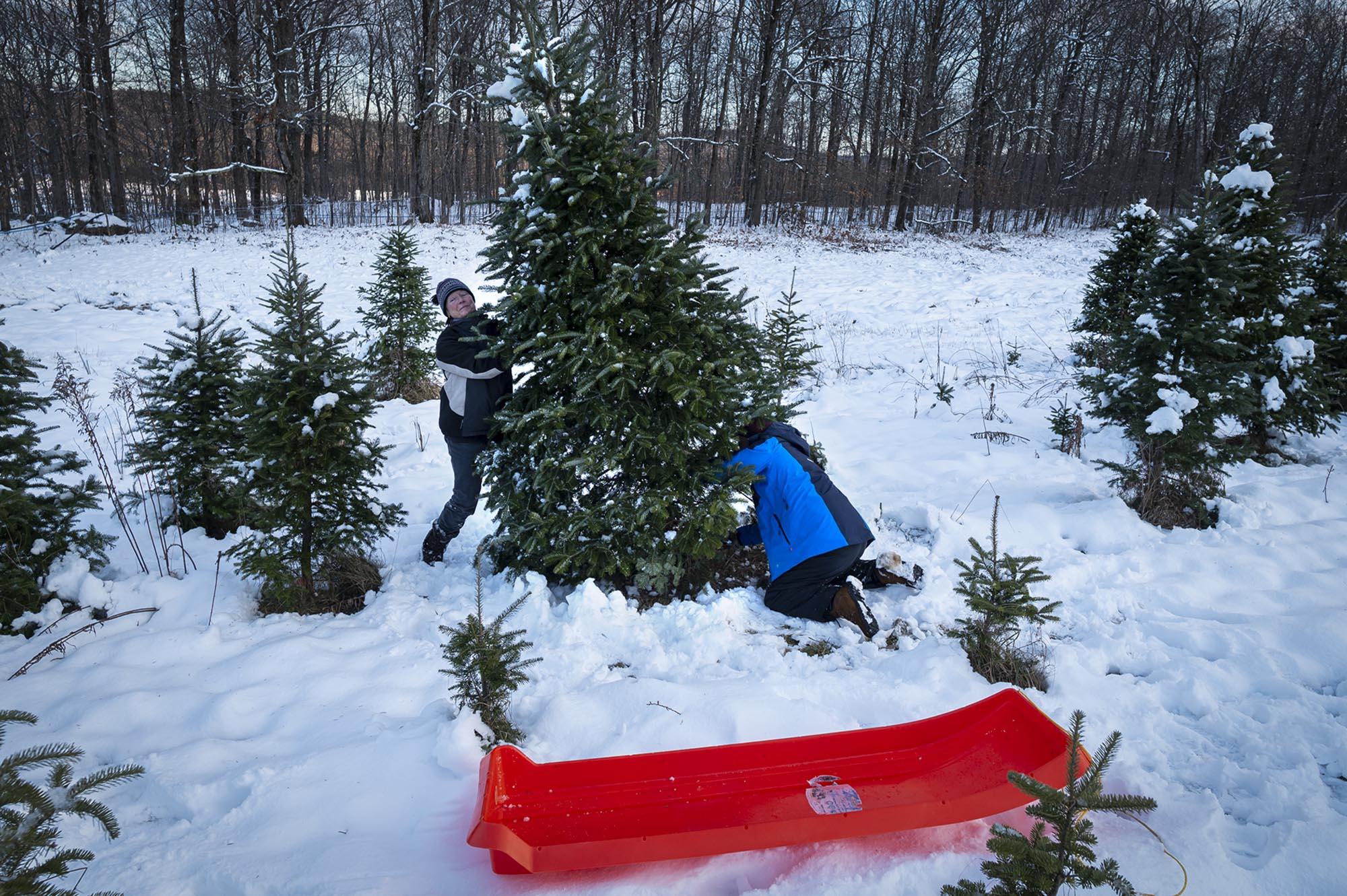
According to Horst and some tree farm owners, there is also growing interest among families in the cut-your-own tree experience in Vermont.
“It’s just the trend of, and I think it started especially during Covid, that people like to get outside and do things,” said Jack Manix, owner of Walker Farm’s Elysian Hills in Dummerston. “You go outside and we have hot cider and popcorn and cookies and all kinds of stuff like that, and it’s like a little event.”
While Manix expects to be open until Christmas Eve, others, such as Isham Family Farm in Williston and White Trees in Jericho, have already closed for the season. That’s not unusual for this time in December, said White Trees’ owner Bob White.

“Everybody wants to cut their own trees — that’s typical. It’s a struggle to find a place to go this time of year. You could find a hundred farms — we all sell out pretty much, that I know of,” White said.
During a call with VTDigger, White had to pause to send numerous customers away. When asked where to, he said: “There’s nowhere else to send.”
White said that he needs to be judicious about how much he cuts to keep sales consistent from year to year. “If we cut (trees) all in one year, it will take four or five years before we open again,” said White.
While the supply may be more plentiful again in the near term, the future of the local industry remains precarious for other reasons. White’s farm, for example, is on a floodplain.
“If (a flood) happens in the spring or fall that doesn’t bother me at all,” he said. But when Tropical Storm Irene hit in late August 2011, “we lost half the farm and it took eight or 10 years to recover from that,” White said.
And apart from a changing climate, the long cycles in the Christmas tree industry pose a real problem for Vermont’s aging population, as new farmers can only begin selling trees after four to five years.
“Assuming you’re planting on an annual basis, you got ever-increasing expenses and no income coming in,” Horst said. “The flooding that we had in July has complicated things a little bit, but even over the last several years there have been people to some extent leaving the industry, primarily because of age, and no one to take over.”
On top of that, the land available is limited, making it difficult to get into the industry, and also to expand to keep up with demand.
“I’d love to plant a lot more trees (but) there’s no land available because I can’t bet against housing projects. Housing projects win every time,” White said. “We only grow X amount of trees, and the demand has grown. … So we do the best we can but we aren’t going to make it to Christmas anymore.”
