

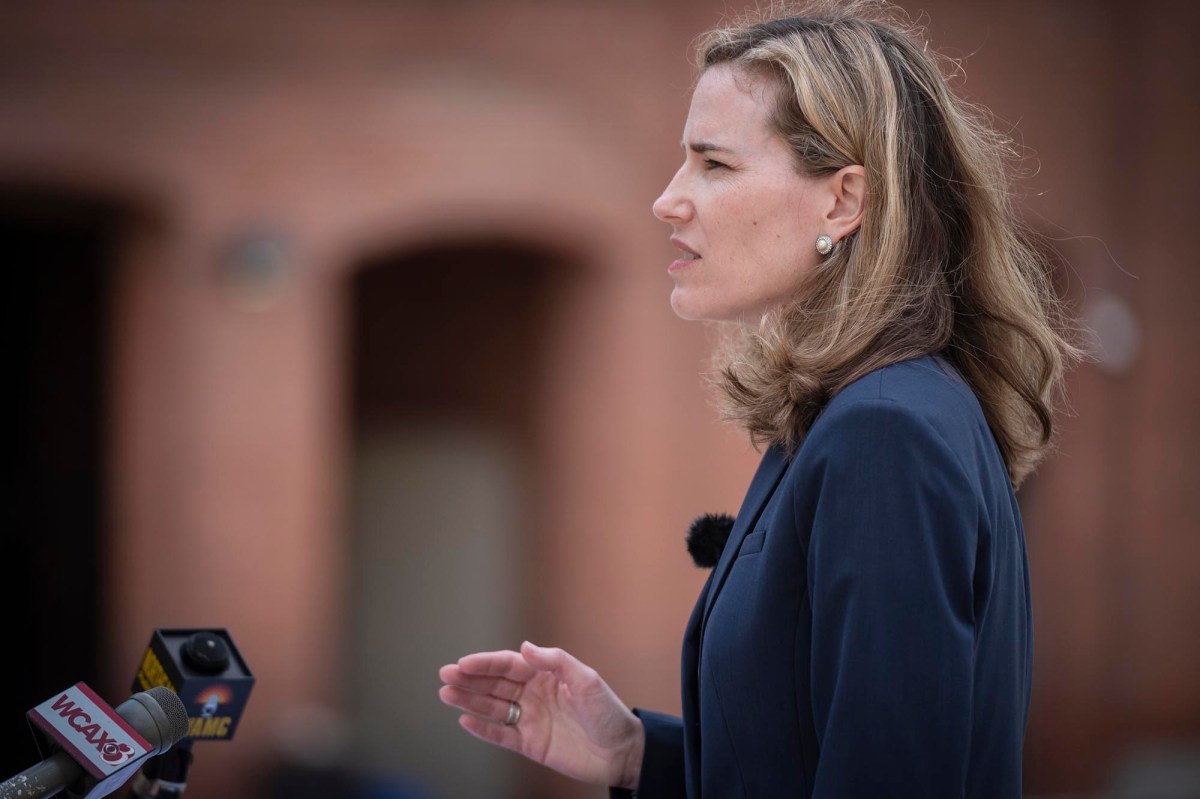
Vermont Attorney General Charity Clark is urging a federal judge to pause a lawsuit that 92 Vermont school districts filed against Monsanto, so the state’s own case against the agri-chemical corporation can get priority.
The move by Clark’s office is the latest development in a string of lawsuits filed by Vermont schools, teachers and the state itself against Monsanto, a subsidiary of Bayer, which throughout the 20th century manufactured PCBs. PCBs, or polychlorinated biphenyls, are a class of chemicals linked to numerous serious health effects, which were incorporated into common materials used in school construction, such as caulk, paint, insulation and electrical equipment.
The U.S. Environmental Protection Agency banned the manufacturing of PCBs in 1979, but in many of Vermont’s aging schools, testing has shown the presence of the chemicals at dangerously high levels. The cleanup and remediation of PCBs in Vermont schools — or, in some cases, the all-out demolition and reconstruction of affected buildings — threatens to cost Vermont and its schools enormous sums of money. Already, the state has spent tens of millions of dollars on PCB testing and remediation in some schools.
The Vermont Attorney General’s Office filed its lawsuit against Monsanto in state court in June. Mere weeks later, nearly 100 Vermont school districts and one private school, represented by Burlington-based attorney Pietro Lynn, filed a similar lawsuit against Monsanto in federal court.
Both lawsuits argue that Monsanto was aware of the danger of its products and chose to aggressively market them anyway. Both make the case that the corporation, not Vermont taxpayers, should bear the cost of PCB remediation.
“The impetus for this (lawsuit) is that those communities are going to have to pay out of their own pockets for anything the state does not reimburse,” Lynn told VTDigger at the time. “They deserve the right to pursue and control the litigation against Monsanto to recover those costs.”
Monsanto and its corporate owner, Bayer, have repeatedly refuted allegations of wrongdoing. The company did not respond to multiple requests for comment for this story.
On Friday, Clark’s office filed an amicus brief in the U.S. District Court District of Vermont requesting that the presiding federal judge stay — or, indefinitely pause — proceedings in the school districts’ federal case. In a press release the same day, Clark’s office said that pausing the federal case and focusing efforts on the state case “will allow issues to be resolved more efficiently, without duplicating efforts and causing piecemeal litigation.”
“Vermonters are counting on the State to litigate this large and significant case efficiently and effectively,” Clark said in Friday’s press release. “An overlapping lawsuit in federal court will not further this goal. It is also critical that we maximize the amount of recouped money going to remediate schools.”

One key difference in the state’s case versus the schools’ case is who receives the financial damages from Monsanto, should they win. If Clark’s office wins its case in state court, the state would receive the money. It would then be up to state officials to disseminate the funds. Alternatively, if the schools win their federal lawsuit, the districts would receive the money directly.
Clark’s office also noted that the private attorneys representing schools in the federal lawsuit are reportedly contracted to receive 33% of any funds recovered from Monsanto, should the federal court rule in the schools’ favor. That contingency fee is significantly higher than that of the outside lawyers assisting the attorney general’s office in the state case: between 12% and 20%, according to the attorney general’s office.
In a text message sent to VTDigger on Monday, Lynn said that his team has and “will continue to collaborate with the attorney general.”
“We will evaluate the arguments raised and respond appropriately,” he added. “Our goal has always been to make sure the districts are made whole. That remains our priority.”
