

Giacomo Cerasoli made up his mind. He would meet the train that morning.
Early on Saturday, May 9, 1931, he shaved and put on his best clothes. The weather was clear and cool as he left his home in Barre and walked to the Central Vermont Railway’s freight house, where he waited in an adjacent alley.
As the train approached, Cerasoli left the alley and walked beside the tracks, ahead of the locomotive. Then, just as the train was about to pass, he stepped in front of it.
A newspaper report that evening suggested that Cerasoli might have stumbled onto the tracks, but his family was certain it was suicide. In an interview decades later, his son Thomas (“Mose”) said there were plenty of tipoffs — his father rarely shaved in the morning and wouldn’t dress up on Saturdays. As a granite cutter, he was more comfortable in his usual overalls.
Also, the family knew that Giacomo Cerasoli had just received devastating news from the doctor he’d seen when illness forced him to stop working. After examining him and hearing his symptoms, the doctor said the word every granite cutter dreaded: silicosis.
Cerasoli knew that the disease, which is caused by inhaling large amounts of airborne silica dust over a long period, was progressive, debilitating and frequently fatal. It also made sufferers extremely susceptible to other often deadly lung ailments, particularly tuberculosis.
In some ways, Cerasoli was lucky. He had lived to the age of 62, longer than his brothers who had also worked in the granite industry and died after contracting silicosis. But he had witnessed his brothers’ slow declines and swore he would never put his family through that. To his son Mose, that pledge was as good as a suicide note.
New tools increase the threat
Laboring in the granite industry had always had dangers. Quarry work involved dynamite and hoisting massive blocks of granite high above the workers in the pit. Explosives sometimes detonated unexpectedly; chains and cables occasionally snapped.
In contrast, jobs in the stone-cutting sheds, where the granite chunks were carved and polished into finished products, were considered far safer. But the arrival of a new type of tool altered that safety calculation.
In the 1890s, quarry owners introduced powerful new equipment: pneumatic tools, which promised to increase productivity dramatically. The air-powered equipment often replaced hand tools (wedges, chisels and drills) that had always been part of the profession.
Pneumatic tools were seen as benefiting both labor and owners. Workers could do their jobs more quickly and with less strain, while granite companies could churn out more gravestones, memorials and other stone products to meet the growing demand in America.
That demand fueled the rapid expansion of Barre’s granite companies, which grew from employing an estimated 100 workers in 1880 to roughly 3,000 in 1910.
Barre’s population grew along with the industry, rising from 2,060 in 1880 to nearly 12,000 by 1900.
There was a downside to the pneumatic tools, however: all the dust they created. As they cut, drilled and sanded, the tools turned bits of the granite into a fine powder that easily became airborne.
Dust from granite is particularly dangerous, because it has a high concentration of silica, which in its powdered form is extremely sharp. Some granite workers likened it to microscopic razor blades. When inhaled, silica dust scars and stiffens the lungs, which can make breathing difficult.
The airborne dust was less of an issue at the quarries, where breezes could carry it away, though some jobs, like operating drills in windless quarries, were still dangerous.
‘You could not see the man next to you’
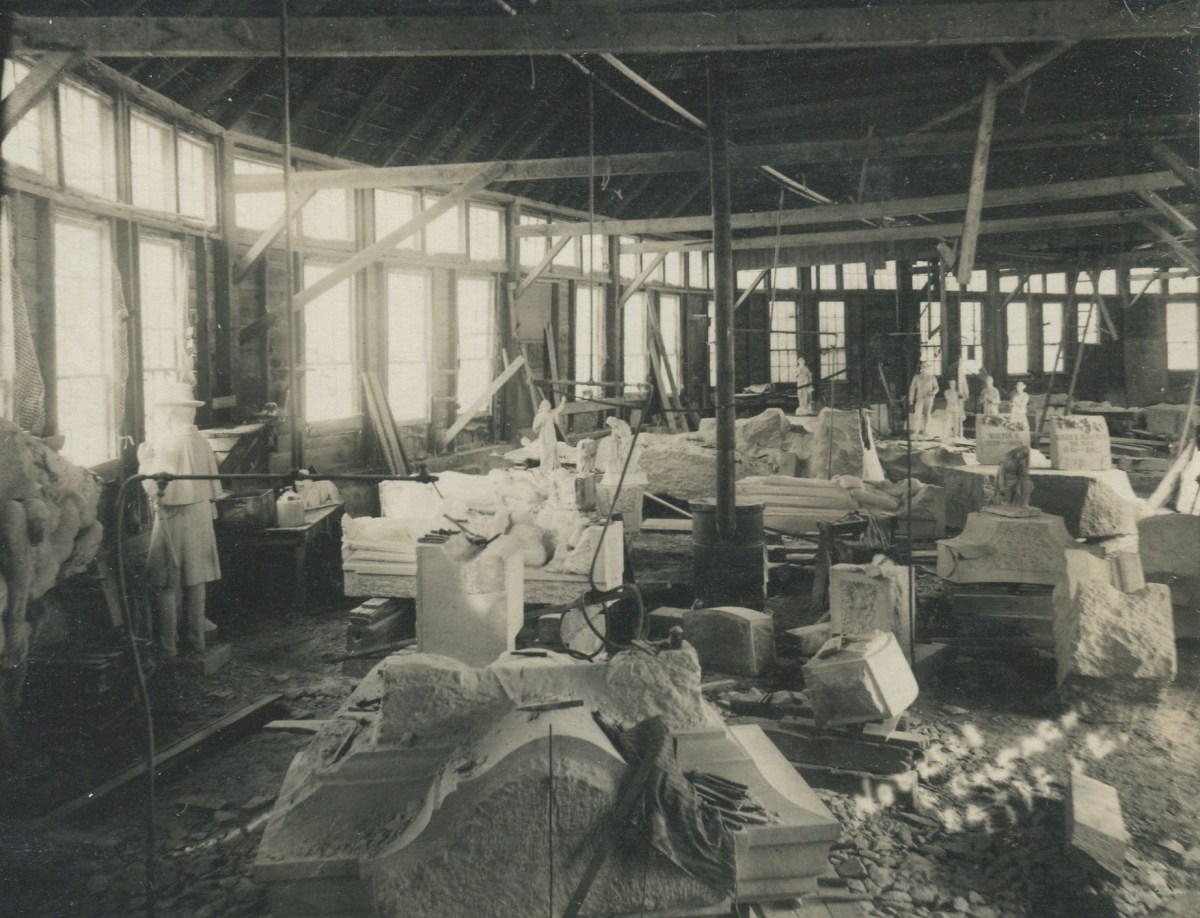
There was absolutely no escaping the dust in granite sheds, where the rock was carved. The many granite workers who came to Vermont from Europe, especially northern Italy, were shocked by the dusty conditions they encountered.
“In Italy, the sheds were like the porch here, open with the wind blowing the dust away all the time,” explained one. “Here, the dust would be so thick in the sheds that you could not see the man next to you.”

A few years after the introduction of pneumatic tools, stonecutters noticed that intense fatigue, recurrent colds, and chest pains had become part of their daily lives. Far worse, scores of previously healthy men were dying years before their time. People started calling the affliction the men suffered “stonecutters’ tuberculosis.” They had no proof, but workers suspected that the dust was the culprit.
By 1903, unions saw dust as a serious enough threat that ventilating the sheds became one of their contract demands. Granite companies countered by offering brooms to sweep up the dust and water to wet the stones. Management and state health officials said the workplace wasn’t the problem: The health crisis was a hygiene issue caused by unsanitary conditions at home or in the community.
Reports of workers’ deaths began appearing regularly in the Granite Cutters’ Journal, a national union publication. In 1908, a Barre union official wrote that there was a “scourge claiming almost every granite cutter in this vicinity, before he reaches the age of fifty. Within the past two weeks, five of our members have been placed in mother earth with consumption. This rate of mortality ought to strike terror in the heart of every granite cutter.”
In 1909, complaints about one kind of pneumatic device escalated into a large-scale labor dispute. Workers at the Cross Brothers Company in Northfield called on owners to restrict use of a heavy surfacing tool called a “bumper” only to warm-weather months, when shed doors and windows could be opened to clear the dust it produced. But the owners refused.

As members of the Barre Granite Manufacturers’ Association, Cross Brothers’ owners persuaded the organization to declare a districtwide lockout, throwing approximately 4,000 men out of work. The association tried to settle the disagreement by offering workers access to more water to keep the dust down, but workers considered the suggestion inadequate and went on strike.
After three months, the owners backed down and agreed to limit use of the bumper while ventilation equipment was designed and installed in the sheds. However, the owners eventually decided not to install ventilation and sought instead to require that workers use a lighter-weight version of the bumper.
Many stonecutters feared that their children would follow them into the trade. Nearly a half-century after the fact, Antonietta Antivi Tomat told an interviewer of a conversation she had had with her husband when he was dying of silicosis and soon to leave her with four children to raise on her own.
“Listen,” he said of his children, “let them do what they want. Even if they are bootlegger(s), they gonna put them in jail, but they gonna feed them at least. But don’t send them down (to) the shed or they never can come out.”
Then, the Spanish flu
Barre stonecutters found an ally in local doctor D.C. Jarvis, who treated many of the men and validated their opinion that they were dying from an occupational disease caused by dusty working conditions. Yes, they often contracted tuberculosis, but they were not developing it because of unhygienic conditions at home or in their communities. Tuberculosis, Jarvis explained, is a common complication of silicosis.
Jarvis echoed the workers’ call for owners to install ventilation systems in granite sheds. He also offered medical advice in a monthly column in the Granite Cutters’ Journal and ran a clinic at the union hall.
Jarvis pointed out that the silicosis health crisis was causing a severe shortage of skilled labor in the industry. “In 1915, we find in Barre 2,050 granite cutters working, while in 1919 we find only 1,240,” he wrote. Despite Jarvis’ arguments, few shed owners were willing to go to the expense of installing proper ventilation.
A significant event occurred between the two dates that Jarvis mentioned: the so-called Spanish influenza outbreak of 1918.
“You can look at the deaths of those stonecutters in the community,” says Scott McLaughlin, executive director of the Vermont Granite Museum. “The number of deaths that happened here in Barre was overwhelming.”
With lungs weakened by years of inhaling silica dust, granite workers were extremely vulnerable to that year’s virulent influenza strain, which is believed to have killed more than 100 of them in just three weeks that fall.
Sometimes the attempted cure for silicosis was as bad as the disease. In 1921, Barre became home to the Washington County Sanatorium. The facility was designed to care for patients with pulmonary conditions, like tuberculosis. In a time before antibiotics, fresh air was considered vital for treating lung ailments, so the sanatorium was lined with wide porches.
Doctors decided to send some silicosis patients there too, since they also suffered from a lung condition. That decision proved fatal for many of them, because doctors didn’t realize that silicosis makes people particularly vulnerable to tuberculosis.
The danger posed by working in the sheds are borne out by Vermont Department of Health statistics: Between 1926 and 1936, stonecutters lived on average 11 years shorter than men in other professions. And a startling 73 percent of stonecutters’ deaths were attributed to silicosis and related cases of tuberculosis, a rate that was 33 times higher than for men in Barre who weren’t in the granite industry.
Things started to change in 1937 when a new labor contract called for shed owners to install dust-removal systems by September of that year. While other workers in the sheds received pay raises in the new contract, the most vulnerable workers, the stonecutters, received none.
Owners justified that lack of a raise by arguing that stonecutters were the ones benefiting most from the dust-control systems; the installation cost would be partially offset by freezing their wages. Despite the agreement, it still took until 1939 for dust management to become standard practice in granite sheds.
45% had silicosis
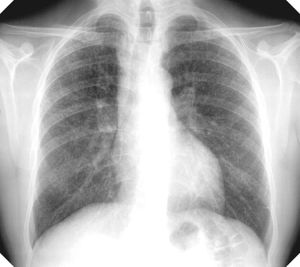
In 1937-38, the Vermont Department of Health tested more than 805 men who worked in the sheds and found that 45 percent of them had silicosis and an additional 18 percent had silicosis with a possible infection (probably tuberculosis).
The department started operating a mobile X-ray unit in 1951 to test workers at their workplaces during work hours. The tests showed that, though the numbers had declined sharply, 16 percent of workers still had silicosis and a little more than 2 percent had silicosis with a possible infection.
The persistence of silicosis in the sheds was likely due to imperfect dust-management systems. The U.S. Public Health Service found that, prior to 1949, “air discharged from the (dust) collector was recirculated in most sheds.”
Once dust-management equipment was properly installed, however, it proved extremely effective, according to a study examining causes of deaths among granite workers. Researchers found that among workers who died between 1951 and 2002, a total of 55 died from silicosis. That might sound like workers were still contracting lethal cases of the disease. They weren’t.
As the study’s lead author Pam Vacek, a research associate professor at the University of Vermont’s Larner College of Medicine, explained in an email: “All of the deaths from silicosis occurred in workers born before 1925 and all but three began work before the full implementation of dust controls in 1949, so they would have had some exposure at high silica levels.”

The three workers hired after 1949 who later died of silicosis all joined the Vermont granite industry after the age of 40, so their exposure to silica probably occurred at their previous workplaces, Vacek said.
“I think it’s accurate to conclude that the dust controls adopted by the industry have nearly eliminated mortality from silicosis, but non-lethal cases still occur,” she said. Vacek added that other Vermont industries, such as those involving the production or use of sand and gravel, might still pose risks to workers, since they have fewer protections from silica exposure.
It took roughly 50 years from the introduction of pneumatic tools for proper dust-management systems to be installed. That half-century shortened countless lives.
The reasons for the delay are complicated. It took time to connect the dust with disease, and even once there was a known link, granite companies resisted spending money that they feared would make them less competitive with other stone manufacturers, and workers refused to walk away from well-paying union jobs.
But thanks to the eventual acceptance that safety measures were a necessity, recent generations of granite cutters have been able to practice their craft with little fear of getting the kind of devastating news that prompted Giacomo Cerasoli to take his final walk.
