


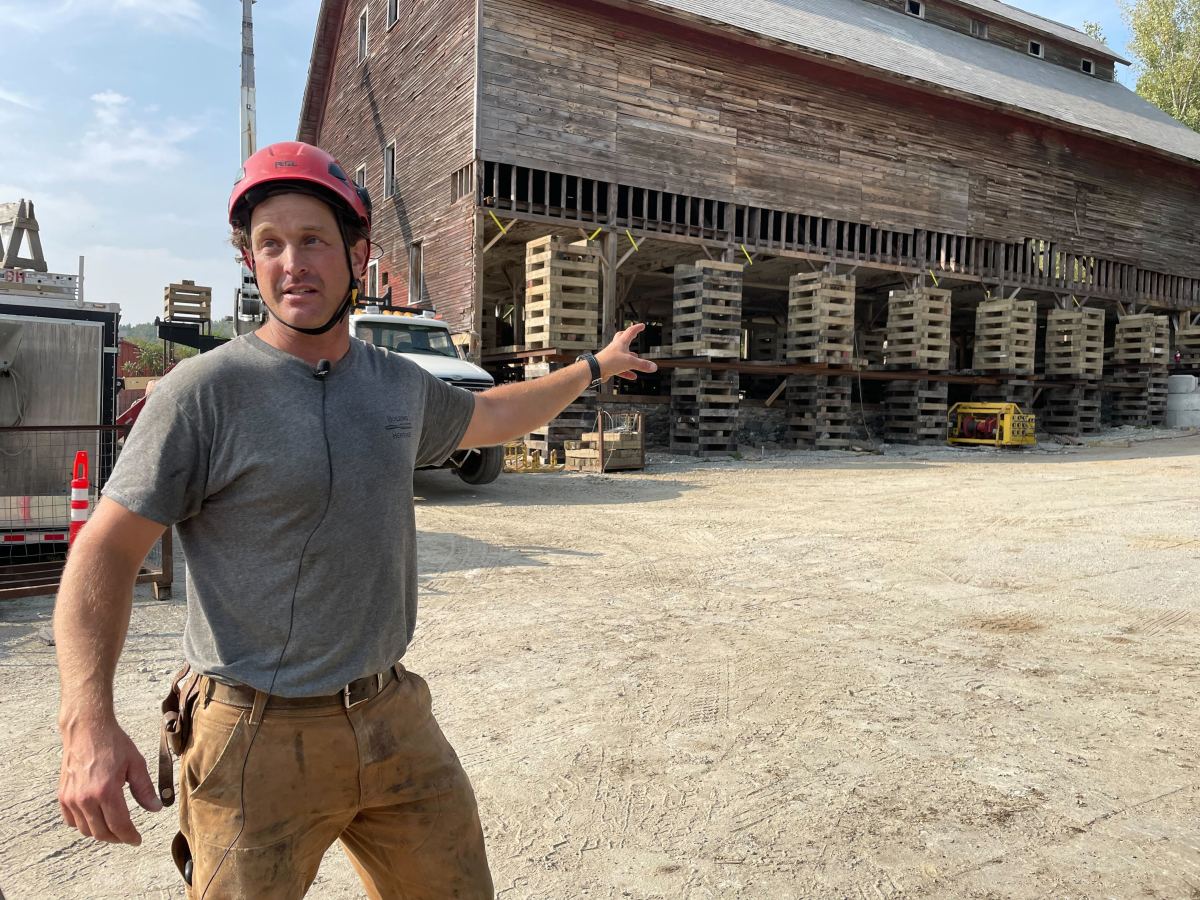
RICHMOND — Visible from I-89, the East Monitor Barn — an almost 70-foot-high, turn-of-the-century behemoth — is in the midst of an extensive renovation.
For three months, it was suspended about 9 inches above its base on hydraulic jacks, supported by 36 cribbing towers (made of wooden blocks) and 168,000 pounds of steel beams, while workers built a new foundation of stone and concrete.
On Wednesday, the 500,000-pound timber dairy barn on Route 2 was lowered onto its new base. On Thursday, crews removed the I-beams that helped suspend it.
“It looks visibly straighter now,” said Naomi Galimidi, spokesperson for the Vermont Youth Conservation Corps, which, as the barn’s steward and owner, is spearheading the multiyear restoration project.
When complete, the barn will provide space for the conservation corps’ offices, teaching and training programs, tools and equipment. It will also serve as housing for young people working in the organization’s conservation and farm programs. The extra room will allow its programs and partnerships to expand, said Breck Knauft, the organization’s executive director.
The July floods delayed some of the work but did not damage the barn, and the VYCC expects to have the building ready by the end of 2025.
Eliot Lothrop, from Huntington-based Building Heritage, said he’s been excited to work on a dairy farm building he has long admired. He used to live at a freestanding milk house on the site when he was attending the University of Vermont, he said. Now he is back there as lead restorationist.
“I used to dream of restoring it, so I can’t believe I’m here doing it,” he said.
One of Richmond’s famous Monitor barns — named for a roof design that lets in light and air — the East Monitor Barn is a gable-front bank barn built into the hill at the back, with all four levels accessible from the outside by grade or ramp. It was used to house cows and hay until 1984, according to VYCC’s research.
Over time, the building was pushed downhill by a heaving back foundation wall. When the restoration work began in May, the barn had to be jacked up in the air so that all four floors could be aligned and the foundation rebuilt. That involved extensive timber repairs and replacements throughout the building, project workers said at the site on Thursday.
The barn, built in 1901 by well-known farmer Charles C. Miller, is one of the region’s few remaining examples of large-scale pre-industrial farming. Given the massive size and state of disrepair, the challenge was to find a new use for it, said Lothrop, who also worked on restoring the West Monitor Barn in 2001.
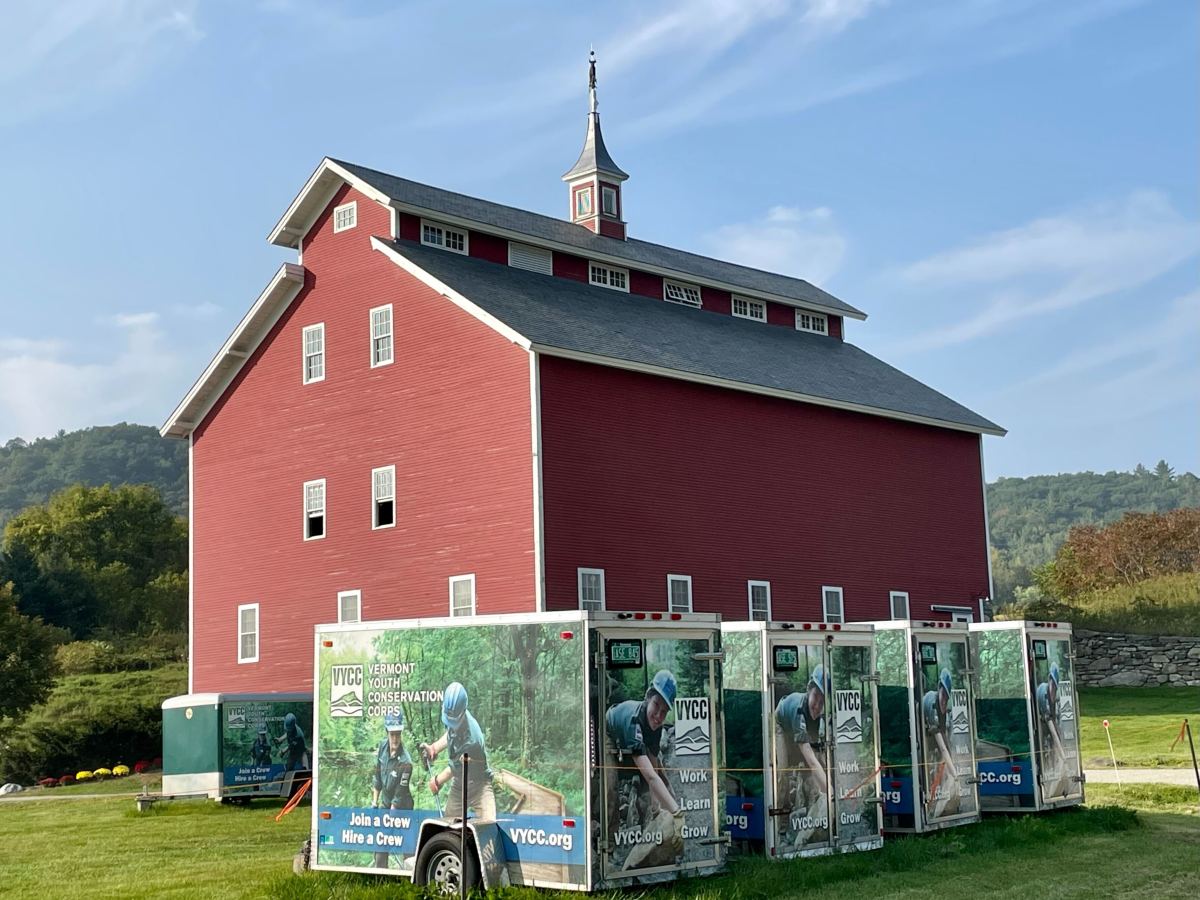
Located nearby, the West Monitor Barn, often used for weddings and special events, has been the statewide headquarters for the VYCC for a few years, but the organization has been running out of space as programming expands, Galimidi said.
A third barn located at the back of the property was once used to house carriages. It remains unused, and there are no plans yet to restore it.
The construction work is estimated to cost $2.5 million; outfitting the barn will add to the price tag. The project has been funded by donations and a Save America’s Treasures grant from the Historic Preservation Fund administered by the National Park Service.
“These barns are just remarkable structures and to be able to save them and breathe new life to them, it’s a real privilege,” Knauft said.


