

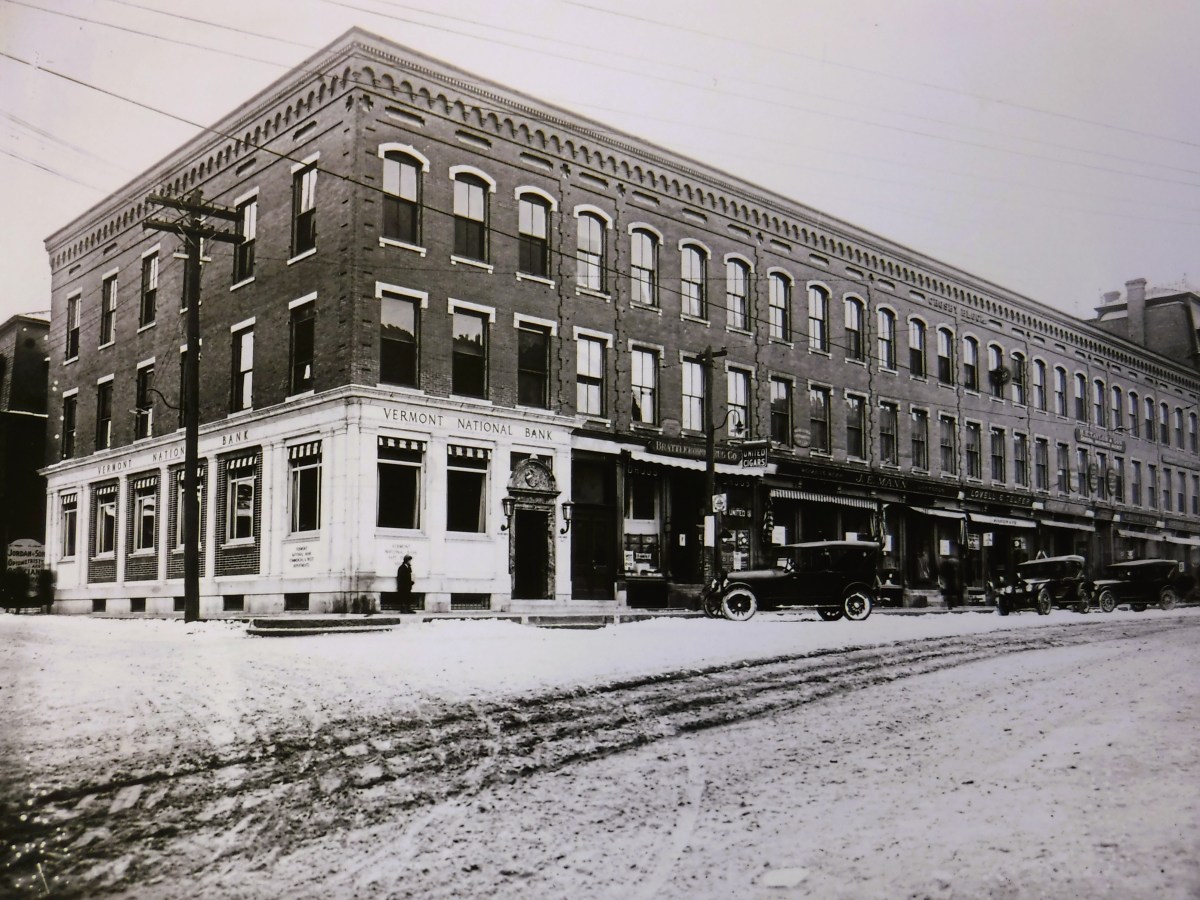
BRATTLEBORO — After this town’s biggest fire incinerated half of central downtown in the fall of 1869, a new business block rose from the ashes with a cornerstone that promised a new era of prosperity.
The Vermont National Bank office that opened at the intersection of Main and Elliot streets in the spring of 1871 sprouted in the same spot where its founders had met a half-century earlier to establish what once was the state’s oldest and longest-operating financial institution.
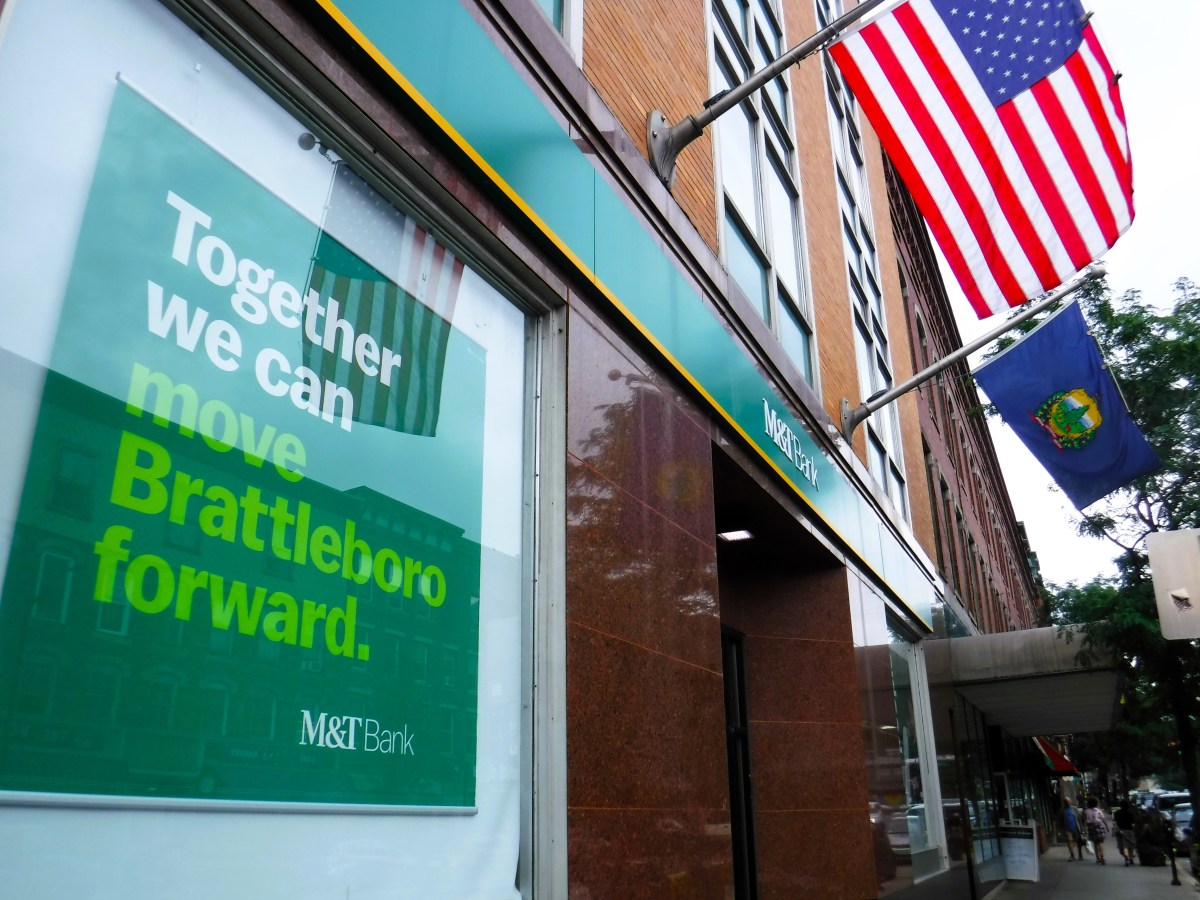
For the past 150 years, the block has anchored downtown Brattleboro, even as bank consolidations have changed its name from Vermont National to Chittenden in 2000, People’s United in 2008 and M&T last year.
But that’s set to end Friday, when the bank’s current New York-based operators are scheduled to close the location.
“M&T continually evaluates the distribution of our branches to ensure our network effectively and efficiently serves our communities,” bank spokesperson Frank Lentini said in a statement.
For customers, that means a walk down the street will morph into a mile drive up to a Canal Street drive-through. For everyone else, it’s one more turn of a world of seemingly constant change.
“This consolidation, this migration, is a pattern that you can’t stop,” said Jack Davidson, who began work at Vermont National in 1970 before departing upon its sale to Chittenden to form the employee-owned Trust Company of Vermont.
Davidson remembers the days before automated teller machines and online banking, when customers visited an office in person to deposit or withdraw cash and checks.
That shifted in 1995, when legislative changes opened the door to out-of-state mergers. As Vermont National was acquired, such nearby institutions as First Vermont Bank became the Canada-based TD Bank, Catamount Bank became the New York-based Community Bank, and Burlington Savings Bank became the Ohio-based KeyBank.
“In the old days, your bank did well because it was your neighbor — it brought money in and then loaned it out,” Davidson said. “Now, they’re trying to get money in, but are they loaning it out, and at what rates? They’ve become very bureaucratic to make their spreadsheets look better.”
Banks don’t have to notify the Vermont Department of Financial Regulation about shuttering offices unless they are chartered in the state, which excludes most consolidated outfits.
“But we have noticed a lot of other institutions are closing branches in other parts of the state,” said Aaron Ferenc, deputy commissioner of banking for the Vermont Department of Financial Regulation. “With digital banking and all the features on your phone, actual people going to a branch is down dramatically.”
The Brattleboro bank’s exit comes in the wake of several neighboring business closures due to the Covid-19 pandemic, as well as a rise in property crime. But downtown leaders are expressing hope that, as 150 years ago, a phoenix will emerge.
“Change is inevitable, right?” said Kate Trzaskos, executive director of the Downtown Brattleboro Alliance. “How we approach that and see it as an opportunity is what makes a difference. We have to be thinking about the possibilities of what could be in the future.”
