

A Washington County judge has dismissed an environmental group’s lawsuit that sought to change the state of Vermont’s land management processes, alleging that the state favored timber sales over environmental protection.
Superior Court Judge Timothy Tomasi sided with the state, ruling earlier this month that Standing Trees, the environmental advocacy group that filed the suit, lacked standing to bring the case. Seven Days first reported on the ruling.
In its complaint, Standing Trees and two of its members — Jamison Ervin and Alan Pierce, who both live near the Camel’s Hump Management Unit — argued that the Vermont Department of Forest, Parks and Recreation and the Vermont Fish & Wildlife Department should be required to explicitly consider environmental and climate impacts in their land management plans. The state regularly allows logging on public lands.
“This summer’s climate chaos is just further evidence why it’s so important for us to get a handle on how we manage our public lands,” Zack Porter, executive director of Standing Trees, told VTDigger on Monday.
In response, the state argued that it closely evaluates every timber harvesting site, “including consideration of data pertaining to forest health, species composition, soil characteristics, wildlife habitat and the presence of rare, threatened and endangered species.”
Standing Trees contended that timber harvesting should be banned on state-owned land until the state completes a public process to establish rules for its land management planning.
“What a rule would allow for is a chance for the public to weigh in, and ensure that the state is following its own plans that it has developed over the last several years,” Porter said.
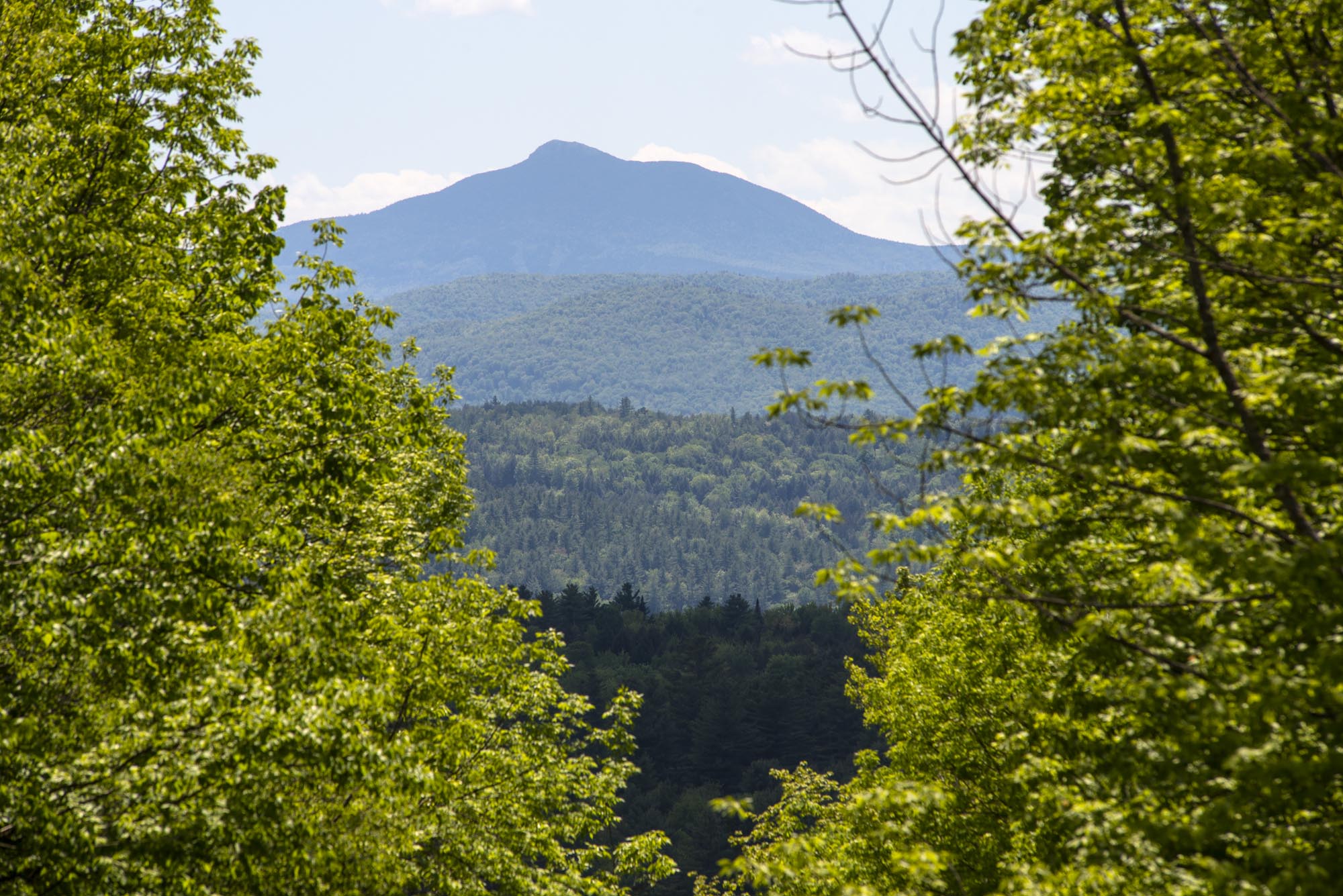
The state’s plan for the Camel’s Hump area — which straddles Duxbury, Huntington, Bolton, Fayston, Buel’s Gore, Waitsfield, Richmond and Starksboro — contemplates logging at 34 sites over the next 15 years, totaling 3,800 acres of the area’s roughly 26,000.
Harvesting near Camel’s Hump could have negative impacts for Ervin and Pierce, Standing Trees claimed, because their property is downstream and downhill of Camel’s Hump State Park. The two also frequently hike, study and forage from the forests near their home.
Standing Trees argued that harvesting trees in the area could hurt Ervin and Pierce because “the flooding of streams and rivers will expose them to greater risk of personal injury and property damage,” Tomasi wrote in his decision.
But it isn’t enough to argue that damage may take place in the future, Tomasi continued.
“The allegations of the complaint are plain: in the future, the Departments, after a ‘robust’ review process, could approve a harvest in the Camel’s Hump area. Whether any such harvest may be approved, and whether the robust review process would lack the considerations about which Plaintiffs are concerned, are left entirely to speculation,” Tomasi wrote.
To bring a suit forward, Standing Trees, along with Ervin and Pierce, would need to show that they have already experienced damages.
Porter said the dismissal marks the “conclusion of the first phase of this litigation process.” The group is weighing its next steps, which could include an appeal, a motion to reconsider, or a different approach altogether, he said.

