

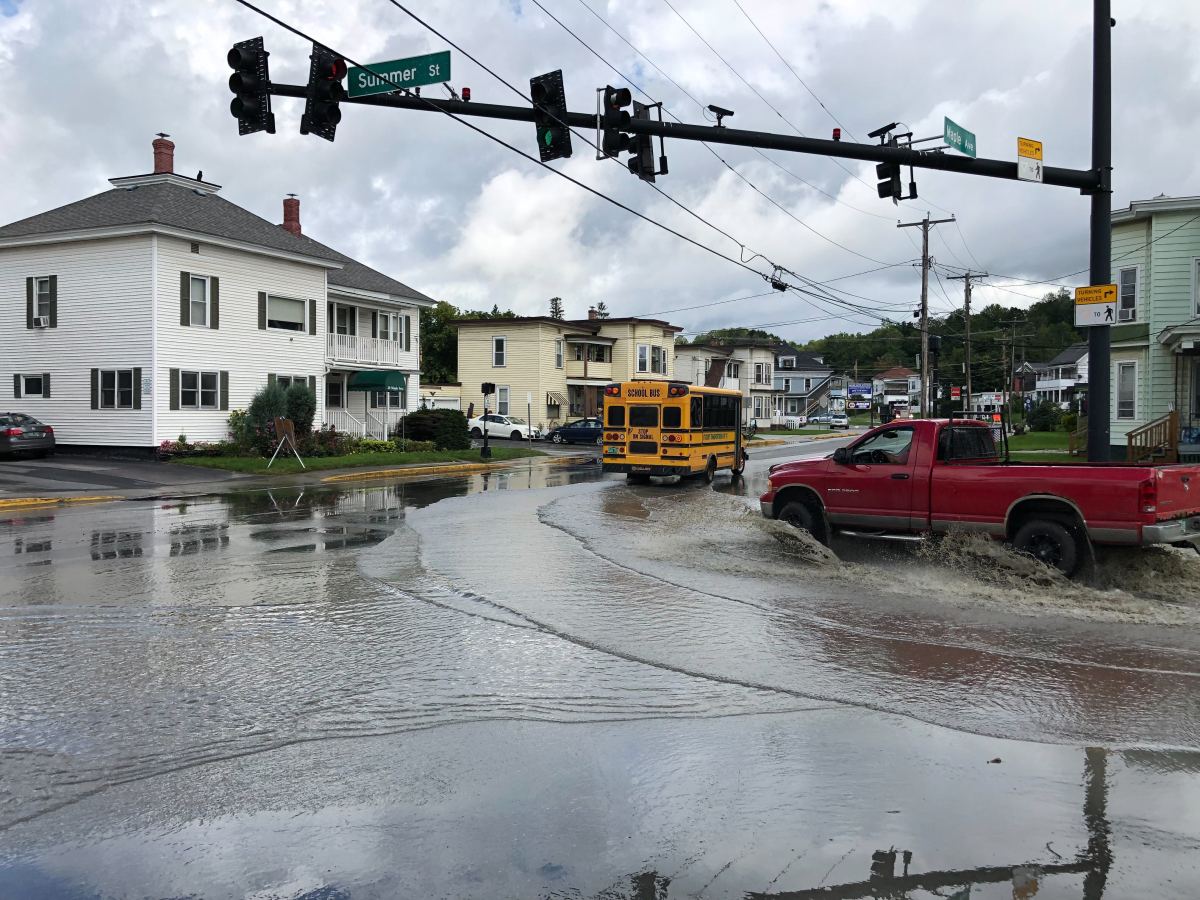
Even though Vermont is still reeling from July’s disastrous floods, state officials already have their eye on future potential flooding events — and are hoping to prepare the state before they arrive.
“We only have to look at what the storms are bringing us today as an example,” Gov. Phil Scott told reporters on Wednesday, as heavy rains once again poured in parts of the state, and water began to collect on the streets in Montpelier and Barre.
Part of that preparation, according to Scott and Public Safety Commissioner Jen Morrison, is cleaning up from this summer’s mess. Removing flood debris from drainage systems and waterways is key to making sure future surges of water can move through Vermont’s infrastructure the way it’s supposed to — unobstructed.
But right now, many of those pathways are still clogged.
“One of the biggest concerns — and again, we can see this happening in real time — when it comes to flooding, happens when culverts, bridges, catch basins and other structures become obstructed with debris,” Scott said.
Officials are also bracing for wet weather in the foreseeable future. As Scott and other officials held their press conference Wednesday morning, Hurricane Idalia made landfall in Florida — a reminder, Scott said, that hurricane season is upon us. And as Tropical Storm Irene showed Vermont in 2011, the inland state is not immune to heavy rainfall from such storm systems.
Even further ahead, officials are already readying themselves for the springtime thaw. It’s important to clear Vermont’s waterways and storm drain systems of debris well in advance of spring, Scott said.
If local municipalities need assistance clearing such debris, Morrison urged them to contact Vermont Emergency Management.
