


Members of the Duxbury Community Garden gathered for two Saturdays in July to perform an excruciating task: uproot their flood-ravaged plants.
At least seven gardeners worked side by side, tearing out of the earth vegetables and herbs they’d been nurturing for months. They got rid of cucumbers, garlic, onions, peppers, potatoes, squashes and tomatoes, as well as basil, cabbages, fennel, kale and shallots.
The produce all became contaminated when the Winooski River overflowed on July 10, submerging the community garden in Duxbury in up to 3 feet of floodwater.
It was among at least 25 community and school gardens severely damaged in flooding around the state, according to the Vermont Garden Network, an Essex Junction-based nonprofit focused on educating, supporting and connecting gardeners. The people tending the affected gardens all had to throw away their produce, said network director Michelle Gates.
Uprooting the Duxbury Community Garden’s ruined plants was an emotionally difficult task, but doing it alongside other members helped, said Jeanne Atchinson, a member and the garden’s manager. The community garden has 17 plots that a dozen people lease.
This season, Atchinson said, the gardeners altogether invested around $2,200 in rental fees and materials, such as seedlings and compost. But the time, energy and hope they put into their plots were priceless, she said, leading many to mourn the loss of the plants that were just beginning to blossom.
“We have this empty space in our hearts,” Atchinson said. “I believe that every single gardener has experienced a period of depression as a result of the loss of what they were growing.”

The garden members, who range in age from their 20s to their 60s, grow produce to consume at home and to share with relatives and friends. Some of the crops are meant for Thanksgiving meals or holiday gift baskets. Others are donated to local food pantries.
That’s not happening this year. The gardeners cannot replant until next year, after they’ve taken care of the silt from the floodwaters and restored the soil’s health.
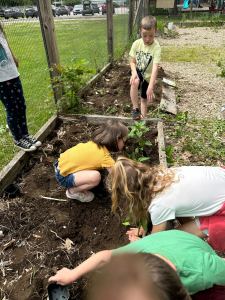
A hundred miles south, in the town of Chester, the Chester-Andover Elementary School was also hit hard during the historic July flooding. The deluge damaged an outbuilding, washed away all the playground mulch and drowned the school/community garden.
The garden, which has nine plots mostly used in student learning, was inundated by up to 2 1/2 feet of water when a nearby brook overflowed, according to Lisa Holderness, coordinator of the school’s science, technology, engineering, arts and mathematics program. The school has about 240 students from kindergarten to sixth grade.
“What is normally a small brook became a giant, forceful-moving lake over a significant area,” Holderness said.
The floodwaters left a layer of “toxic silt” in the garden, so that all the plants must be thrown out: cabbages, carrots, cucumbers, garlic, potatoes, peppers, tomatoes and zucchini.
“The children who have helped plant it were very sad,” Holderness said, “and they were confused about what had happened.”

She said the garden has been integrated into the school curriculum by, for example, using harvested garlic bulbs to teach kindergartners how to count by five or how to measure the growing plants. It’s also part of the after-school program, which teaches students skills such as planting and cooking.
A number of students take some of the produce home for meals. Others use it in their nutrition and cooking classes. “Mostly, it’s the joy of the students themselves running into the garden,” Holderness said, “seeing what they can find and getting to taste what they find.”
Also ruined were herbs that some community members planted, including chives and cilantro. There was also mint, which past summer program attendees turned into mint ice cream.
But since the flooding, Holderness said, the children haven’t been allowed back into the garden because of safety concerns. Garden managers are still evaluating how long the remediation will take and, in the meantime, are looking for volunteers and donations to help rebuild the garden.
Correction: An earlier version of this story included an incorrect location for the Duxbury Community Garden.
