

Vermont officials have waived limits on the amount of waste that landfills and transfer stations are permitted to process, as well as on the hours those facilities can operate, to make it easier for people to dispose of their trash after last week’s historic flooding.
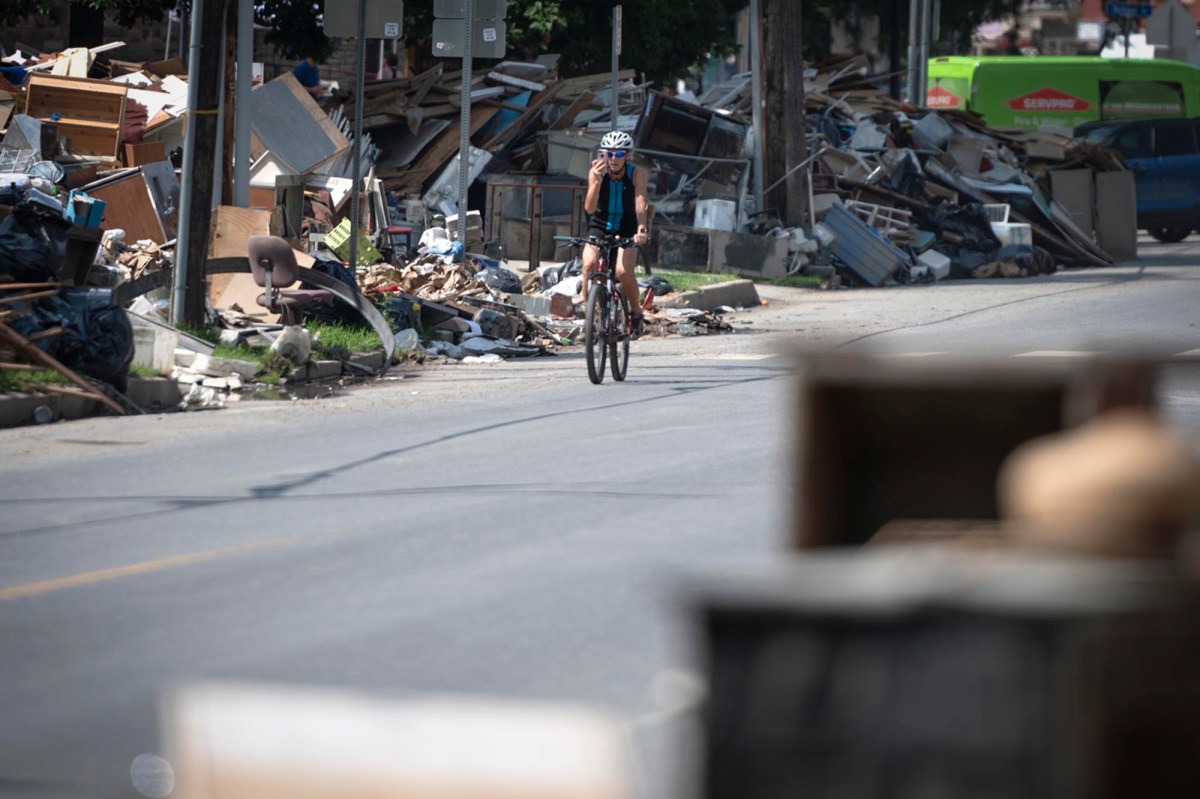
Thursday’s announcement from the Department of Environmental Conservation comes as many communities — including in the hard-hit capital region — have watched wet waste and debris pile up in front of their homes and businesses.
“It’s an ongoing need,” said Josh Kelly, who manages the solid waste program at the environmental conservation department. “Some people have cleaned up and brought everything out. But some are still doing it.”
According to Kelly, most of the debris that state and local contractors are picking up will go to Vermont’s only landfill, which is in Coventry. He said state officials are confident that the landfill, owned by Casella, has more than enough capacity to keep up.
Kelly said some of the waste may also be taken to facilities in New York and New Hampshire, something that crews were already doing before the flooding.
He acknowledged that state emergency management officials have received multiple complaints about waste and debris not being picked up quickly enough. In most cases, he said, the state’s response has been to ask for patience, noting that many trash haulers and staff at transfer station facilities have been logging close to 80-hour workweeks.
In many cases, it is safe for people to leave waste — even if it is hazardous — out on the curb while waiting for pickup crews to come, even if that takes multiple days, according to Kelly. He said people should do their best to separate different types of waste from one another, following official state guidance.
Across the state, storm-related waste is being removed from people’s homes and businesses through a combination of state-contracted environmental remediation crews, municipal workers and private haulers.
The state’s largest trash hauler, Casella, has had so much flood-related waste to contend with, alongside regular trash collection services, that it’s brought extra workers, trucks and dumpsters into Vermont from neighboring states, according to company spokesperson Jeff Weld.
Casella, which is based in Rutland, owns about three dozen transfer stations and waste collection facilities across Vermont, according to Weld. Its Montpelier transfer station was the only one significantly damaged during the flooding, Weld said.
He said that, with additional staff and equipment from New York and New Hampshire, Casella has been able to pick up trash in a timely manner and has not had to contend with any significant staffing shortages so far in the wake of the storms.
Still, the flooding is “certainly a tax on the resources that we have,” he said.
Weld declined to say which towns the company has been providing additional flood relief services to directly.
If towns need help with flood debris beyond what local contractors can handle, leaders also can contact the state’s Emergency Operations Center, Kelly said. Officials in Barre and Montpelier, though, told VTDigger that the state took days to respond to some of their requests for additional support after they first reached out last Saturday.
Barre City Manager Nicolas Storellicastro said volunteers started arriving in the city to help clean up debris but were limited in what they could do without additional help.
“The bulk of the major debris that we need removed is not something that I can send a volunteer crew to,” he said earlier this week. At the same time, Storellicastro said, debris removal was “probably the No. 1 thing I hear from residents right now.”
Ben Rose, recovery and mitigation chief for Vermont Emergency Management, said on Thursday that state and local officials were developing a plan to start cleaning up debris in Barre on Friday.
Meanwhile, in neighboring Montpelier, debris removal was in full swing on Thursday morning. Montpelier Mayor Jack McCullough said Thursday that the debris removal process had been slower than he would like, but he was happy to see it started.
A group of Montpelier business leaders hosted a press conference on Friday morning asking the state for, among other things, clearer guidance on what to dispose of and how to do so.
“It’s not going to be overnight,” McCullough said. “When people see those mounds of garbage disappear, I think it’s going to be a tremendous morale booster.”
Rose said one of the main reasons cleanup work didn’t start until the second half of the week in major Washington County hubs was that it took several days for the state to get confirmation from the Federal Emergency Management Agency that it would waive restrictions on providing reimbursements for damaged commercial property.
The issue, according to Rose, was that FEMA would not immediately waive those restrictions in Washington County — as the state had asked — because the feds hadn’t yet made any part of Vermont eligible for the requisite category of disaster relief.
“In other words, the waiver needed to be approved before it was eligible,” Rose said. “And we said, well, that’s a Catch-22.”
He said state officials worried that, if contractors started to remove commercial debris in places like Barre and Montpelier too early, it could jeopardize access to those federal reimbursements. Late Wednesday night, though, Rose said FEMA told state leaders that they did not need to wait for any additional disaster relief designation — and now, state leaders are expecting the waiver to be approved by some point next week.
Rose added that the state “wants to get the debris off the streets as soon as we can,” but he doesn’t think the process could have gotten started any more quickly than it did.
FEMA did not respond to a request for comment Thursday evening.
Erin Petenko contributed reporting.
