

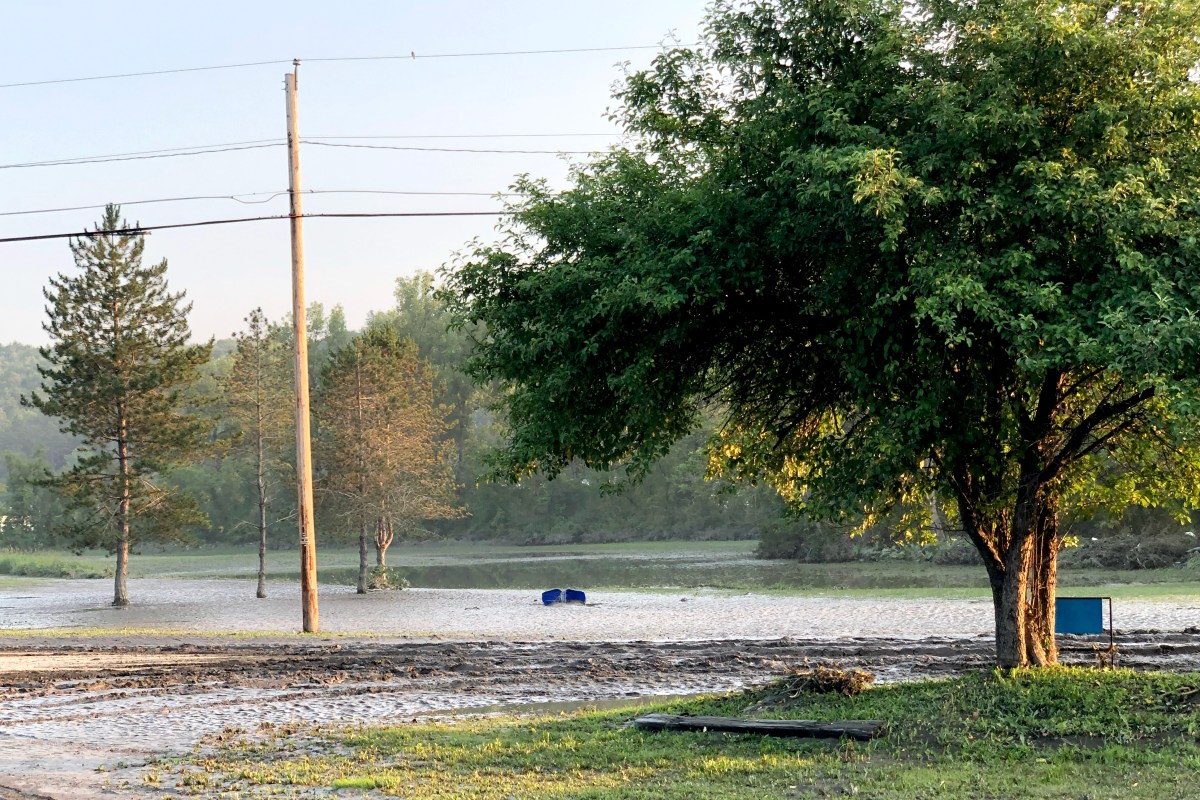
As people’s emotions run high and flood water recedes, officials warn that professional scammers have methods of taking advantage of homeowners’ vulnerability.
Because Vermont residents are rebuilding and mourning lost property, they may be more likely than usual to fall victim to information breaches.
“We have been active in trying to spread awareness about disaster-related scams because we do know that in the days and weeks to follow after a natural disaster, scammers will use that to try to get money from people,” said Lauren Jandl, chief of staff at the Attorney General’s Office.
However, there are safeguards that can help Vermonters keep themselves and their information secure.
The most common type of scam that Vermonters may see is impersonation fraud, in which a scam artist pretends to be someone else — for instance, a government official asking the victim to fill out a form that would disclose personal information, Attorney General Charity Clark said.
Most scams use psychological tricks to get people to comply, such as creating a sense of urgency, Clark said.
Also common are phishing scams, in which the scam artist will try to steal identity information such as a person’s Social Security number, name, address or birthdate, she said.
Anyone who’s a target of class like these should hang up the phone and contact the Vermont state government, said Elliott Greenblott, Vermont coordinator for AARP Fraud Watch.
Scammers may also approach homeowners with home improvement fraud — say, proposing a cleaning or repair service to the homeowner, Clark said. These types of scams are always a concern, but they may be more dangerous now because more people need flood damage repairs.
When considering contractors for repairs and cleanup needs, people should check government sites, Greenblott said. Vermont requires home improvement contractors to register with the Secretary of State if they have a contract for work worth $10,000 or more
Additionally, the Attorney General’s Office keeps track of contractors previously convicted of fraud, Clark said.
Before signing up for work to be done, Clark encourages people to ensure there is a contract that specifies the scope of work, the timing and the payment terms. She urges people not to pay upfront.
False charities may also arise as fundraising efforts are mounted to help Vermonters. Before they donate, Clark suggests people consult independent reviewers of charities to ensure that their intentions are legitimate.
People should also consider looking locally to donate, to people and organizations they know, Greenblott said.
Additionally, scammers may impersonate homeowners’ insurance companies. If that happens, people should immediately hang up the phone and call their own providers, Greenblott said.
Scammers mainly focus on people who are isolated and lonely, and often target elderly people, Clark said.
However, young people are also falling victim to these crimes, particularly online, Greenblott said. Scams can occur on any platform, including social media, email, phone calls or in person.
Anytime someone is approached by a scammer, they should report the incident, even if no personal information is exchanged, Clark said. The report can be used to identify callers or phone providers giving out caller information to scammers.
If anyone loses money in a scam, in some cases the Attorney General’s Office can help regain it, especially if it is within 24 hours of the call, Clark said.
Instances of price-gouging are rare in Vermont, though Clark strongly recommends people report it if they suspect it is occurring.
Gov. Phil Scott said at a press conference on Thursday that he had not heard any reports of price-gouging in connection with this week’s floods.
