

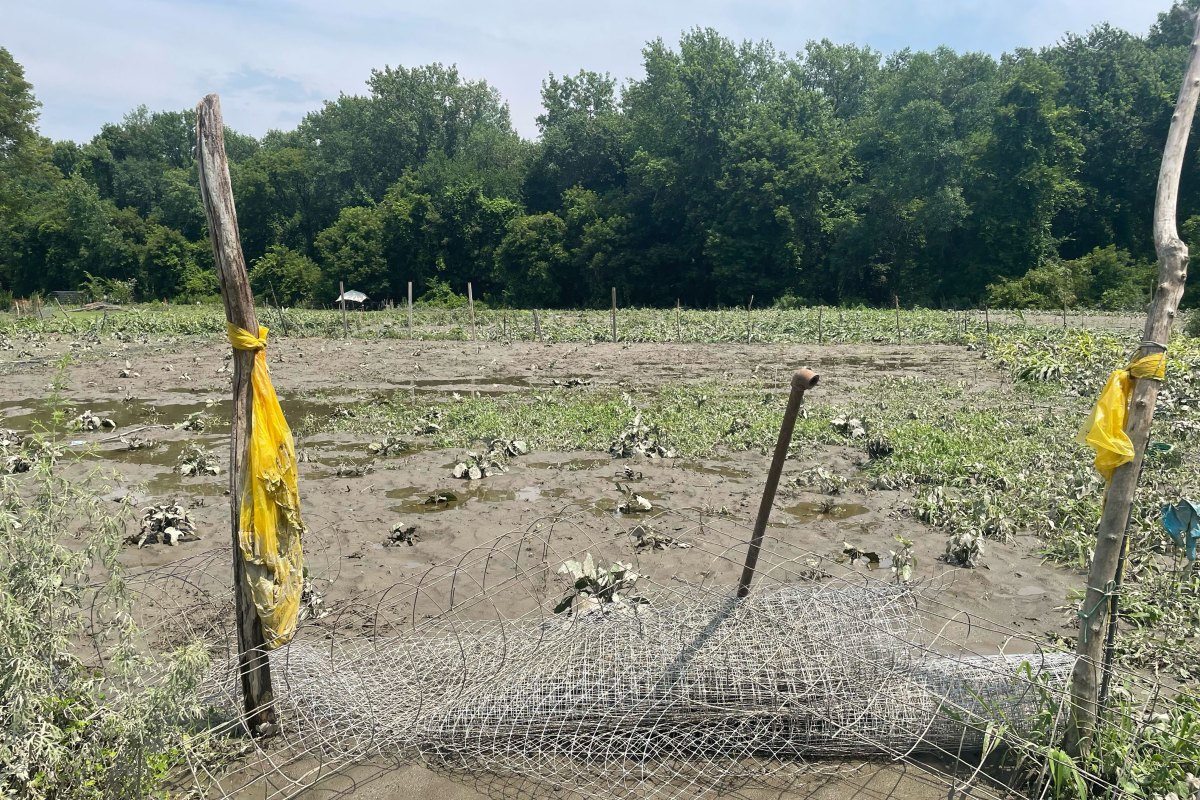
In May and June, Bhutanese farmers had carefully hand-crafted wood trellising systems on their land plots in the Winooski Valley Park District and the Intervale, to allow space for their tomatoes to grow.
As late as Monday, Burundi farmers were tending to their African eggplants and African corn, newly transplanted from the greenhouse on farmland in the Intervale Center.
By Tuesday afternoon, all of their work had been swept away as the Winooski River swelled and flooded both areas.
Like other farmers around the state, Burlington’s refugee farmers have lost almost all of their season’s crops to the floods. In this case, the damage threatens the food security of the 100 families who rely on the season’s harvest.
“It is a complete loss,” said Alisha Laramee, who coordinates the New Farms for New Americans program for Association of Africans Living in Vermont, or AALV. “A lot of people will be devastated.”
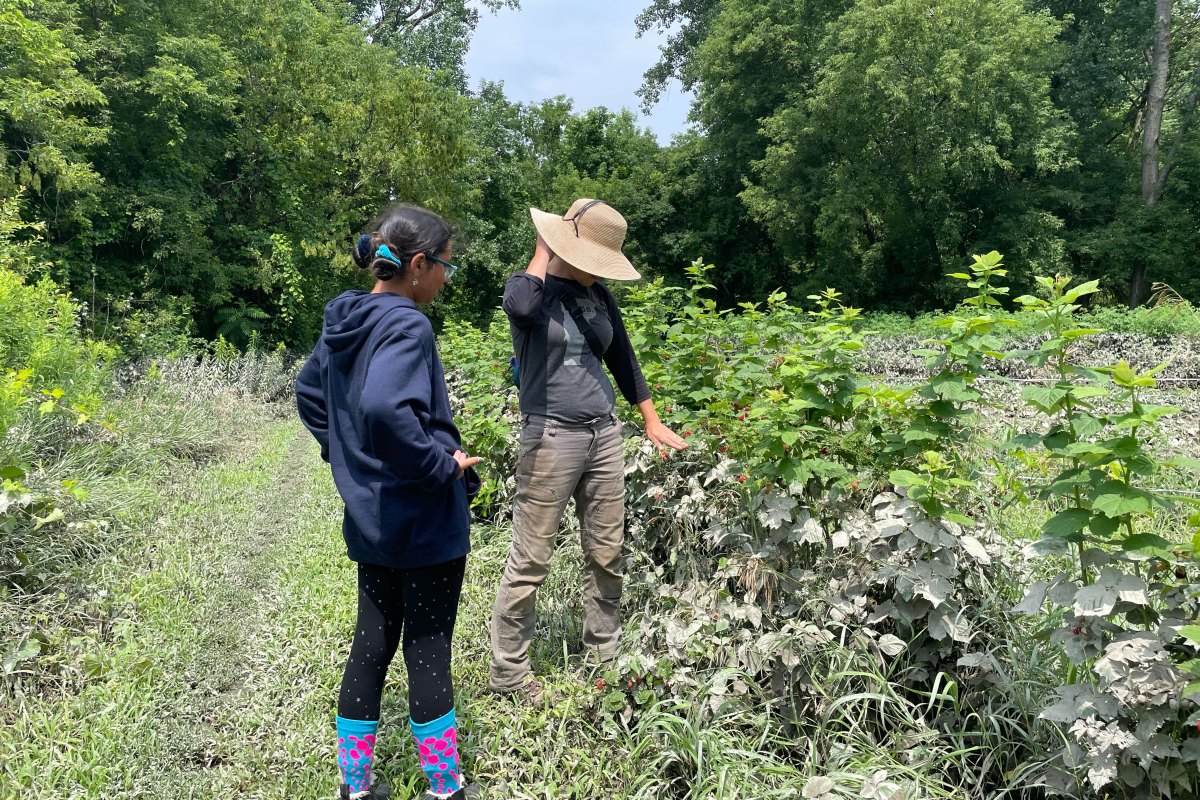
On Thursday afternoon, Laramee toured the program’s land at the Intervale for the first time since the deluge of rainfall that caused severe flooding in most of the state. Her 10-year old daughter Lily was in tow because she wanted to “show her what climate change looked like,” she said.
With her daughter’s help, Laramee picked up fallen trees and downed fences and gazed out onto the crops that were now covered by a layer of dust and debris.
The entire season was likely without hope, she said, due to the soil contamination from floodwater, which will take months to subside.
Her job now was to relay that crushing news to the farmers, most of whom have not been able to reach the farm plots to see the damage for themselves. In their Whatsapp chat group, Laramee said, there was a sense of “disbelief” and sadness among farmers.
“I’ve worked so hard,” she said one farmer wrote. “I bought plants, I bought compost, I bought seeds. Please tell me it’s not all gone.”
‘The community will be in mourning’
For the majority of their 100 farmers, “this is not a hobby [nor] a business,” Laramee said. Most have full-time jobs as janitors, food workers and in hotels. The crops the farmers grow go towards feeding their households throughout the entire year.
The non-profit AALV leases the land plots to refugee farmers to grow culturally familiar crops, many of them not readily available for purchase in local grocery stores. Refugees in the program come from Somalia, Burundi, Bhutan, Burma, Nepal and other countries.
Its New Farms for New Americans initiative began with the mission of combating food insecurity in refugee resettlement communities, which studies suggest face hunger at rates as high as 85 percent.
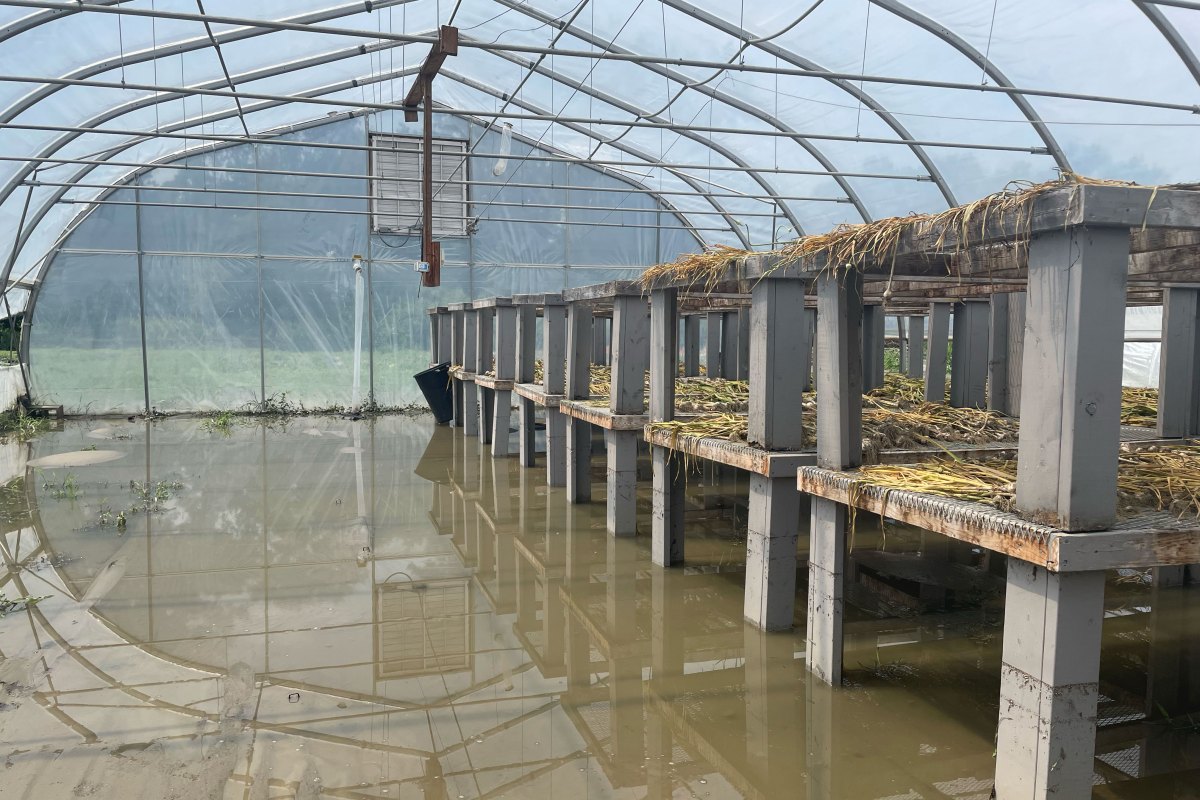
The organization has five acres of land in the Intervale Center and five acres in the Winooski Valley Park District. Both farms are in flood zones and were completely submerged as a deluge of rainfall raised the Winooski River’s water levels at Essex Junction to 22.56ft, according to the National Weather Service.
Laramee has not been able to access the land at the Winooski Valley Park District, where water levels are still too high, she said.
As the flooding worsened earlier in the week, Laramee’s first priority was getting safety precautions out to farmers, worrying that some might try to visit their land plots. As waters recede, she will convene a community meeting midday on Friday to discuss with farmers what to do next, as well as provide them with clear guidelines as they return to their plots.
She is worried that some would want to harvest the top parts of crops that had not been touched by floodwater or that had survived it.
“They are not a community that ever wastes food,” she said. Floodwater brings sewage, raw manure, and toxic chemicals into the soil. She estimated that it will be months before it is safe to replant.
Vermont’s short growing season means there likely will not be enough time to start over and get plants to maturity before the first frost sets in, Laramee said. It is likely that the season is lost for many of the crops that farmers grow here, which need to be established in greenhouses first before being transplanted.

Laramee plans to organize volunteers to begin cleaning up the fields and documenting the damage. Irrigation systems have floated in from neighboring farms. Trees have fallen and fences are strewn about. She noted that while the program is supported by a federal grant and will be fine, “what’s not fine are the farmers.” As subsistence farmers rather than businesses, she said, they will not be eligible for most state or federal funding.
More importantly though, “the community will be in mourning,” she said. “And we need to hold space.” She anticipated that some would cry, others would pray and others still would say, “We can do this; let’s keep going.”
“This is definitely worse than the last time,” she said, recalling flooding the group had experienced in previous years. “This is a different scale.”
Many of the farmers had been subsistence farmers before fleeing their home countries due to war and persecution, she said. Some had lived in refugee camps for upwards of 18 years.
Farming is “what makes them feel like a Vermonter because growing vegetables is a way of life,” she said. “It’s the closest thing to owning land when you’ve lost everything. And it’s like muscle memory.”
They are “resilient,” Laramee said. “But haven’t they been through enough?”
