

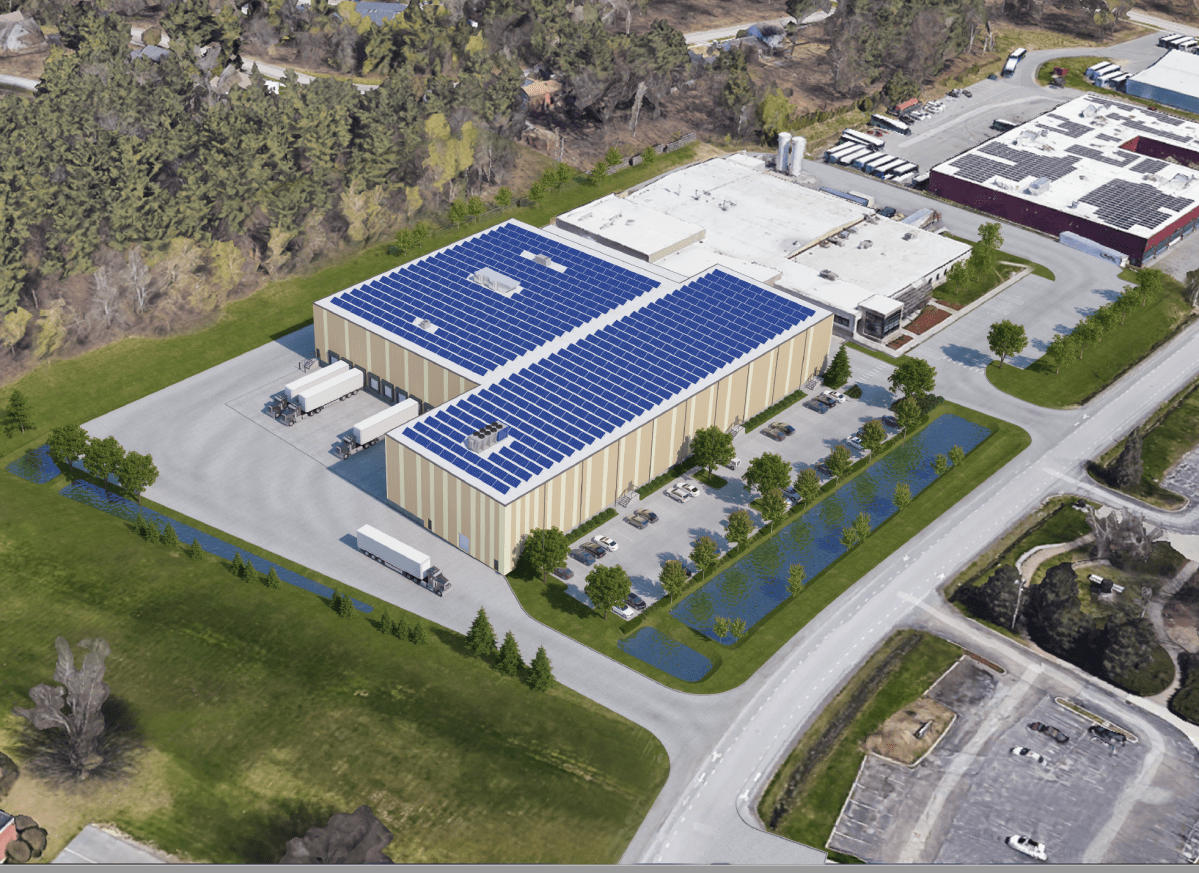
Plans to build a 65,000 square-foot expansion at the Burlington headquarters of Rhino Foods got a boost on Wednesday after the Burlington Development Review Board signed off on them in a unanimous vote.
Though the company now has zoning approval, it still needs city building permits before it can proceed. Rhino president and CEO Rooney Castle told VTDigger on Thursday that the company is also planning for an Act 250 environmental review due to stormwater implications.
Rhino Foods founder Ted Castle told the review board on Wednesday that he and other company leaders and consultants are excited by the project but still deciding whether it is “economically feasible.”
“This is a big, huge investment on our company’s side,” he said. “We think it’s going to make us more prosperous into the future.”
The zoning permit lists an estimated project cost of $10 million, according to city property records. Project plans include a large warehouse with tractor trailer bays, a new parking lot and stormwater retention.
In an interview last week, Rooney Castle said the company currently uses a leased off-site warehouse space in Williston where it stores both raw materials and finished goods. The plans at its Burlington headquarters are “about bringing that operation under one roof.” He also sees the project as an opportunity to reduce the company’s environmental footprint by decreasing the amount of truck traffic moving between two locations.
Though Rooney Castle said the Queen City Park Road headquarters is in an industrial zone, “we recognize that we are part of a community and that there are neighbors nearby, so we’re going through the process of making sure that any of the plans that we’re setting in motion or thinking about are obviously in line with any regulations and requirements that are necessary.”
Some of those neighbors spoke at the review board Wednesday.
Derek Zipprich, who lives nearby on Austin Drive, said he has had conversations with Ted Castle about the project and described the company as a “great neighbor.” But he said he’s also concerned about noise.
Zipprich noted that in the industrial district in which Rhino and other manufacturers are located, the city doesn’t regulate noise emissions.
“We manage water emissions, water pollution, air emissions. I think we need to approach the noise emissions and noise pollution with some quantifiable, measurable measures,” Zipprich said.
He also said he didn’t think that vegetation planted between the Rhino plant and residences has been effective and asked that the industrial district be restricted to 45 decibels at night and 50 decibels during daytime hours at property boundaries.
Several other nearby residents also shared a letter with the review board that was addressed to the environmental commission that is expected to handle the Act 250 review. The letter outlined an agreement the residents said they have with Rhino in which the company outlined steps to reduce noise, including limiting delivery hours, hiring a sound engineer and adding fencing and landscaping.
But the residents also said they are concerned by the prospect of noise from another driveway and added machinery.
“While we really appreciate the changes they have made to accommodate us, there is quite a ways to go and we have serious concerns,” according to the letter.
Brian Pine, director of the city’s Community and Economic Development Office, endorsed the project at the review board, calling it “a really important opportunity to add to the city’s workforce.”
Pine said Rhino is bucking a nationwide reduction in the manufacturing sector. “And to have the opportunity today to have a manufacturer actually adding square footage and adding the capacity to add jobs is pretty remarkable actually given that most urban areas across the country are seeing significant disinvestment in their older industrial parks.”
In addition to being good for the city’s tax base, Pine pointed to other benefits, as well, specifically for the workforce at Rhino, which is largely made up of immigrants and refugees who often don’t have access to vehicles.
“By last count, it was well over a third of Rhino workers at (the Burlington) property were arriving by bus and that’s not something most employers really can tout as a benefit,” Pine said, adding that that helps to alleviate congestion and pollution.
Rooney Castle said the company, which started in 1991 and now has over 200 employees, remains committed to Burlington.
“We think manufacturing is a unique industry and being a part of a community like Burlington is something that we’re really interested in continuing on into the future,” he said.
