

The Burlington City Council passed a $101 million budget on Monday night, but councilors’ debate ahead of the vote revealed worries about the city’s finances.
The council approved the 2024 fiscal year budget 10-2, with Progressive councilors Joe Magee, P-Ward 3, and Zoraya Hightower, P-Ward 1, voting against it.
City taxes were handled in a separate resolution, which passed 9-3. Councilor Gene Bergman, P-Ward 2, joined Magee and Hightower in opposition.
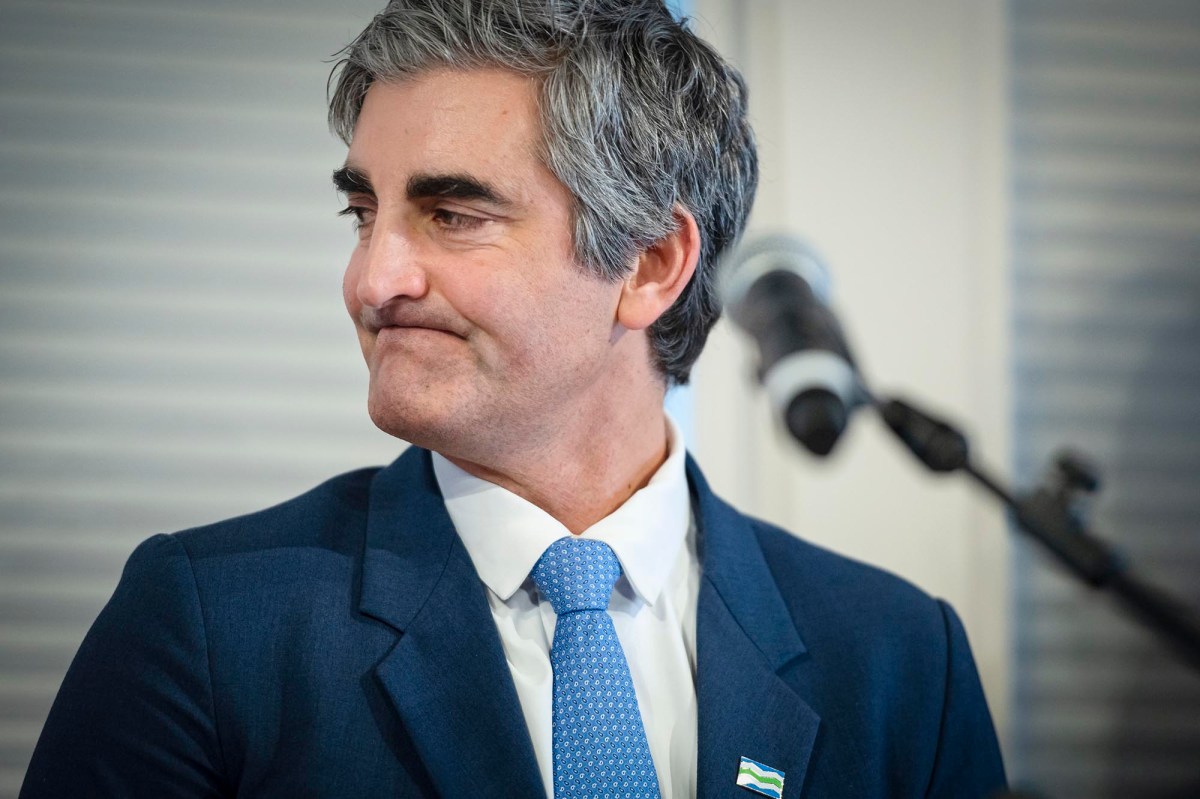
Mayor Miro Weinberger told councilors that the budget “has been the most difficult budget to complete” out of the 12 that he’s presented during his tenure.
The Democratic mayor pointed to inflationary pressures, declining federal revenue, struggles with the city’s vehicle fleet and an ongoing effort to rebuild the police department — all taking place while the city’s borrowing power is consumed by the $200 million Burlington High School construction.
Those challenges will likely put pressure on future budgets as well, Weinberger said. The budget approved Monday includes money to study how to stabilize the city’s finances in upcoming years.
Burlington’s chief administrative officer, Katherine Schad, presented the details of the 2024 budget, which represents a 4% increase in expenses over the current fiscal year.
Schad told the council that city officials had to contend with a “$5 million hole” caused by vehicle expenses, police and fire department personnel costs, cost-of-living adjustments for city staff and inflation-related factors.
To fill the gap, the budget makes $750,000 in cuts across city departments, pulls money from one-time sources such as reserve funds, repurposes federal dollars, and levies an additional $1.1 million in taxes. That amounts to an estimated $13.60 monthly increase for a homeowner at the city’s $370,000 median home price.
Progressive councilors criticized the tax increase, and Bergman introduced an amendment to instead pull more money from reserve funds. It failed by a vote of 7-5. All council Progressives and Ali Dieng, I-Ward 7, supported the amendment.
Bergman said Monday that the budget put him “in a bind.” He supported the expenses but opposed the tax increase that would help pay for them.
The budget, he argued, “does not raise the revenue that we need in the ways that are most responsible to the majority of the people in our city — our low- and moderate-income residents.”
Hightower said it was the first time that she hasn’t supported a budget “in a very long time.” Calling the budget a “moral document,” she said this year’s process has provoked larger questions about “who can afford to live here and under what circumstances.”
Magee said they were concerned to see a tax increase following a citywide property reappraisal in 2021, which led to higher property tax bills.
“I think it does a disservice especially in a year when folks are going to be paying higher electric rates, higher water rates and continuing to see prices for household goods go up across the board,” Magee said.
Even those who supported the budget acknowledged its flaws. Councilor Mark Barlow, I-North District, made the motion to introduce the budget resolution and called it “responsible.” But he also said the city is entering a “challenging period financially.” It was “imperative,” he said, that the city study ways “to contain expenses and to minimize additional taxpayer burdens.”
Councilor Joan Shannon, D-South District, said the budget “retained the level of service that our community needs.” Yet she later added, “I’m disappointed though that this budget both increases taxes and dips into our unassigned fund balance, which is really our insurance policy and it’s not a sustainable way to move forward.”
Correction: An earlier version of this story incorrectly stated how much the Burlington High School renovation is expected to cost.
