

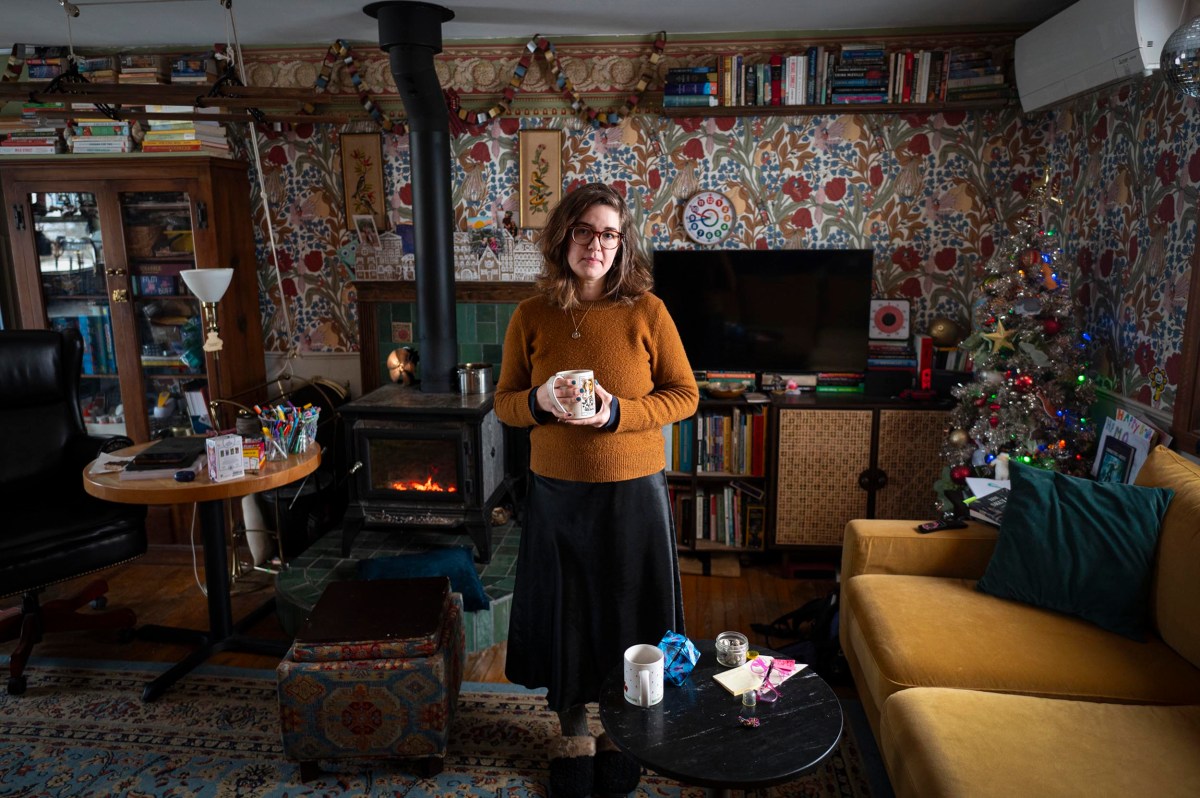
Maggie Byers first felt drawn to paganism during a rough patch in her life.
Her marriage fell apart during the Covid-19 pandemic, and she began to reevaluate many aspects of herself that she’d taken for granted: her relationships, her body, her career.
When her mother sent her a video of people reading Tarot cards, she decided to visit a Tarot reader for the first time. The experience went beyond what she could have imagined, as she felt the medium connect her with her departed relatives.
“I’m driving home thinking, ‘I forgot about spirituality,’” she said. “All of the things that I was working on for myself, it was all grounded in the earth.”
It took another year of research and experimentation for her to identify as pagan, but it now plays an integral role in her life, whether it’s Tarot, manifesting desires through positive thinking, following the moon cycles or sitting side-by-side with her father, a Christian minister, as they both pray.
In some ways, Americans have become less religious than ever. A decadeslong Pew study found the percentage of Americans with any religious affiliation is dropping, and Vermont in particular has the second-lowest religious affiliation of any state.
Yet at the same time, there’s been a small but steady rise in the percentage of Americans who identify as contemporary pagans, an umbrella term that includes paganism as well as Wicca, witchcraft and a host of other belief systems. Helen Berger, a researcher at Brandeis University, calls it the “third wave” of interest in paganism after the surge in Wicca in the 1960s and renewed interest in the 1990s.
It’s harder to say if Vermont is part of that trend, since the absolute numbers are still very small. Pew’s study, for example, reports that only 1% of Vermonters identify as pagan or Wiccan. But interviews with Vermonters who practice these beliefs suggest there is a thriving community of practitioners in the Green Mountain State.
The state’s connection to paganism surged in the 1960s and 1970s, when the back-to-the-land movement drew in migrants with more liberal and alternative beliefs. Doc Bradley, a politics and religion professor at the University of Vermont, said in October that the rise of the counterculture movement in that period prompted a shift away from mainstream religious systems in the Green Mountain State.
Berger said contemporary pagans tend to be more common in urban environments than rural ones, but Vermont may be an exception to that rule because of its counterculture history. There are “a lot of hippies” in Vermont, she said, who could feel drawn to paganism or witchcraft for its lack of authority structure and practice of alternative healing methods.
Vermonters may also be open to contemporary paganism because of its association with feminism and environmentalism, Berger said. Many branches of it celebrate and even worship nature.
“People go to Vermont to feel closer to nature,” Berger said. “We’re always in nature, but the concrete makes us feel more distant from it in the city, possibly.”
Today’s contemporary pagans are different from previous generations, Berger said. They’re more likely to practice alone, more likely to connect to their beliefs through online sources and more likely to find their own preferred practices rather than following set paths of study.
“If you want to become a witch, you go online, and they say, ‘this is what you need to practice,’” Berger said. When she was studying covens in the 1990s, “people made a lot of their own tools, or they would buy them individually. Now you can buy these packages from Walmart.”
That accessibility, Berger said, has made contemporary paganism appealing to people who feel disconnected from the rigidity of other religious traditions. The most common religion remains Christianity, with 45% of Vermont adults identifying as Christians.
“It’s considered a spirituality, rather than an institutional religion,” she said. “There’s no church, mosque, temple, synagogue to attain. It’s much more open to your own interpretation. People do magic, and they feel it works.”
Finding the light
The winter solstice, which was Dec. 21 last year, is one of the most important holidays in the pagan calendar, Berger said. It represents a celebration of the return of the light, since each day after the solstice will gradually get longer.
Byers has created her own tradition for her family. Each year, they hang pine cones on a tree with little scraps of paper that represent their wishes for 2026.
“It’s almost like writing to Santa Claus,” she said.
Then in February, the deepest part of winter, they burn the pine cones to “release that energy.”
Manifesting is one of many practices that commonly fall under the realm of contemporary paganism, Berger said. Others are as diverse as the pagans and witches who practice them: tarot, spellwork, astrology, using crystals and herbs and worshipping the goddess or other divine figures are some of the most cited.
For Cassandra, a recent Vermont convert to witchcraft, meditation with herbs and candles is the ritual that has brought her the most peace and spiritual connection in her everyday life.
“It’s not about clearing your mind of thoughts, as some people will tell you; it is so much more about taking in your senses and regrounding in your body,” said Cassandra, who asked not to use her full name due to concerns about harassment for her beliefs.
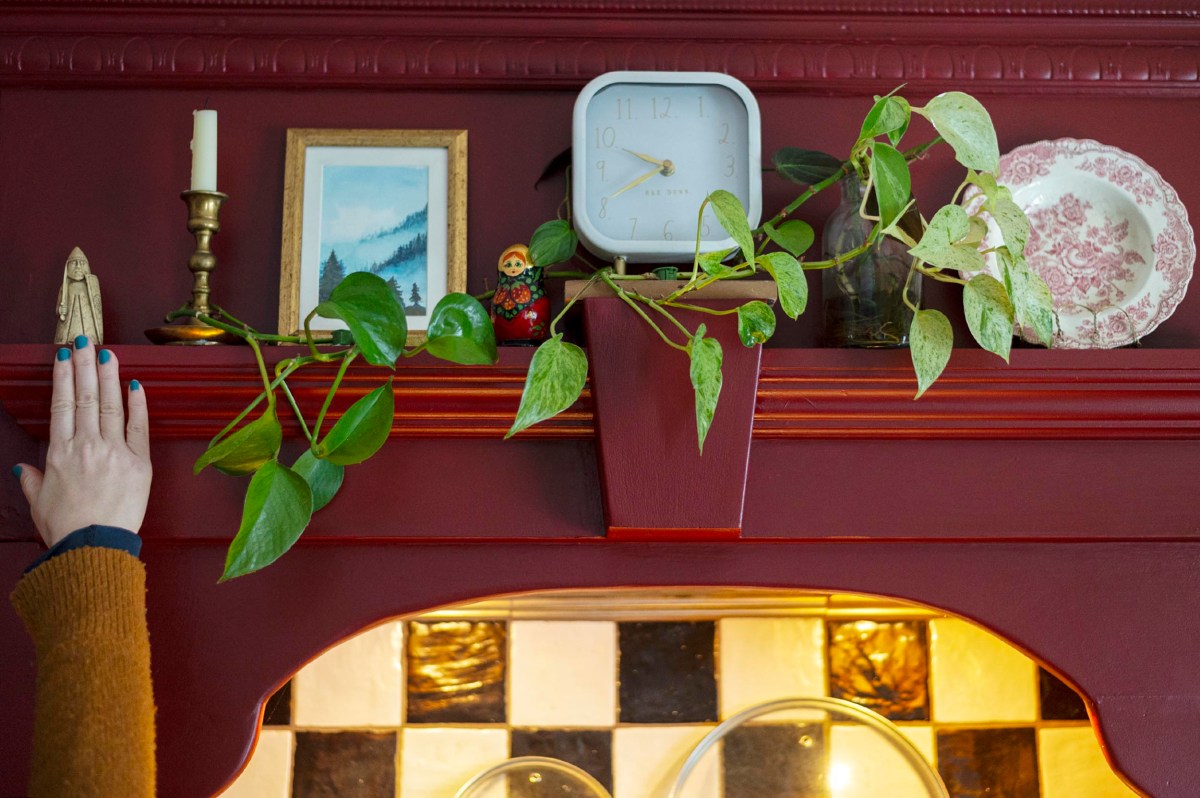
Jillian Kirby, a Burlington-based witch, said her favorite part of witchcraft was the altar she created for her ancestors above her cooking range. The altar has small objects that belonged to each of her deceased loved ones.
Kirby took an indirect path to her identity as a witch. Raised as a Christian churchgoer, she became a “really intense” atheist in her early adulthood. But she found herself missing the “sense of mystery” she found in church services.
Then she found an online community of atheopagans, atheists who incorporate pagan philosophy and traditions into their lives. Kirby sometimes describes herself as a “placebo witch” and has become an ordained atheopagan cleric.
“(There are) a lot of things that from the outside would look very specifically like the idea of spell work, but without any implication of there being a spiritual or other worldly power at work in those things,” she said.
Kirby said online spaces have allowed many people to discover paganism or witchcraft, or their own specific niche within those beliefs, in a way that wasn’t as easy in the pre-internet era.
“There were so many people who were sort of existing and had their own thoughts and their own practices and maybe some little thing here or there,” she said. “And then social media comes. Then people start connecting via the internet, and you find all these other people in your immediate community who are doing these weird little things that you’re into, and then they’re doing other things. And you sort of can expand your practice.”
Byers said she was surprised to learn there were so many other Vermont witches. Although she occasionally connects with other witches on social media, she hasn’t quite gotten around to attending a local witches meetup in White River Junction.
“It’s a busy life, and it’s hard to get out,” she said. “So I haven’t made that a priority yet.”
Berger said she’s also encountered witches who view their practice through a more symbolic lens.
“You could still have the experiences, but not believe in it in a divine or another world way, but you’re having an experience, and those experiences are meaningful,” she said.
Vermont may have a low rate of religious affiliation, but data from the Pew Religious Survey suggests some Vermonters without a specific religious affiliation still have spiritual views. While only 54% of Vermonters identify as part of a named religion, 81% said they believed in a soul or spirit, and 70% said they believe in something spiritual beyond the natural world.
“They still have these experiences, feelings, needs,” Berger said. “And one way in which this need is being met is witchcraft, the metaphysical religions and being in nature.”
Witch hunts, old and new
Modern-day contemporary paganism has few ties to the accusations of witchcraft that led to witch hunts and killings in colonial New England. Amanda Van Eps, a commissioner on the Vermont Commission on Women and a disability advocate, said the historical label of “witch” had more to do with who was viewed as an outsider than the person’s actual beliefs and practices.
“The so-called ‘witch’ was really just a linguistic label signaling that someone had been singled out by their community, not so much a reflection of the practices or the beliefs of people who identify as witches today,” she said. “And I would say ironically, it wasn’t the accused who were hysterical, but rather society itself.”
Yet there have been women who describe themselves as witches as a way of reclaiming their power in a patriarchal system, she said.
From the first wave of interest in contemporary paganism in the 1960s, the movement has been connected to feminism and the feminine divine, Berger said.
“It is drawing in women and particularly girls because of empowerment, this sense of empowerment,” she said.
She’s also observed a higher-than-average rate of people in the LGBTQ+ community identifying as contemporary pagans.
“There is a hetero-centralism within Wicca,” she said. “But from the beginning, the groups that were forming were very open to alternatives, which meant alternative lifestyles and alternatives for whom you might love or create a family with. So all along there have been more gay, more trans people within paganism than in the general population.”
There’s been a long history of discrimination against contemporary pagans, stemming in part from a mistaken connection between paganism and Satanism. Van Eps said there was a certain irony to the fact that modern-day practitioners face the same accusations that victims of historic witch hunts did, even though they have no documented connection to each other.
“Unfortunately for those who identify as a witch today, or are trying to reclaim their femininity, they may be targeted just because of the word ‘witch,’” even though their ideology is “completely different” than what they’re being accused of, Van Eps said.
Berger said some witches in the past have lost custody of their kids because their ex-spouse argued they were an “unfit parent.” In other instances, public rituals have been disrupted or called out by Christian ministers or other religious figures as “evil.”
The stigma continues, even in Vermont. One business owner who sells witchcraft-related products pulled out of an interview with VTDigger because, she said via email, she’s received harassing phone calls accusing her of Satanism.
Kirby recalled taking out a book from the library as a child that happened to contain a description of palm readings. Her devout Christian grandmother made her return the book.
“It took me a long time to not feel like I had to pretend I was just still Christian with my very intensely religious family,” she said.
It was becoming a parent that made her realize she needed to make a more conscious decision to openly embrace her beliefs.
“Really purposely crafting that for my kid has really grounded me in like, ‘No, this is really the choice I’m making, and it’s a completely valid choice,’” she said.
Byers said she would study a person at first to get a sense of whether they would object to her beliefs before opening up to them about it. She also tries to find common ground with people from other religions by finding the overarching principles of love and kindness.
“The same ideas of like, giving gratitude, forgiving yourself, being humble — it’s all the same context, just different words,” she said.
At the same time, Vermont’s witches and pagans are able to be critical of what they see as missteps within their own movement. Cassandra said she’s cautious about avoiding “closed practices,” or rituals and beliefs that are tied to specific marginalized groups. She gave the example of sage burning or smudging, which is associated with Indigenous tribes.
“The most important thing would be to be respectful and do your homework, because a connection with witchcraft is is about your own interpretation, true, but it’s best to approach that interpretation from a respectful standpoint of people who have been practicing these spells, festivities, what have you for thousands of years,” she said.
Byers said she tries to avoid any practice that could interfere with another person’s free will, like hexing someone.
“That’s just bad juju,” she said.
To her, witchcraft is more of an internal practice that has allowed her to see life in a new day. She said it has helped her quell her fear of dying and leaving people behind.
“I have that type of faith that whatever is meant to be will happen, and that somebody will come in and take care of my kids, or people will move on and grieve as they need to,” Byers said. “So it really took away fear of dying and leaving people behind and also taking away the fear of living my life.”
Correction: An earlier version of this story misspelled the name of Amanda Van Eps. The story also misidentified her title.
