

Sitting in the drizzling rain outside of Montpelier’s Kellogg-Hubbard Library on Friday afternoon, Jeffrey Dorsey rolled back the black sock on his left ankle.
“I just want to show you that so you believe me. Because I feel like some people don’t,” he told a reporter as he revealed a fist-sized, red-and-purple lump on the joint, and, in one crevice of his shin, a small abscess. “They don’t know the extent of it.”

The 57-year-old had lived in Barre’s Budget Inn for months as part of a state program that sheltered people experiencing homelessness in motels and hotels. But on June 1, he was shown the door, and told he no longer qualified for a voucher because of the state’s newly narrowed eligibility criteria.
The news had come as a surprise to Dorsey, because he’d heard that disabled people would continue to be helped. Between his diabetes (an infection this spring landed him in hospital for 17 days) and the continued effects of a hit-and-run in 2019 which required a succession of surgeries (one just seven months ago), he’d assumed he qualified. He didn’t.
Dorsey stayed with his girlfriend for a couple days, but he couldn’t stay long-term. And since then, he’s been wandering around downtown Montpelier and sleeping in a friend’s car. Being outside either irritated an old injury or fractured something anew, but on Friday he reported being in more pain than he’d been in years.
“I’m in a lot — a lot — of pain, more pain that I’ve been in like four years. And I’m walking around and it’s been hurting. So I don’t know what to do,” he said. “Like, I really don’t know what to do. I’m not really, like, into begging people. I’ve just been trying to stay outside by myself.”
Using federal Covid-19 aid that flooded the state during the pandemic, Vermont dramatically scaled up a pre-existing program to shelter nearly everyone experiencing homelessness in a hotel or motel. More than three years later, the federal money is gone — but homelessness remains. In fact, amid a housing crisis, it spiked nearly 19% between 2022 and 2023.
Back in March, when federal aid ran dry, lawmakers temporarily extended the program but decided to split the roughly 2,800 individuals staying in motels into two categories. Those who met new eligibility criteria — such as families with children, elderly people and those receiving federal disability benefits — could stay in motels until July 1, the beginning of the new fiscal year. Those who didn’t would need to be out a month earlier, on June 1.
Both Republican Gov. Phil Scott and Democratic legislative leaders have, to varying extents, reversed themselves on the subject of the roughly 2,000 people that are scheduled for eviction July 1, promising to extend their stays. But they’ve held firm to the decision that the June 1 cohort, which number about 800 people, should remain ineligible for further shelter through the state’s program.

That leaves people like Dorsey, who don’t receive Social Security Disability Insurance — but who nevertheless have disabilities or medical conditions — relying on whatever help local service providers can muster.
Advocates have been pushing for lawmakers to reconsider. Brenda Siegel, an activist and former Democratic gubernatorial candidate, last week released a compilation of data from a survey of 76 people set to leave in the June 1 cohort. Many have had major medical conditions, she reported, including grand mal seizures, a brain tumor, epilepsy, kidney disease, cancer, Crohn’s disease, severe arthritis, endocarditis and hemophilia. One recently underwent an amputation, she said, and two had had a heart attack or stroke.
Service providers by and large say that people with such significant physical needs who don’t receive federal disability benefits represent a minority of those who left hotels and motels on June 1. But they argue their needs are still acute. On Monday, Martin Hahn, executive director of the Vermont Coalition to End Homelessness, sent a letter to lawmakers, urging them to include those who meet Vermont’s definition of “disability,” and those who are medically vulnerable, to remain housed.
“Many people with disabilities do not have (federal Social Security Disability Insurance or Supplemental Security Income) and you can’t apply for that if you don’t have an address,” stated the letter, signed by several local service providers.
Indeed, an hour or so after speaking to a reporter, Dorsey met with the co-executive director of the Good Samaritan Haven, Rick DeAngelis, who concluded, after studying his injuries, that he had no option but to use the shelter’s funds to pay for a motel.
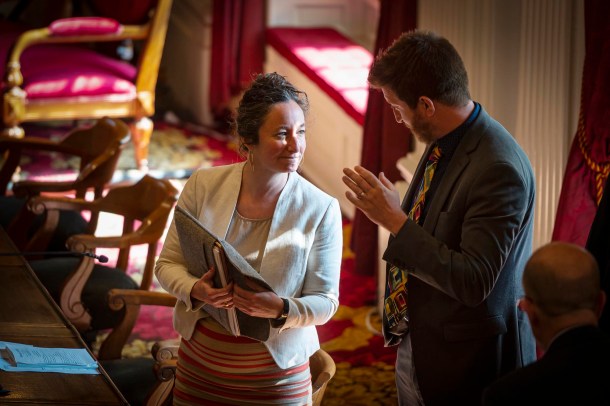
Lawmakers will reconvene in Montpelier on Tuesday for a special veto session, when they are set to take up legislation that would keep in place those who were scheduled to leave July 1 until alternate shelter can be found. Rep. Emilie Kornheiser, D-Brattleboro, who has been involved in the legislation’s development, told VTDigger on Monday afternoon that lawmakers did not intend to tweak eligibility criteria for now.
Advocates have also criticized the legislative deal that was announced in broad strokes last week for leaving out anyone who will fall into homelessness after July 1. While it would keep people in motels if they’re already there, it would subject anyone who loses shelter starting next month to the pre-pandemic rules for the state’s general assistance program.
A family with children, for example, would be eligible for only 28 days of shelter within a year, not counting the winter months. (Hahn’s letter also made this point, and noted that more people are entering homelessness than are leaving it.)
Kornheiser said some legislators are interested in re-evaluating the motel program’s rules when they come back for their next full session. But after this week’s veto session, lawmakers won’t be back in Montpelier until January. And in the interim, Kornheiser freely acknowledged many people will be left in the lurch.
“One of the hardest things about this work is that almost everything that we do leaves people out that shouldn’t be left out,” she said.
