


Gov. Phil Scott on Wednesday signed a two-year infrastructure package into law, appropriating $122.8 million in bonded dollars for a wide array of initiatives, including courthouse upgrades, clean water projects, and repairs at the Vermont Veterans’ Home.
The capital bill is Vermont’s regular spending legislation that finances state construction and maintenance projects, and this biennium’s package, H.493, also authorizes an additional $50 million through a separate cash fund. But that pot of money is technically appropriated in the so-called “Big Bill,” or state budget, H.494, which Scott vetoed last month over unrelated objections. (Lawmakers are planning an override next week.)
“The Capital Bill I signed today will yield dividends for years to come. In my Inaugural Address, I made clear one of my priorities was to use one-time surpluses for future required match funding, so that we can take full advantage of federal funding opportunities,” Scott said in a statement released by his office. The governor also highlighted the spending package’s clean water investments, which include $15.9 million in bonded dollars for various initiatives, plus $9.8 million in the cash fund.
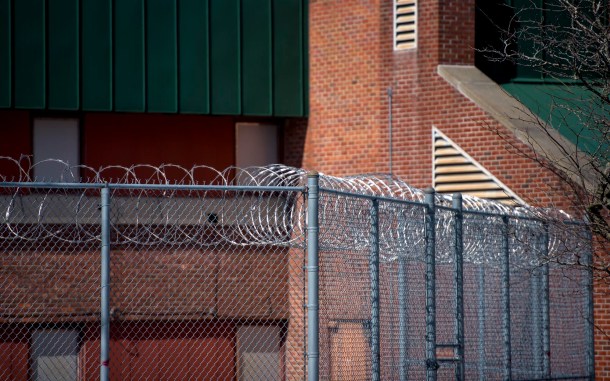
Perhaps the most contentious item in H.493 is $14.5 million to begin planning and saving for a new women’s prison.
What to do about Chittenden Regional Correctional Facility, Vermont’s only facility for women, has been the subject of debate for years. Journalists, advocates and attorneys have all documented unsanitary living conditions at the South Burlington prison, and state officials have long promised action. But previous proposals have spooked advocates and criminal justice reformers, who fear that building too large a facility will allow the state to lock people up without adequately prioritizing further strategies for decarceration.
The state hasn’t selected a site for a new prison, which officials have estimated would cost at least $70 million, and construction is not expected to begin within this bill’s two-year cycle.
In a concession to advocates, lawmakers included language in the bill requiring the Department of Corrections to submit a report to the Legislature in November detailing “the proposed size and scale of replacement women’s facilities.” The report would include the expected numbers of correctional and reentry beds, bed types for specialized populations, and data to back up the department’s plan. Another report, due in January, asks the Department of Buildings and General Services to propose a site.
Falko Schilling, advocacy director at the Vermont ACLU, said the civil liberties group remains “concerned” about “plans we’ve been hearing from new prison construction — but understand that there’s gonna be a lot more to talk about when everyone comes back to the Legislature in January.”
“That’s when we’re going to learn more about the actual proposals. And that’s when the rubber is going to meet the road,” he added.
Sarah Robinson, deputy director of the Vermont Network Against Domestic & Sexual Violence, which worked to get the reporting requirements into the bill, wrote in a statement that while the group believed that the Department of Corrections was “moving in the correct direction with its design,” that “investments by the General Assembly must continue (to) be balanced with transparency.”
Other notable projects funded in H.493 include:
- $7.6 million for HVAC renovations at the Statehouse, plus $150,000 for design documents on an expansion
- $2.75 million for a roof replacement at the Brattleboro courthouse; $6 million for a renovation at the county courthouse in White River Junction; and $1.25 million for design and planning of a replacement for the one in Newport
- $1.3 million for a roof replacement at the Northwest State Correctional Facility in St. Albans and $2.75 million for projects at the Northeast Correctional Complex in St. Johnsbury
- $15.9 million in bonded dollars for various clean water initiatives, plus $9.8 million in the cash fund to match funding from the federal Infrastructure Investment and Jobs Act
- $6 million for the Vermont Veterans’ Home, including an elevator upgrade and an emergency generator a boiler plant replacement
- $3.6 million for the Vermont Housing & Conservation Board
Also on Wednesday, Scott signed H.127, a bill legalizing sports betting; H.461, a miscellaneous education bill; H.470, a bill that permits the sale of to-go cocktails for another two years and makes other amendments to state alcohol laws; and H.480, a bill tasking the state with handling property reappraisals. He also allowed two bills to become law without his signature. One, H.165, will require all K-12 schools to offer universal free meals, and the other, H.270, makes several amendments to Vermont’s cannabis laws.
Among other items, H.270 repeals the sunset of the Cannabis Control Board, Vermont’s regulatory body for the cannabis market. Scott wrote in a statement that while this change “appears minor,” in actuality it carries “substantive consequences for the principle of separation of powers.”
“I understand there is a need for an alternative structure for regulating controlled substances that remain federally illegal so that we do not compromise federal funding,” he said. “However, when removing the sunset on the CCB, the statutory authority of the CCB needs to be clarified to ensure constitutionality and accountability to the governor.”
