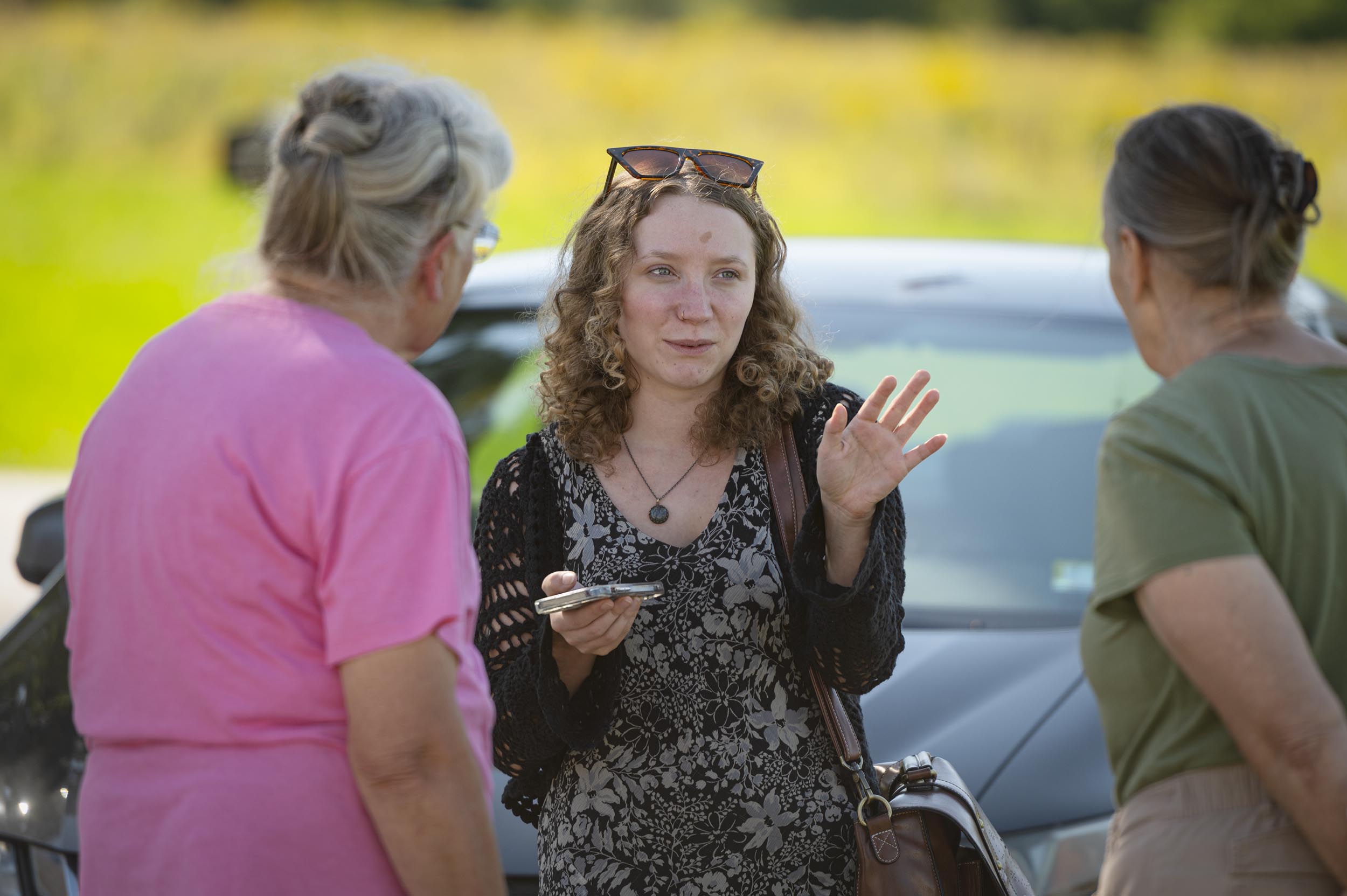
Kira Corasanti is a reporter with Community News Service, part of the University of Vermont’s Reporting & Documentary Storytelling program.
As part of an ongoing recovery project, wildlife officials have announced the annual closings of cliffs where peregrine falcons nest across Vermont. The closures began this month and will run until Aug. 1 to protect the birds from human interference during breeding season.
“These nesting closures are critical,” said biologist Margaret Fowle of Audubon Vermont. “We want to maintain the population.”
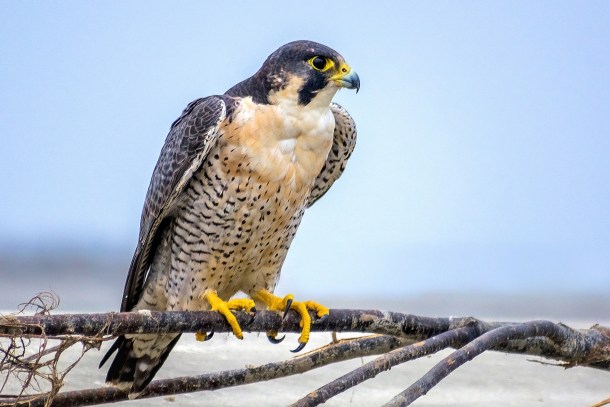
Peregrine falcons, known for their remarkable speed and hunting skills, have made an extraordinary comeback from near extinction in the past century. In the mid-1900s, peregrines became both federal and state endangered species after suffering significant declines due to the harmful pesticide DDT.
“They were one of the species that was telling a story of what DDT was doing to the environment,” Fowle said. Reintroduction efforts began in the mid-1970s, and in 2005, peregrines were taken off Vermont’s endangered list.
But their nesting sites remain vulnerable to human activities, such as rock climbing and hiking, which can scare young birds or keep falcons away from their young. “They are still considered a sensitive species and one of conservation need,” Fowle said.
Audubon Vermont coordinates peregrine falcon monitoring and management efforts in partnership with the Vermont Department of Fish and Wildlife, the Green Mountain Club and Climbing Resource Access Group, or CRAG, a rock climbing and conservation organization. Volunteers and officials find and document nests, determine incubation, hatching and fledging dates and count the number of young fledged at each site.
The closures have been happening since the 1980s. “They are pretty consistent with where they breed — they come back to the same cliff year after year,” said Fowle. There are 12 cliffs closed for nesting season this summer.
Keeping climbers away from nests is especially important since their presence can lead to falcon deaths.
“There is a critical window with the chicks in particular where they aren’t ready to fly yet,” said Travis Peckham, a volunteer with CRAG. “If climbers get too close, the chicks would jump prematurely … It’s a risk to the chicks and a risk to the climbers — of course, you don’t want to be climbing on a rock when a bird smacks into you.”
Every year, volunteers put up new signs and postings on climbs or trails. Yet some people ignore these warnings.
“We know people have been seen going on the top despite the closures or the signage,” Fowle said. Rested on an overlook, the nesting site on Prospect Rock in Johnson is a problem area frequented by many hikers.
“In 2020, the nest on Prospect didn’t survive because of people,” Peckham said. Experts initially thought the falcons had abandoned the site, but the birds were recently spotted there, and Prospect is now off limits. The Green Mountain Club plans to reroute the trail there to avoid the overlook.
Posting signs can be tricky, too, because people might be tempted to try to see the birds if they know they’re around.
“You want there to be awareness, but sometimes you don’t want there to be attention,” said Rosalind Renfrew, who manages the Department of Fish and Wildlife’s Wildlife Diversity Program and teaches at the University of Vermont.
At the same time, monitoring from volunteers and recreationists is an important part of the ongoing efforts.
“If people are climbing or hiking and find peregrines, they help spread the word,” Fowle noted.
The extra eyes can also dissuade would-be intruders. “It would be pretty embarrassing if you were to disturb them and someone found out,” Renfrew said.
Since their comeback, peregrines have established more than 40 nesting sites in Vermont. “It’s exciting for me as a climber to see a peregrine falcon,” said Peckham. “That was not the case 20 years ago.”
Why are peregrine falcons important? “They nest on these cliff sites, and they take small birds as prey. They occupy a niche that no other species does around here,” Renfrew said. “And frankly, they are amazing for people. They are a spectacle.”
The birds can also tell scientists how the rest of the ecosystem is doing. “If they aren’t doing well, it’s a sign that other things aren’t doing well,” Fowle said.
The closure sites are:
- Bolton Notch (Bolton) — UUW cliff’s cliff access and climbing closed
- Bone Mt. (Bolton) — portions closed to climbing
- Deer Leap (Bristol) — cliff-top and climbing closed
- Eagle Ledge (Vershire) — closed to hiking and climbing
- Fairlee Palisades (Fairlee) — clifftop closed
- Marshfield Mt. (Marshfield) — portions closed to climbing
- Mt. Horrid (Rochester) — Great Cliff overlook closed
- Nichols Ledge (Woodbury) — cliff-top and climbing closed
- Red Rocks Park (South Burlington) — southern cliff access closed
- Rattlesnake Point (Salisbury) — southern overlook closed
- Snake Mt. (Addison) — entire western trail closed
People who want to get involved can reach out to Fowle at margaret.fowle@audubon.org.
Clarification: This story was updated with new information about the closure of Prospect Park in response to recent peregrine falcon sightings there.