

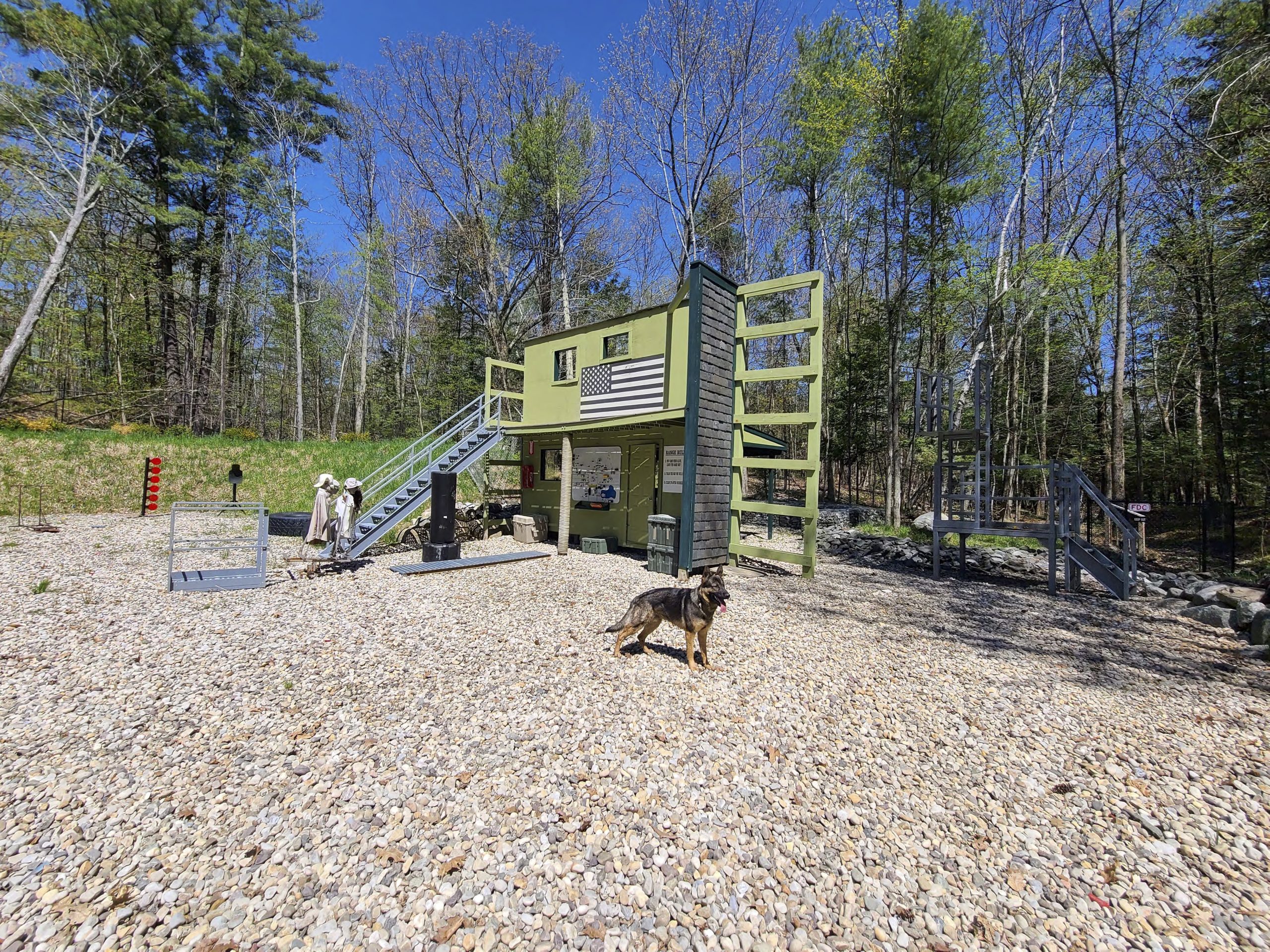
A bill that proposes banning paramilitary training in Vermont is poised to become law.
Gov. Phil Scott has indicated that he’s likely to sign S.3, a bill lawmakers in the state’s House of Representatives passed on Friday after the Senate passed it in February.
“The Governor hasn’t reviewed the latest draft, but he is not opposed to the concept and barring any new additions that significantly changed the bill since the version the Senate originally approved, it is likely to become law,” Jason Maulucci, the governor’s press secretary, wrote in an email.
Senate President Pro Tempore Phil Baruth, D/P-Chittenden, introduced the bill partly in response to Slate Ridge, a paramilitary training facility that has operated since 2017 in West Pawlet. The facility’s owner, Daniel Banyai, has hosted militia groups, threatened local officials and harassed neighbors and others who have spoken out against him, according to court documents and a VTDigger investigation.
Speaking on the House floor on Thursday, Rep. Will Notte, D-Rutland City, said much of the legislature’s work is “in anticipation of problems we might have.
“There are things that may happen somewhere else in the country (and) we would like to avoid problems in Vermont,” he said. “But this is a problem that has come home for our state.”
When news of Slate Ridge’s impact on local residents broke in the fall of 2020, state officials, including the governor, said they couldn’t act. Banyai had not violated state laws, Scott said at the time.
Baruth also introduced the bill because of the larger national context in which militia groups have proliferated. Earlier this year, he told VTDigger he was concerned that the state could become hospitable to those groups unless lawmakers took action.
In Pawlet, Slate Ridge has been an upending force for years. With no state law to regulate Banyai’s activities, town officials sought relief through the state Environmental Court. While a judge has ordered the facility to close, the process has taken years — and tens of thousands of dollars in legal fees. Proponents of the bill have said the state needs a clearer path to shutter such organizations quickly.
Addressing his colleagues on Friday, Notte said state government “exists to tackle the problems that local municipalities cannot handle.”
“A lot of this could come down to issues of property management, of zoning, proper use of land,” he said. “It would be irresponsible on our part, knowing this problem has existed — and it could very well exist again — to send a local zoning administrator out to a camp where there are armed people with ill thoughts of the government.”
Mirroring laws that already exist in 25 states across the country, the bill makes it a crime to “teach, train, or demonstrate to any other person the use, application, or making of a firearm, explosive, or incendiary device capable of causing injury or death” if the person knows or should know that the training is “intended to be used in or in furtherance of a civil disorder.”
It also prohibits people from assembling to be trained in those techniques if they know or should know that they are intended to cause civil disorder.
The bill allows the attorney general or a state’s attorney to intervene with immediate action if they have “reason to believe that a person is violating or is about to violate” the law.
Vermont is the only state in New England that does not prohibit paramilitary training in its statute.
The measure has received widespread support, in part because of its narrow scope. Private military organizations are outside the protections of the Second Amendment, Rep. Angela Arsenault, D-Williston, said while presenting the bill on the House floor on Thursday, when the body first considered and voted on the bill.
S.3 would still allow lawful and authorized organizations and activities, such as legitimate law enforcement activities, legal shooting ranges, self-defense instruction and hunting.
While the Senate passed a bill that would have allowed a criminal penalty of up to five years in prison and up to a $5,000 fine for those who violate the law, the House raised the fine to $50,000.
