

Updated at 4:50 p.m.
By a single vote, Vermont’s House of Representatives has sent the state’s largest climate bill back to the drawing board, failing to override Gov. Phil Scott’s veto.
It was the House’s second unsuccessful veto override on Tuesday, after it failed to resurrect legislation that would bar “evictions without cause” in Burlington.
Scott vetoed the clean heat standard bill, H.715, on May 6, citing concerns about the large role it would give the state’s Public Utility Commission and the potential cost implications for Vermonters, sending the bill back to the House. An override needed 100 votes — and earned 99, with 51 lawmakers voting “no.”
Born out of the state’s Climate Action Plan, the clean heat standard was designed to measurably reduce emissions in the state’s thermal sector. Heating Vermont’s buildings produces more than a third of the state’s greenhouse gas emissions — the thermal sector is second in line behind transportation.
According to mandates set by the 2020 Global Warming Solutions Act, Vermont must reach emission-reduction targets by 2025, 2030 and 2050 or face potential legal action. Without the clean heat standard, it’s unlikely that Vermont would meet those legally mandated greenhouse gas emission reduction deadlines.
If the state faces a lawsuit because it hasn’t formulated a path to meet the deadlines, a judge may order the state’s Agency of Natural Resources to take corrective action. It is unclear what actions the agency might take to meet the emission reduction requirements.
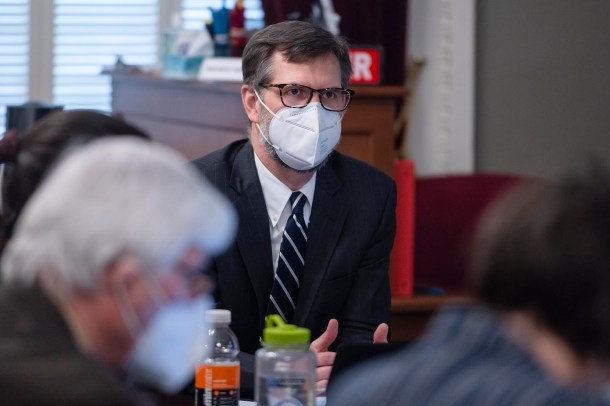
“It is possible that the governor or the Climate Council or someone in this Legislature has been sitting on a secret plan to reduce fossil fuel use and greenhouse gas emissions on a scale contemplated by the clean heat standard,” Rep. Tim Briglin, D-Thetford, who chairs the House Committee on Energy and Technology and spearheaded work on the bill, told lawmakers on the floor. “If that secret plan is out there, I’m not in on the secret.”
The clean heat standard would have established a credit system to encourage Vermont’s thermal sector to shift from fossil fuel heating sources to heat sources that produce fewer emissions.
While Republicans, including Scott, have expressed concerns about the potential cost impacts of the clean heat standard, some Democrats and environmentalists have also been wary of the bill. As written by lawmakers, the clean heat standard would have directed Vermonters to use biofuels, which come with their own emission price tags and can have harmful environmental ripple effects.
Three Democrats voted against the bill: Rep. Nelson Brownell of Pownal; Rep. Linda Joy Sullivan of Dorset; and Rep. Thomas Bock of Chester.
Bock told VTDigger he made a last-minute decision to vote against the bill, and hadn’t told House leaders about his plans. Calls from constituents, whom he described as environmentalists and people in businesses who would be affected, ultimately changed his mind, he said.
“I didn’t think, ‘What do we have to do to beat the governor?’ or something. I didn’t think that way,” he said. “I had to consider my constituents and the bill itself, and let the chips fall where they may.”
Bock said he didn’t realize his would be the swing vote. He wanted to see the bill broken into smaller pieces and deliberated by legislators.
Groups such as the Conservation Law Foundation and 350VT have opposed the bill, and a presentation to lawmakers from Indigenous leaders and environmentalists expressing concerns about the clean heat standard earlier this session now has nearly 10,000 views on Youtube.
“Every dollar that we spend on biofuels will be a dollar away from our communities’ ability to reduce energy consumption through weatherization and energy efficiency,” said a statement released Monday by 350VT, an environmental advocacy organization..
The bill acted like an outline to the state’s Public Utility Commission, designating much of the substantive work involved with creating and implementing the clean heat standard. The commission would have determined how to mitigate negative impacts on low-income Vermonters, for example, and how to deal with biofuels.
Scott cited concerns about allocating so many decisions about heat to an unelected body. He requested a “check back” amendment so that the commission’s plan would come back before the Legislature. Lawmakers added that amendment, but Scott called it “inadequate.”
On the floor, Briglin said there was “a lot to unpack in trying to understand the governor’s veto message on H.715” — mainly because, he said, lawmakers addressed his requests in recent versions of the bill.
Briglin said Scott’s second objection — a concern about the Legislature’s decision to delegate authority to the commission, an unelected body — did not hold up, either.
Briglin took issue with that point for two reasons: The first was because lawmakers would need to approve the clean heat standard again in 2024, he said, so elected officials would ultimately have the final say.
The second reason was that the Agency of Natural Resources — another unelected body — may need to implement regulations to meet Vermont’s greenhouse gas emission requirements if the Legislature doesn’t have a plan.
“When we passed the Global Warming Solutions Act two years ago, we did so anticipating that we might get to this very point where we find ourselves today in the policymaking process, that there would be tough decisions to make, and that elected officials — whether the governor or legislators — might be reluctant to make them,” Briglin said.
The choice before lawmakers, he said, was not whether to reduce emission or do nothing.
“By law, that is no longer our choice,” Briglin said on the floor. “The choice we are faced with today is: Shall we proceed with the clean heat standard, examining and debating the details of how that program will work? Or shall we stand aside and defer to the Agency of Natural Resources to act if we fail to do so?”
Lola Duffort contributed reporting.
