


When Steve Kieselstein comes home from his law firm each night, he makes dinner, tidies the house, and then, when he can carve out the time, he sits down to work on a plan: How will his son be cared for when he’s gone?
Kieselstein’s 29-year-old son, Aaron, has autism, and needs constant support for communication and day-to-day skills, such as cooking. Kieselstein, 64, manages Aaron’s care and education. He trains the aides who support Aaron while Kieselstein goes to work.
He worries that when he is no longer able to care for his son, Aaron will lose the structure he’s built over the past two decades.
“He could end up with a world that’s so much smaller than it is right now,” Kieselstein said.
Elizabeth Campbell, a psychoanalyst in Shelburne, also worries about her son’s future, especially after her 61-year old husband died from a brain tumor in 2020.
“I haven’t really been able to mourn him because it’s triggered such anxiety in me,” Campbell said. “Because what if something happens to me?”
Campbell’s 24-year-old son, Jesse, has Down syndrome and Down syndrome regression disorder, and cannot be left alone for any long period of time.
Both Kieselstein and Campbell worry that as they age, or after they die, their adult children with developmental disabilities will be placed in what’s known as shared living. Some parents and advocates liken it to adult foster care.
This worries Kieselstein, based on what he’s heard from other families. What if Aaron is shuffled between homes? Who will train the shared living provider on what Aaron needs? What if the provider isn’t trained in Aaron’s applied behavior analysis program, and Aaron loses the skills he’s developed so far? What if they don’t know how to manage problem behaviors, and they stop including Aaron in social settings? And in the worst-case scenario, what if he gets hurt or arrested?
“The amount of things that you have to get track of and make sure are covered — the list is incredibly, incredibly long. And it’s very scary,” Kieselstein said.
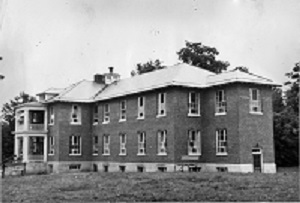
For the past three decades, shared living has been the dominant housing model for Vermonters with developmental disabilities. Previously, most were housed in institutions, the largest being the Brandon Training School in Rutland County.
When the center closed in 1993, the state lauded its progress toward inclusion.
“The story of the closing of the Brandon Training School is really a story about opening doors: the doors of homes, churches, workplaces, swimming pools, parks and stores throughout our state,” said a Vermont Agency of Human Services report that year. “The Brandon Training School closed this year because the doors and hearts of communities throughout Vermont opened just a little wider.”
But some advocates say the emphasis on deinstitutionalization has gone too far, limiting choices for people who would prefer to live among their peers, causing isolation and leaving overwhelming responsibility on individual, aging parents.
“There’s a general reaction in Vermont to any kind of setting in which there are more than just a couple of individuals — in part, as I understand it, as a reaction to the closing” of the Training School, Kieselstein said. “And in some ways, that’s caused the pendulum to swing all the way in the other direction.”
More than 70 Vermont parents of adults with developmental disabilities, alongside self-advocates, have been lobbying state lawmakers this session to reform the developmental disabilities services system. The parent group organized this fall as the Developmental Disabilities Housing Initiative.

Having a choice in where to live is important for autonomy, said Max Barrows, outreach director for Green Mountain Self-Advocates. Other young adults get to live independently, among their peers, in a college dorm, or with roommates, and they’re allowed to fail and grow from mistakes — whether that’s through developing friendships, dating or managing their money.
Barrows calls it “the dignity of risk.”
People with disabilities “are controlled in a way where they are not given the chance to make a mistake,” he said. “It doesn’t make sense to not allow people with disabilities not to fail, versus everyone else, and learn from their failures. It’s just a way people learn.”
‘What happens when those parents are no longer alive?’
For parents, particularly parents of people with high support needs, housing is an existential anxiety.
Ellen McKay Jewett testified before the Senate Health and Welfare Committee on March 24 about her challenges finding suitable housing for her 28-year-old daughter Kate, who is Deaf and has physical and intellectual disabilities.
Jewett has been looking for a Deaf household to serve as Kate’s shared living provider, and after three years and lots of advertising, she has received only one “wildly inappropriate” application, Jewett told the committee.
“Imagine sending your aging parent with mild dementia off alone to live in a series of unknown strangers’ homes. None of us would do that,” she said to lawmakers. “Many families can’t bring themselves to do this to their adult children and keep them at home. But what happens when those parents are no longer alive?”
In the meantime, Kate has been living with her 72-year-old father, who has provided 24/7 care for the past two years, Jewett said.
During that period, Jewett also supported her husband, former Vermont House Majority Leader Willem Jewett, through treatment for a rare, terminal cancer. He died earlier this year.
“Willem’s death is tragic in so many ways, and it underscores a terrible but obvious truth: The natural guardians and advocates for our sons and daughters will die, sometimes way too early, leaving them unprotected,” Jewett said. “This is why we must put a better system of care in place.”
The Senate is now considering a bill, H.720, that takes some steps toward new pilot housing programs. It would also give the Legislature more oversight over the Department of Disabilities, Aging and Independent Living. Under the bill, the department would have to seek the General Assembly’s approval before restructuring some aspects of the system, including payment.

While the department disagrees with some of the Legislative oversight requirements, said Commissioner Monica White, the department supports piloting new housing models.
The bill appropriates half a million dollars for the Vermont Developmental Disabilities Council and other advocates to develop “pilot planning grants” in at least three regions of the state. Parents in the Developmental Disabilities Housing Initiative are currently working on proposals for what they’d like to see in residential programs, said Elizabeth Campbell, the Shelburne parent.
The bill would also create a Residential Program Developer position within the Department of Disabilities, Aging and Independent Living.
A history of institutions
Shared living became the prominent housing model for Vermonters with developmental disabilities over the last 30 years, since the closure of the Brandon Training School, White said.
The Brandon site — opened in 1915 as the Vermont State School for Feebleminded Children — segregated people with developmental disabilities from the rest of society. By the time the state closed the facility in 1993, it had housed more than 2,300 people.
In 1999, in the landmark case Olmstead v. L.C., the U.S. Supreme Court ruled that institutionalizing people with disabilities was unlawful discrimination. The court required states to deliver services in a way that integrates people with disabilities into their communities.
Vermont is currently one of just two states where no people receiving developmental disabilities services live in group settings of six or more, according to the most recent annual report from the Department of Disabilities, Aging and Independent Living.
Most adults receiving developmental services do not live with family. And of the approximately 1,800 Vermonters with paid support staff, about 75% are in shared living.
Shared living made sense after the closure of the Training School because many people leaving the institution didn’t have any remaining family, said Kirsten Murphy, executive director of the Vermont Developmental Disabilities Council.
And while the system still works for some, Murphy said, it doesn’t work for everyone, and it is often the only option.
The desire for permanent, small-group housing may be due, in part, to a generational divide, White said. Many of the advocates pushing for this choice were born after the Training School closed, and “institutionalization was not something that had been experienced in their lifetime,” she said.
Advocates emphasize that their vision is different from the warehouse, prison-like institutions of the 20th century. They point to programs like Yellow House, in Middlebury, or Heartbeet Lifesharing, in Hardwick, which offer community, programming and support staff for small groups of people with developmental disabilities.
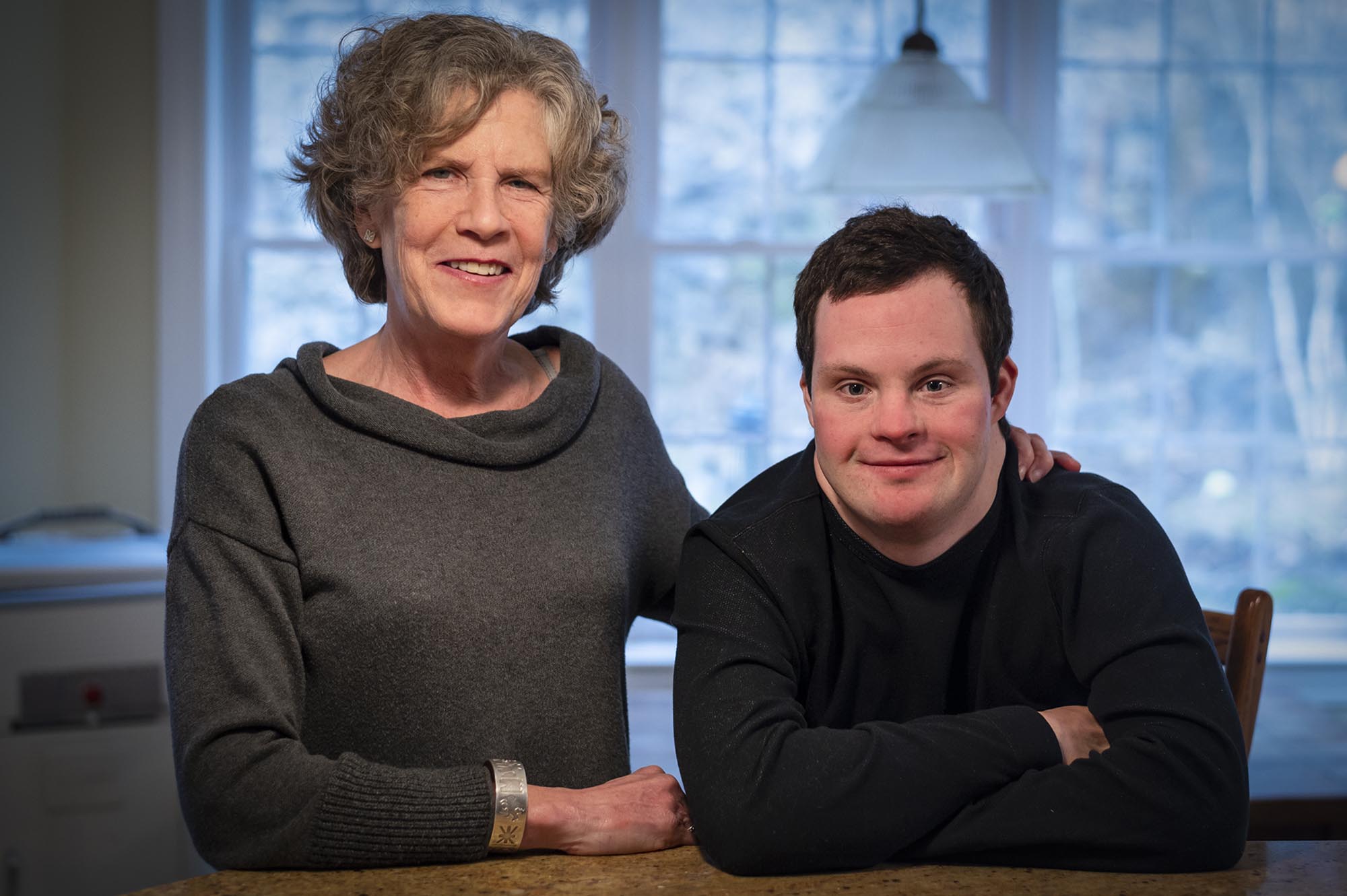
For Campbell, a residential program would offer stability, where Jesse could continue to live in the same community, regardless of any individual caregiver. She also wants him to be able to live among peers and make friends.
Comparing Jesse’s positive, social experience in Vermont public schools to his adult life, “sometimes, we sort of set our kids up for sorrow,” she said, as there are few venues in adulthood for Jesse to build relationships with people besides his caregivers, and to meet other people with developmental disabilities.
Small-group residential sites, like Yellow House and Heartbeet Lifesharing, are relatively rare in Vermont, and have limited capacity. Heartbeet and Yellow House also depend on private donations.
The Department of Disabilities, Aging and Independent Living does not collect vacancy data for residential programs, said White, the commissioner.
Cost could prove to be a challenge, as small-group communities have significantly higher per-person costs.
In 2021, shared living cost almost $39,000 per person, according to the department’s annual report. Group living — where three to six people live in a home owned or rented by a service provider — cost about $107,000 per person. Similar settings that housed one or two people cost about $139,000 per person.
Supervised living, in which a person receives support in a home they personally own or rent, is the lowest per-person cost for the state, but it is limited by the market’s lack of affordable housing options, according to the report.
It “remains to be seen” how new housing models would affect the state’s developmental disabilities services budget, White said.
Forty percent of Vermont’s developmental disabilities services budget currently comes from state funds, including state funds used to match Medicaid payments.
Medicaid — which funds most developmental disability services — also requires supports to be deinstitutionalized as much as possible, White said. This can complicate the process of setting up a residential program.
The bill to pilot new programs passed the House on March 22. The Senate Health & Welfare Committee plans to continue working on the bill for the next two to three weeks, according to Sen. Ginny Lyons, D-Chittenden, the committee’s chair.
Advocates and parents remain firm that there is a middle path: a system that doesn’t institutionalize people, but also provides choice and stability.
“It’s a terrible thing to age and realize that there’s no stable future for your totally vulnerable adult child in wonderful, enlightened Vermont,” Campbell said. “Vermont is behind other states in this regard.”
