

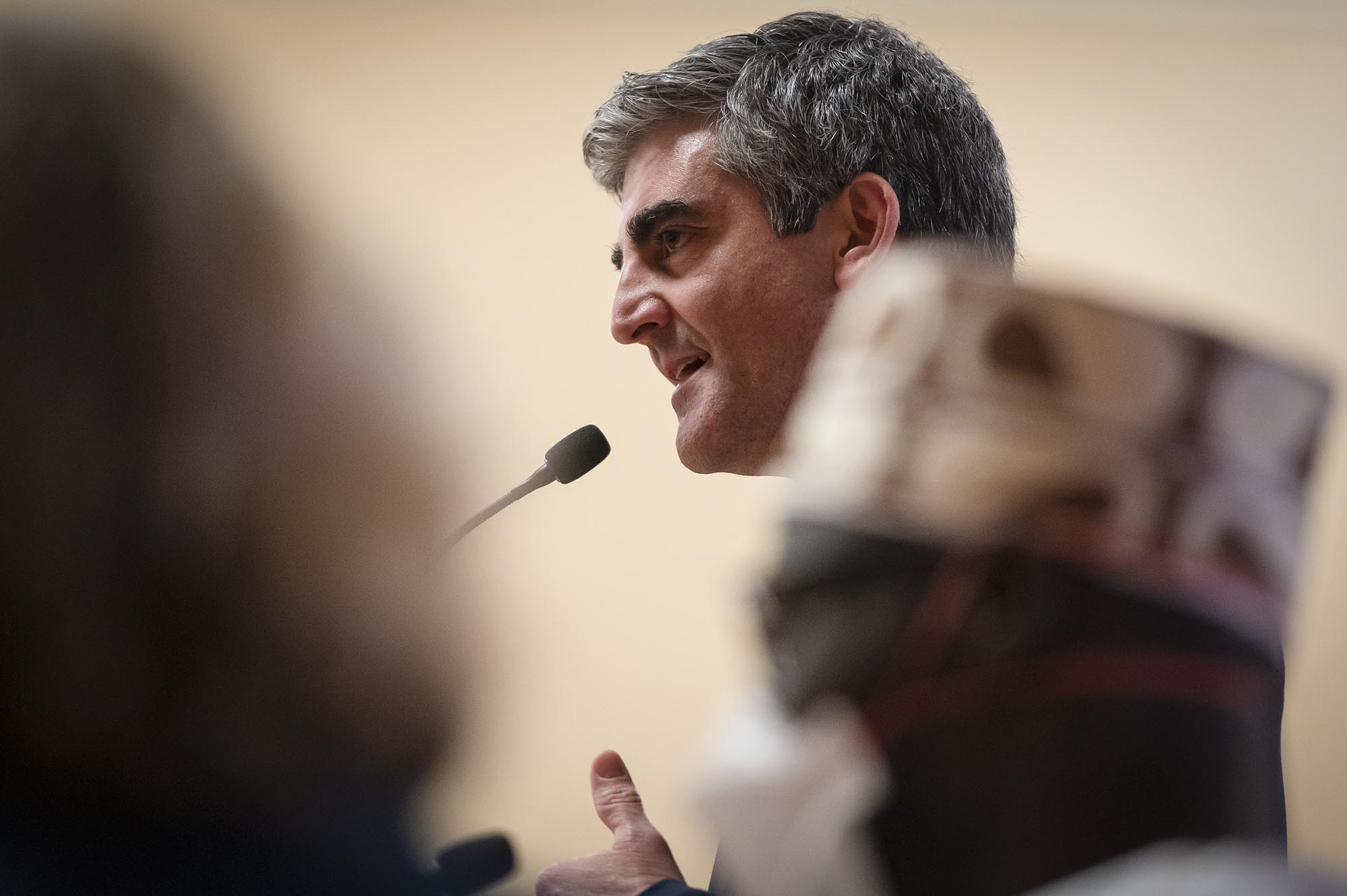
BURLINGTON — Mayor Miro Weinberger touted the city’s response to the pandemic and laid out his vision for growing its economy and improving public services Monday night in his annual State of the City address.
Delivering the ceremonial speech in person for the first time since 2019, Weinberger defended his administration’s approach on key issues — such as policing, housing and the environment — and pledged to work with the newly constituted city council. Shortly after the mayor delivered his remarks, the council elected Ward 6 Democrat Karen Paul as its president.
Weinberger said he remained “as committed as ever” to advancing Burlington’s racial equity goals, despite the strong criticism he has faced since the city’s director of racial equity, inclusion and belonging, Tyeastia Green, resigned in February and three of her staffers followed her out the door.
Though some Progressive councilors have suggested that the mayor intended to downsize Green’s former department, Weinberger vowed to maintain its current level of funding in his upcoming budget proposal. He did not detail how his administration would address the exodus of staffers from the office.
Weinberger also announced a plan to create a new city department aimed at supporting small businesses, with a special focus on establishments owned by people of color and women. The office would make permanent the city’s pandemic-era efforts to stabilize the local economy, the mayor said.

On the issue of housing, Weinberger asked councilors to help enact his “plan to end homelessness” by 2024. The proposal calls for the construction of more than 1,200 units and an expansion of the city’s outreach to those without housing. The mayor also announced a plan to track the city’s efforts through a “housing dashboard,” which is slated to come online later this month.
Weinberger underscored his concern about what he called the “troubling criminal trends” that have coincided with a significant decrease in the size of Burlington’s police force.
The mayor said he planned to work with acting Police Chief Jon Murad — whom he unsuccessfully nominated as the department’s permanent leader — on recruiting new officers and reprioritizing how the agency responds to calls for service.
Weinberger indicated that he would propose an ordinance increasing the police commission’s authority in the coming weeks. The mayor said he wanted the commission, which has remodeled itself as a citizen-led watchdog body, to serve as a vehicle for stronger police oversight.
Yet the proposal is likely to generate backlash from Progressives, who proposed in 2020 that a citizen body separate from the Police Commission be tasked with meting out discipline in cases of police misconduct. Weinberger vetoed that measure.
Also during the speech, the mayor took credit for shepherding through long-stalled infrastructure projects, such as a renovation of City Hall Park, the repurposing of the Moran Plant on Burlington’s waterfront and the reintroduction of passenger rail in the city.

He pointed to what he characterized as signs of progress with CityPlace, the beleaguered mixed-use development project that has left a “pit” in the center of Burlington’s downtown.
“The city has done its part to make good on our commitments and create a clear path for the developer to move the project forward, and we continue to support the project in many ways,” Weinberger said. “One way or another, we will see construction at the site soon.”
The mayor also highlighted the city’s efforts over the past year to reduce carbon emissions — part of its goal to achieve carbon neutrality by 2030. The passage of a $20 million bond in December allowed the Burlington Electric Department to offer customers new incentives to switch their cars, heating and appliances over to electric, Weinberger said.
“While plastic bag and drinking straw bans, or eliminating air travel, may generate headlines in public policy debates, electrification is the strategy that can realistically get us 70% of the way towards the climate goals we need to achieve over the next decade to avoid the worst consequences of the climate emergency,” the mayor said.
New council organizes
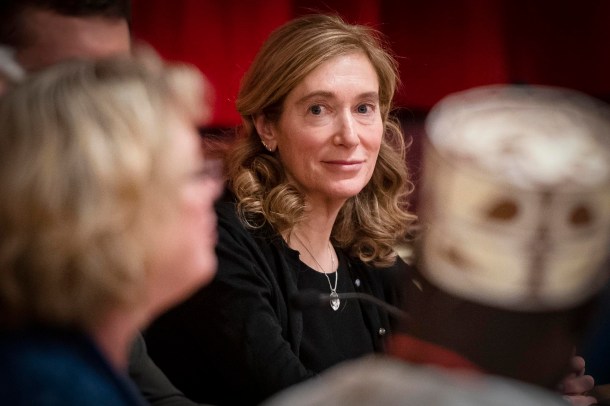
Following Weinberger’s remarks, the 12-member City Council unanimously elected Paul, the Ward 6 Democrat, as its president.
Paul, who has represented the Hill Section since 2008, cleared a path to the presidency after Ward 1 Progressive Councilor Zoraya Hightower opted not to run for the position, as VTDigger reported last week.
Though Hightower’s party holds the most seats on the council, the Progressive said she declined to run after Paul agreed to take a “collaborative approach” toward assigning councilors to the body’s 10 standing committees.
In remarks to her fellow councilors Monday night, Paul encouraged the body to maintain civility as it debated sometimes contentious issues.
“We can disagree, and we all know that we will disagree,” Paul said. “We can be respectful at the same time.”

Five councilors who were elected or reelected on Town Meeting Day took the oath of office Monday, including three newcomers: Councilor Gene Bergman, P-Ward 2, who served a previous stint on the body from 1986 to 1992; Ben Traverse, D-Ward 5; and Ali House, P-Ward 8.
The council selected Hightower, Councilor Ali Dieng, I-North District, and Joe Magee, P-Ward 3, to sit on the council’s powerful board of finance, which vets money-related resolutions before they reach the full council.

