


In spring 2006, Vermont’s last bar catering to the LGBTQ+ community, Burlington’s 135 Pearl, closed its doors for good.
Shooka Dooka’s in Rutland closed weeks before. The Rainbow Cattle Company in Dummerston shut down years earlier, and the iconic Andrews Inn in Bellows Falls had faded away decades ago.
But when 135 Pearl announced its closure — the owner cited the struggles of owning a small business — no one knew it would take 15 years to fill the gap it left for LGBTQ+ Vermonters.
In that time, the nature of LGBTQ+ rights and identity in Vermont shifted dramatically. In 2009, the state became the first to legalize same-sex marriage by legislative action and passed bills protecting LGBTQ+ people against discrimination.
Vermont now has among the highest rates of LGBTQ+ people in the nation, according to a University of California-Los Angeles survey, with those age 18 to 24 most likely to identify themselves as such, compared with other age groups in Vermont. Yet the state’s small well of bars catering to LGBTQ+ people ran dry — until 2021.

Eight months ago, Fox Market and Bar opened in the tiny, rural community of East Montpelier. The small pub-and-store combination proudly calls itself a “queer bar” and hangs a rainbow flag outside its doors.
Babes Bar in similarly small and rural Bethel does not call itself an LGBTQ+ bar, but it’s gained a reputation for welcoming that community. Both venues’ owners are trying to revive the tradition of such spaces in Vermont — but they’re also rethinking what it means to be an LGBTQ+ bar in the first place.
“Dedicated spaces that you’ll go and find other people in your community and be safe and welcome and prioritized are really challenging to find, or at least I found them really challenging to find,” Fox Market co-owner Liv Dunton said. “And they feel so important.”
Finding your place in East Montpelier
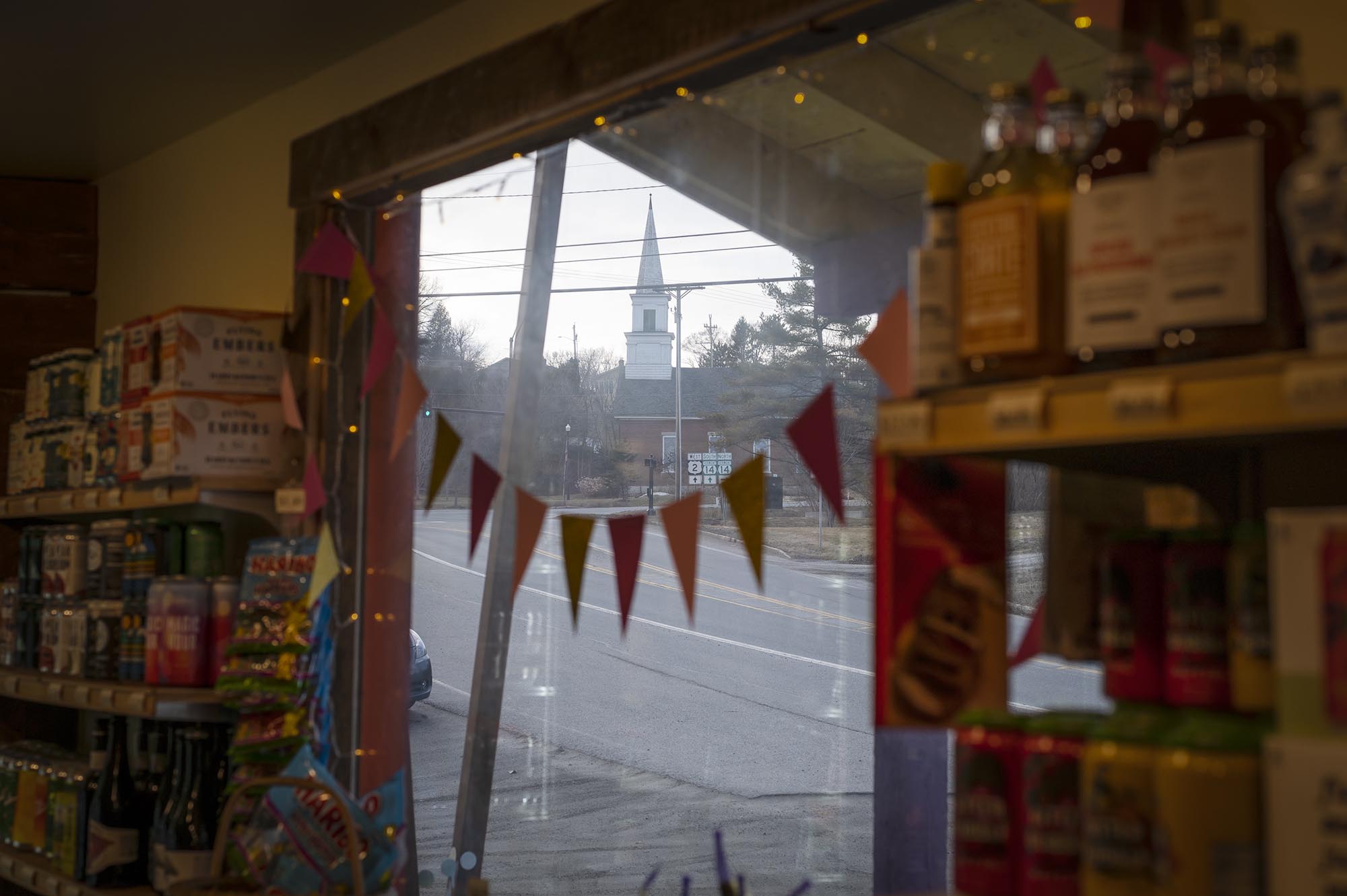
Fox Market is located close to the intersection of Route 2 and Route 14 North, just beyond the town’s lone gas station and a general store. Cars whiz along the thoroughfare between Montpelier and the Northeast Kingdom.
Upon entering the building, patrons have the option to turn right into the market, which features a wall of wines, a selection of cheeses and a few daily deli specials. Or they can turn left, which leads them past a counter to order a drink and up the stairs into the bar’s seating area.
The space is warm and cozy, with just enough seating for 20 people. The furniture is a mishmash of antique tables, chairs and couches. The walls are lined with bookshelves filled with graphic novels and board games. The far wall is taken up with a massive window nook with a view of a neighboring field.
“Mainly what we are is a place to meet up with friends,” said Dunton, the Fox Market co-owner. “A lot of teachers meet up (here) after school. A lot of groups of people meet up after work. So it’s definitely more of a meeting place and more of a comfortable hangout space.”

There are touches of decor that hint at the joint’s target demographic, such as a ceramic plate with two penises crossed in an X, but they often go unnoticed by the bar’s patrons. Co-owner Doni Cain said “people still show up with their entire gaggle of children to hang out and play games all day.”
And that broad demographic is partly intentional. Cain and Dunton believe their gathering spot should be inclusive to everyone, regardless of their sexual orientation or gender identity. In fact, much of their clientele consists of straight, cisgender people.
Cain said it would not make sense as a business to limit Fox Market’s customer base. The population of East Montpelier is so small that the owners cannot afford to focus on just one demographic.
“There’s enough people in the city and enough queer people to go to those bars that you can make it work, and they do, but here there’s just not enough people to do that,” Cain said.

At the same time, Dunton said the bar prioritized people in the LGBTQ+ community, even at the occasional discomfort of people who may see things like its LGBTQ+-based decor from an outsider’s perspective.
“I think it’s OK for people to have momentary discomfort and think about that and think about why they have that feeling,” they said. “And then, for the people for whom that makes them feel really welcome and laugh and feel like the space is theirs like that — that to me is so much more important.”
Cain originally hails from Oregon but has spent the past 15 years working for businesses such as Hunger Mountain Co-op in Montpelier and AR Market in Barre. Dunton moved to Vermont from Maine to work for Hunger Mountain Co-op and spent several years living in Elmore, which they remarked “was beautiful, really beautiful. But it is hard to find a scene of a community that you fit in with” in such a small town.
“What I’ve always wanted to do, since I was very young, was build a space that felt welcoming to my community and felt like it put the community first,” Dunton said. “And I felt like I could do that more authentically in my own space.”
Opening a queer bar also meant contending with issues that the average business may not face — such as protecting the clientele’s safety. The week Fox Market opened, somebody shot out its two upstairs windows from across the street, Cain said. The rainbow flag was also torn down in a separate incident.
“We got really nervous about how we were going to deal with” potentially dangerous situations, Cain said.
But Dunton said the two have not experienced anything like that since then. In fact, they’ve been embraced by the East Montpelier community, which has become among their most loyal customer base.
“It’s sort of wrapped us in this bubble of love and protection,” they said.
Cain said that, months after opening, he still occasionally has customers come by who break down crying when they come into the store, overwhelmed by the power of finding a place that fits them.
“There’s some younger people, or some teenagers that are queer and have never been in a space that felt as warm and accepting and for them, and they just like, break down to us and say, ‘Thank you,’” he said.
Where did the gay bars go?
The closure of LGBTQ+-focused bars is a national phenomenon. Greggor Mattson, a professor at Oberlin College who studies LGBTQ+ culture, said his research has found as many as 37% of gay bars shut down across the country between 2007 and 2019.
Mattson found no single factor that shuttered bars across the country, he said. One hypothesis is that, as the country became more accepting of LGBTQ+ individuals, there became less of a need for specific businesses that catered to them.
“Vermont could be seen as some sort of queer wonderland, where everyone’s just skipping through the maple trees,” he said. “And yet, as I’m sure you know from talking to LGBTQ+ Vermonters, we still need places to congregate.”
He pointed out that young LGBTQ+ people are often raised by straight, cisgender parents, so they often learn about LGBTQ+ culture from friends — which is why their institutions have been so important throughout their history.
“They were the only place to learn not just mechanical things like, ‘What’s the best way to have sex?’ But like, ‘What is bisexual lighting?’ And, you know, ‘What is lesbian camp?’ And, ‘Why is Golden Girls so funny?’” he said. “Those kinds of things are part of (the) cultural side of LGBTQ-ness that we learn from each other now.”

Although social media sites like TikTok have become great places to learn about LGBTQ+ identity and culture, Mattson said, there’s still something important about seeing people face-to-face and forming in-person relationships.
Socializing with others can be essential for their mental and physical health, too. LGBTQ+ people, especially young adults, are at higher risk of anxiety, depression and substance use. Some experts link those conditions to facing discrimination and not having familial support.
While Mattson tallied some 730 LGBTQ+ bars scattered throughout the U.S., none in Vermont — including Fox Market — made his list. Still, the watering hole follows the national trend: LGBTQ+ bars nationwide have evolved, Mattson said, as an increasing number don’t aim to serve one specific identity, but the entire community and their allies.
“One, it’s a business necessity. Because gay people can go to Olive Garden and hold hands. They don’t need your gay bar for everything,” Mattson said. “But second of all, younger queer folks demand it. And if a place isn’t making a good faith effort to have gender-neutral restrooms, or to use people’s pronouns correctly, or to have programming that acknowledges queer people of color, even in a very white state like Vermont, then young people and progressive queers will not come.”
That starts with the name: The term “gay bar” has fallen out of favor somewhat, replaced by “queer bar” or other terms that encompass a wide spectrum of gender identity and sexuality.
Mattson said he does not envy bar owners who have to navigate the language of older generations “for whom queer is a slur that causes triggering trauma,” as well as the younger generations “for whom queer is an essential naming that describes an inclusive place.”
The shifting dynamics within the LGBTQ+ community was one challenge Robert Toms faced when he ran 135 Pearl, the gay bar in Burlington that closed in 2006.
Toms was 23 when he arrived in Vermont with plans to wait tables at Red Lobster while he saved up for a chance to open up a black box theater in Burlington. But he ended up bartending at 135 Pearl, then known as Pearls, and became its manager just as the owners were looking to sell the business.
The 1800s-era building had been an old boardinghouse, he said, then a fine French restaurant that would clear out its tables for lingering customers to become a dance space.
After buying the business in the 1990s, Toms rebranded the space as 135 Pearl and refocused it as a part-time performance venue that hosted live theater and music, often from local LGBTQ+ artists.
The venue had a lower level with a stage covered in many layers of paint, he said. An upper level covered in knotty pine served as a pool room full of little nooks to hang out in.
“Depending on what they’re feeling, they want to go dance, they can dance, (or if) they want to, play pool or sit and have conversation,” they could do that, too, he said. “And it really, it worked. It kind of catered to everybody’s needs in that way.”


Mike Bensel, executive director of the Pride Center of Vermont, is a former customer of the lounge. A “young 20-something queer person” in the late ’90s may have gone to Red Square or Metronome for the night, but “you always passed through Pearls” at some point, Bensel said.
When Toms bought the bar, it not only catered to the gay community, but also held “women’s nights” for lesbians and other LGBTQ+ women to congregate and dance.
“I just remember playing pool with a couple of older lesbians,” Bensel said. “And as a 20-year-old who would not necessarily interact with people across generations in the LGBTQ+ community, it was a great opportunity to have those discussions while playing pool in an unstructured social setting and talk about books and our history as a community and about politics.”
At the same time, Toms said, he ran into tension when he tried to open up the space even further to people of diverse sexualities and gender identities, including becoming more welcoming to transgender people.
He also had to deal with incidents of blatant transphobia. In one incident in the early 2000s, a gay man accosted a trans man using the men’s room, saying, “You’re not supposed to be in here. You should be in the women’s room,” according to Toms.
“And I took the signs off the doors, and I just said, ‘Sorry, we have gender-neutral bathrooms now,’” he said. “I just could not understand our own discrimination that existed within that community. And it brought a lot of pain to us, the staff because we were just trying to make sure that we have a safe space for everybody.”
Years later, in 2017, a Winooski bar owner ran into accusations of transphobia when he announced he would rebrand his bar Oak45 as a gay bar. Craig McGaughan planned to name the bar “Mister Sister,” which critics denounced as a transphobic slur.
The Pride Center hosted a forum on the bar in March 2017. Seven Days reported at the time that at least 80 people attended, many of whom spoke out against the name. By July, McGaughan announced that the bar was closing.
Bensel said the incident demonstrated there’s a lot of work to be done in centering the needs of trans people in the LGBTQ+ community.
“Vermont is a very different place right now in 2022, depending on where you live, for a cis lesbian-, gay- or bi-identified person than it is for a trans person,” they said.
Toms said the resistance to trans people “boggles my mind.”

“Some in the community feel that they haven’t struggled the way we struggled, their civil liberties are on the hard work and backs of us. And I find that to be sad,” he said. “I think it’s our duty to stand with those who are oppressed and walk with them and support them.”
In the end, what drove 135 Pearl to shut down was the bottom line. “We were always barely making ends meet,” Toms said.
“We did everything we can to be creative, like a pride celebration would ultimately help clean us up from the bad winter here. And, I mean, that was backtracking six months of bills,” he said.
The bar was on the market for three years before Toms gave up on selling the business and just sold the building. The location housed a Papa John’s pizzeria for many years and is now a tea shop.
There’s no LGBTQ+ bar in Burlington today, according to the people VTDigger interviewed, although several bars were noted as being especially welcoming to LGBTQ+ Vermonters, including Red Square and Radio Bean.
Bensel said the Pride Center has worked to connect LGBTQ+ people across Vermont through social events such as potlucks and Pride celebrations. They pointed out that, as a nonprofit, the center can cater to people of all ages and interests, including sober people.

But they said any attempt to compare an organization like the Pride Center with a bar is “apples and oranges.”
“A bar adds something that’s very specific and, yes, it adds a lot of flavor and some social diversity to, you know, a very rural state with not a lot of things on its social calendar,” they said.
Mattson said it’s a “historical accident” that LGBTQ+ people have bars as the primary site to serve the community — which are private businesses, not nonprofits that could qualify for government grants or donations. (He noted Fox Market may be the first “gay grocery store” he’s heard of.)
Toms said that, as he ages, he longs for an LGBTQ+ space that isn’t a bar or nightlife-centered business.
“I’m 53 years old. I can’t keep my eyes open past 9,” he said. “A coffee shop would be fabulous.”

Where everyone can come on in
At Babes Bar in Bethel, the social calendar of rural LGBTQ+ people could be judged in the number of miles customers travel to attend the bar’s “Queer Dance Nights.”
They attract people from Montpelier, Rutland, White River Junction and even far-flung Bennington, co-owner Owen Daniel-McCarter said.
The bar is located in a two-story brick building in downtown Bethel, along the White River. On a weekday afternoon in March, the owners’ tiny dog, named Smidge, ran up to greet customers as they walked in.
Babes isn’t a “queer bar,” or at least it hasn’t marketed itself as such.
“But obviously, we’re queer folks,” Daniel-McCarter said. “And we bring that to how we run the space, which I do think makes it different than a lot of other bars in just how it feels inside.”
Like Fox Market, Babes has touches of decor that signal its welcoming of LGBTQ+ people to the space and a bookshelf full of “radical reading,” as Daniel-McCarter describes it.
Its bathroom signs read, “Vermont Law requires that multi-stall restrooms are designated for a specific sex. Babes Bar welcomes all genders to this restroom even though it is designated ‘Female’ (or ‘Male’).”
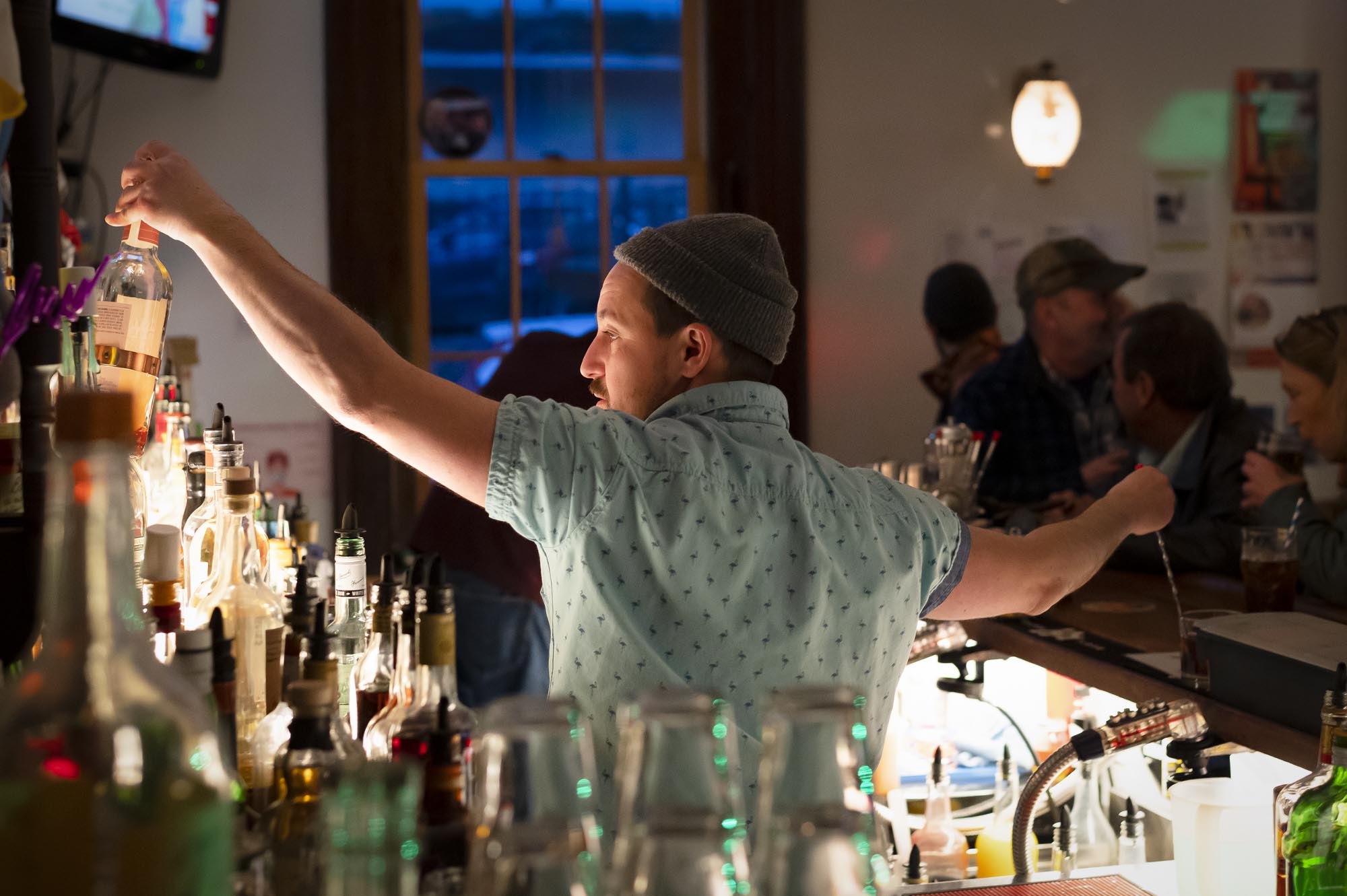
“No matter who you are, what your body looks like, what your gender is, what your racial identity is, you’re welcome here, and you’re not just welcome — but like, come on in,” Daniel-McCarter said.
Daniel-McCarter attended the University of Vermont as an undergraduate student before he spent 11 years in Chicago, working as a lawyer for LGBTQ+ rights. Co-owner Jesse Plotsky, Daniel-McCarter’s husband, was a bartender, musician and wine manager at Trader Joe’s before the two moved to Vermont, opening Babes in 2018.
“The fact that we moved here from a city and people didn’t know us, that almost was more of where we needed to build in some ways, to really honor the space,” Daniel-McCarter said.

The Bethel community pulled together to support them during the pandemic, when the two decided to close for 14 months to prioritize their customers’ safety. Their most loyal regulars bought gift cards and were understanding of their decision, Daniel-McCarter said.
Babes is slowly restarting its live events, like its queer dance nights, with plans to begin live music and catering parties.
Daniel-McCarter said they were planning a Pride weekend at the end of June, with a movie day, a drag show, and “queer and sober” meeting. They also plan to host a queer trivia night with a tongue-in-cheek slogan: “Anyone can play, but it’s gonna be gay!”

Daniel-McCarter said the interactions at Babes feel like an extension of his former work as an activist. Their everyday conversations about their lives, embracing other people and building trust frequently challenge the assumptions people have about the LGBTQ+ community “by really just getting to know each other.”
“It’s been awesome to witness people saying, ‘I had this opinion of gay people, but like, you’ve actually really helped me pick up on that and change the way I think about gay people,’” he said.
Correction: An earlier version of this story misrendered the name of the former Burlington bar Pearls.
