


BURLINGTON — Parts of a yearslong effort to swap parking spaces for expanded bike lanes in the Old North End are scheduled to appear before the City Council on Monday night.
The overall plan is meant to increase cyclist and pedestrian safety along the North Winooski Avenue corridor, and to reduce the pollution caused by gas-powered cars.
The resolution before councilors Monday would set that plan, which has been in the works since 2020, into motion. Proponents say the project will better connect cyclists in Winooski and northern parts of the city to downtown.
Under its current design, the plan would remove some parking spaces along the one-way street, starting at its intersection with Decatur and North Union streets and running to its junction with Riverside Avenue. The newest envisioning would remove fewer spaces than a previous version floated by city officials.
Yet Monday’s resolution would halt the removal of any parking spaces until the state Agency of Transportation repaves sections of the Old North End next year.
Still, the resolution would give the green light for city officials to start sketching out bike lanes in each direction on North Winooski Avenue. It would also allocate $15,000 for businesses and nonprofits along the corridor to develop plans for “transportation demand management” — the practice of getting more cars off the road in favor of less-polluting alternatives.
“The idea is to support their employees and/or other visitors to the site in getting there sustainably,” said City Councilor Jack Hanson, P-East District, in an email. “The money could be spent on parking cashouts, transit passes, bikeshare memberships, carshare memberships, incentives for biking/carpooling, (or) stipends/reimbursements for expenses related to sustainable commuting.”
The resolution is one of two parking-related measures that councilors are set to vote on Monday. Councilors are also slated to examine a proposal designating an Old North End parking lot as a sheltering site for houseless residents, and will have the chance to override Mayor Miro Weinberger’s veto of regulations on short-term rentals the body passed last month.
The other parking resolution would eliminate zoning regulations that require properties to possess a minimum number of parking spaces. Proponents say the new rules would make it easier for developers to build new housing in the city.
The plan for North Winooski Avenue has won the favor of some residents by endeavoring to make the street safer for bicyclists, as well as its potential to curb greenhouse gas emissions.
“The point is to shift city resources (in this case, city right of way) from car infrastructure to sustainable transportation infrastructure,” Hanson said. “Parking will become slightly less convenient for some, though there is more than enough parking capacity in the corridor to accommodate the loss of spaces.”

City Council President Max Tracy, P-Ward 2 — a staunch advocate of boosting Burlington’s bikeability — said the changes would help the city reach its goal of carbon neutrality by 2030.
“If we’re trying to encourage people to drive less or be car-free, we need to have infrastructure that supports them in doing that,” Tracy told VTDigger.
Tracy, who often cycles on the corridor, called the current traffic conditions “a total mess” for two-wheeled vehicles.
“It makes you feel really unsafe when you’re on a bike there,” he said.
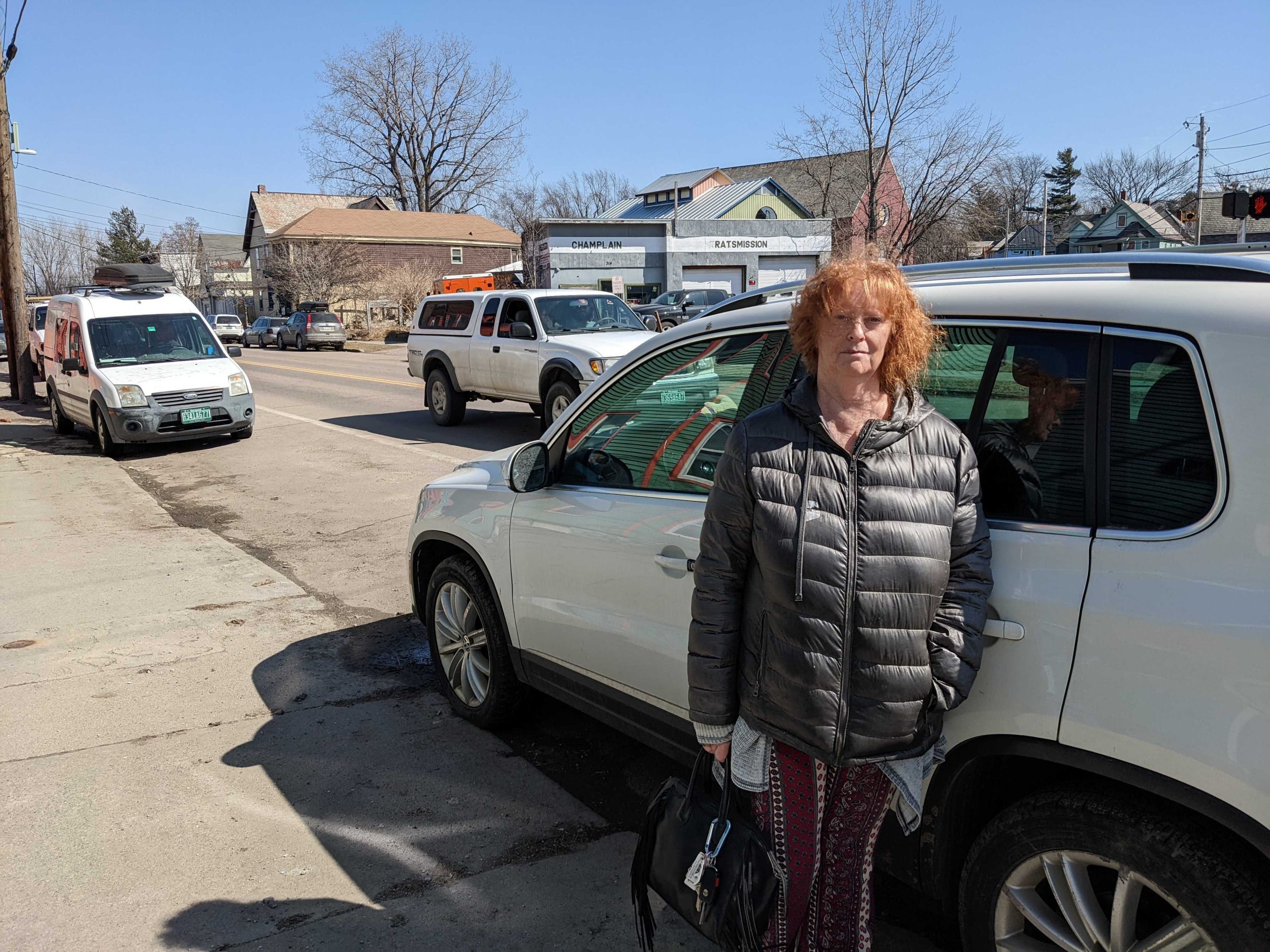
But some neighborhood residents say that ditching a car isn’t always an option. Trudy Macy, a North Winooski Avenue resident with mobility issues, worries that less parking will mean she has to walk farther to get to her car.
“I really think that roads are made for cars,” Macy told VTDigger. “There should be room for bicycles, but cars should get the priority.”
In response to those concerns, Tracy told VTDigger that neighbors with a handicapped tag in their vehicle can ask the city’s Department of Public Works to set aside a handicapped parking spot near their residence.
Hanson said the revamped design is meant to make pedestrians of all ability levels safer.
Chapin Spencer, the city’s director of public works, said he has reached out to property owners along the corridor in an effort to open up more parking spots through shared-parking agreements.
But while some residents are expressing concern about a potential lack of parking, Tracy said combating climate change will require people to make lifestyle changes.
“You can’t just have the same infrastructure and expect different results when it comes to carbon reduction,” he said.
Correction: An earlier version of this story misidentified a street that intersects with North Winooski Avenue. It is North Union Street.
