

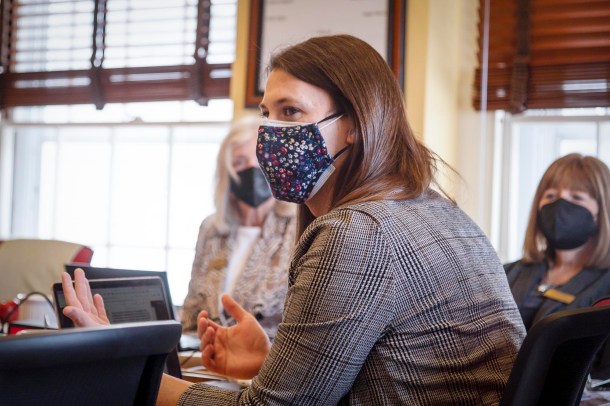
A new bill would make it easier for Vermonters to amend their birth certificates to reflect their gender identity.
H.628, sponsored by Rep. Taylor Small, P/D-Winooski, would allow individuals to attest to their gender identity, simplifying a process that currently involves doctors, judges and extensive documentation.
In November 2020, Small became the first openly transgender person elected to the Vermont House and one of four openly transgender state legislators in the country at the time.
Transgender and nonbinary people could be “outed” if their gender is listed differently across different identifying documents, such as driver’s licenses and birth certificates, Small said. She pointed to the history of housing and employment discrimination against transgender people as issues the bill could fight against.
The goal of the legislation, which has more than 30 additional sponsors, is to mitigate a “history of discrimination and violence against the LGBTQIA+ community,” according to the bill.
Rep. Topper McFaun, R-Barre Town, expressed concern that individuals could still be outed if the bill were passed as written, flagging a potential “public records issue” if someone requests a public document and sees that gender markers have changed.
He suggested that gender markers — ‘M,’ ‘F,’ and ‘X’ — could be exempted from the Public Records Act.
Vermont law, in part, already protects against similarly outing transgender people.
“Under the current circumstances, a person who is requesting a copy of the birth certificate would not know that it had been changed,” legislative counsel Tucker Anderson said.
As introduced, the bill would give rulemaking power to the Department of Health on how best to implement the self-attestation process. The bill also would give the Department of Health the power to “add gender pronouns to the list of two markers on a birth certificate in order to foster a gender literate environment.”
“The assumption is that our conception and language around gender will continue to change over time, and the rulemaking process is more nimble to be able to edit and update language,” Small said.
