


From Sesame Street to school-based clinics, the push to vaccinate children ages 5-11 against Covid-19 is well underway.
As of Friday, more than 15,000, or roughly 35%, of the 44,000 Vermonters in that age group are scheduled for, or have already had, Pfizer shots at a state clinic, according to data from the state Department of Health. Health leaders hope to vaccinate 60% of children ages 5-11 by the end of December.
The state health department said on Friday that roughly 5,500 children have received their first dose. Some 5,200 children at high risk for complications from Covid-19 have completed their two-shot series.
The two-dose series is the only Covid-19 vaccine regimen to receive emergency authorization for use in young children. As with the adult dose, children receive their second shot at least three weeks after the first dose, and full immunity kicks in roughly two weeks later. The Centers for Disease Control and Prevention does not recommend boosters for children in that age group for now.
While the adult and child vaccines have the same active ingredients, the children’s shot has less of them. In Vermont, the children’s vaccine is already available at independent providers, such as some pharmacies and in state-run clinics. The state plans to set up a total of 188 clinics with children’s doses in the coming weeks, according to Mike Smith, secretary of the Agency of Human Services.
Here’s what we know.
Why should I vaccinate my child?
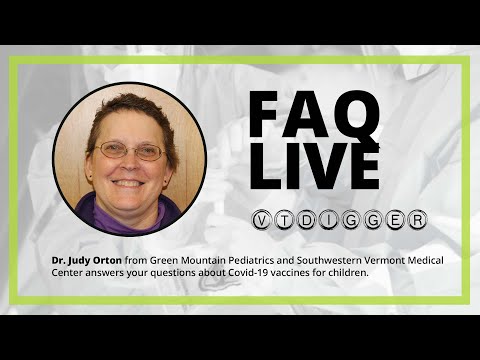
Children can still get seriously ill from Covid-19, even if no Vermonters in that age group have been hospitalized or died from the virus thus far. But the coronavirus is one of the leading causes of death in the U.S. for children ages 5-11, said Judy Orton, a pediatrician at Bennington’s Green Mountain Pediatrics.
“We don’t expect children in that 5-11 group to die,” Orton said. “They’re not supposed to die. … Have there been many deaths? No. But even one death is one too many.”
Amy Pfenning, a pediatric nurse practitioner at Community Health in Rutland, said getting young children vaccinated protects the family from the realities of prolonged quarantine as well as missed school and workdays.
As parents and guardians know, even mild illness in children can mean sleepless nights, doctor’s appointments and extra trips to the pharmacy. The time it takes to care for a sick family member could also mean lost income or using up paid sick and vacation days.
Getting children vaccinated also protects grandparents, immunocompromised siblings or parents with preexisting conditions from catching the virus, being hospitalized, and possibly enduring lingering symptoms and long Covid, Pfenning said.
There are benefits to the vaccine even if children do not come in regular contact with people who are at high risk for serious infection. It lessens the overall transmission of the virus, an important protection against mutations that could give rise to versions of the virus that are better at bypassing the immune system.
“It helps us get back to our normal lives,” Pfenning said.
Are the vaccines safe?
Yes. The Food and Drug Administration reviewed vaccination data from 3,100 children before authorizing the Pfizer series for emergency use in that age group earlier this month. The vaccine was roughly 90% percent effective in preventing the coronavirus after two doses, according to the FDA, and none of the children had any serious or long-term side effects.
Most children can expect to have a sore arm for a day or two, Orton said. Some children may feel tired, have low-grade fevers or swollen lymph nodes, but those symptoms, too, go away quickly. Lingering effects are uncommon, but none should persist after eight weeks after being vaccinated, according to the CDC.
The shot draws on decades of research on how the immune system behaves, the risks and benefits of vaccines, and our understanding of viruses, Orton said.
“This has probably been the most well studied and most followed-up vaccine in the history of vaccines, and probably the most public too,” Orton said. “So we have a lot of data to go by.”
Parents should also feel encouraged by the fact that the vaccine is temporary, so delayed reactions years or decades down the road are unlikely, said Rebecca Bell, president of the Vermont chapter of the American Academy of Pediatrics.
Robust immunity is the only thing that lingers after the vaccine leaves the body, she said.
Orton said parents worried about the safety of the vaccine should balance that with the dangers of the virus itself. Coronavirus can take a serious toll on children, and the symptoms can be unpleasant. Some kids lose their sense of taste and smell for a time. Others contend with fatigue, aches and pains, difficulty walking, and labored breathing.
Others may develop rare but serious conditions such as inflammation of the heart, known as myocarditis, or Multisystem Inflammatory Syndrome, which can damage internal organs.
“We can’t predict who is going to be a long haul, who is going to have long-term consequences, who might get pneumonia and need oxygen or, even worse, be in an ICU,” Orton said. “Vaccines can prevent a good share of those.”
Why does my child need 2 doses?
Children need two shots for the same reason other routine vaccinations require multiple doses: for better protection, Orton said.
The first shot is a little like the blueprint that teaches the body to protect itself from the coronavirus, she said. The second shot helps the body to mount an even better response. The protection the vaccine grants is stronger and more reliable than natural immunity, according to a recent CDC study.
Orton said natural immunity does not always protect people from a second coronavirus infection, which could be serious even if the child’s first bout of the virus was mild. That is especially true in winter, when other common respiratory illnesses such as the flu or respiratory syncytial virus circulate.
“Your immune system would be pretty taxed, so you may have more severe disease,” she said.
My kid is afraid of needles. What should I do?
When it comes to vaccine anxiety, children tend to take their cues from the adults in their lives. That’s why Orton suggests that parents use a matter-of-fact tone when discussing the vaccine with their child. An adult may say something like “this vaccine is going to keep you healthy.”
Orton suggests parents present simple solutions to children’s concerns about pain or other side effects. Parents could say, “If your arm gets sore, we’ll give you a little Tylenol. We’ll put a cool cloth on it. You’ll get a cool Band-Aid, and all is good.”
Orton said parents can help children understand what to expect by giving a pretend shot at home ahead of the appointment. Other resources, including Sesame Street’s special episode on coronavirus vaccines, may also help children feel comfortable about the vaccine.
In most cases, however, most children find that the anticipation is worse than the shot, even when kids are very afraid.
“I even say, ‘I’m pretty sure your sister pulls your hair harder than this is going to feel,’” Orton said. “And they’re like, ‘Oh, yeah, you’re right.’”
Mike Dougherty contributed reporting.
Get the latest statistics and live updates on our coronavirus page.
Sign up for our coronavirus email list.
Tell us your story or give feedback at coronavirus@vtdigger.org.
Support our nonprofit journalism with a donation.
