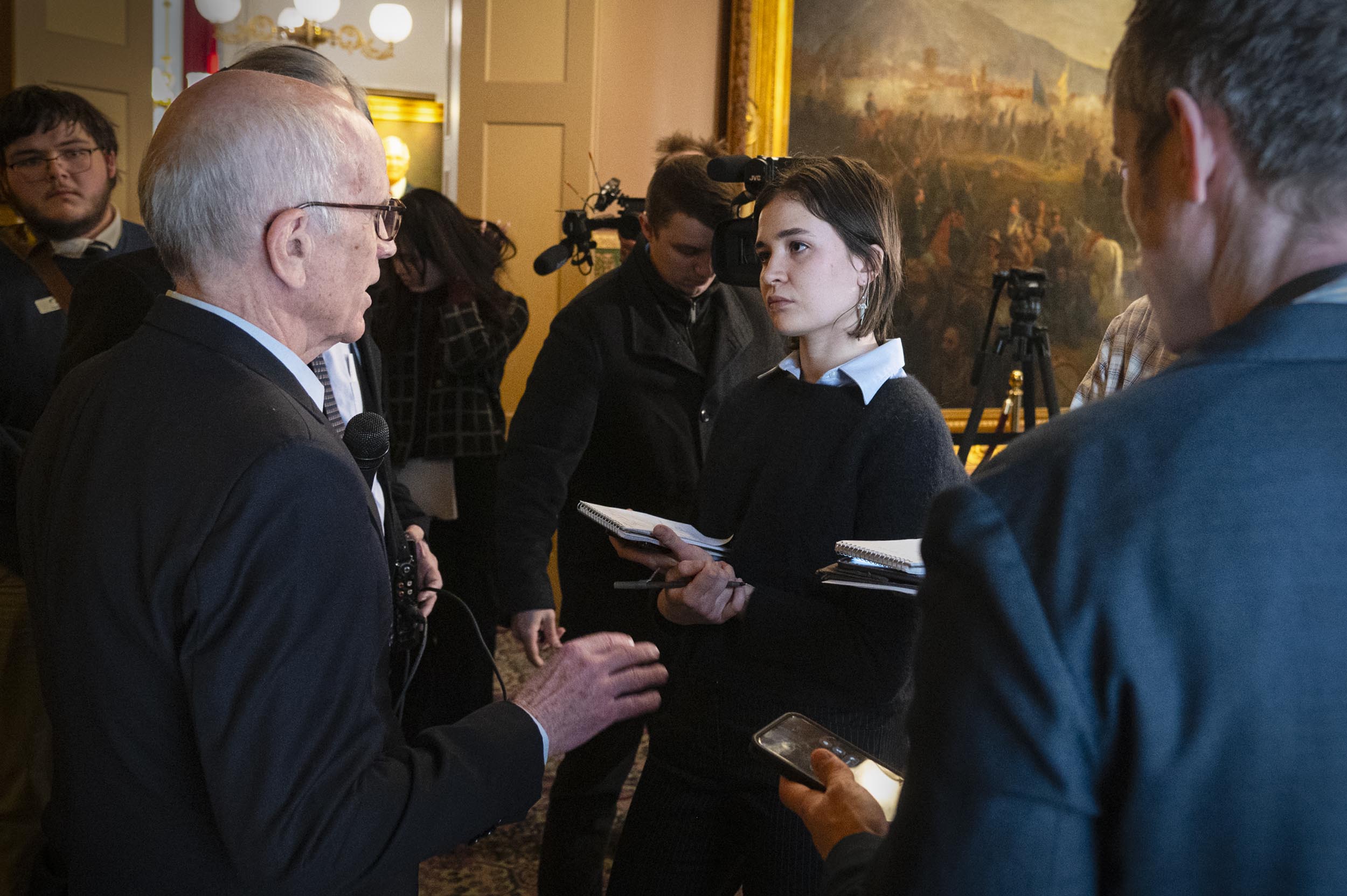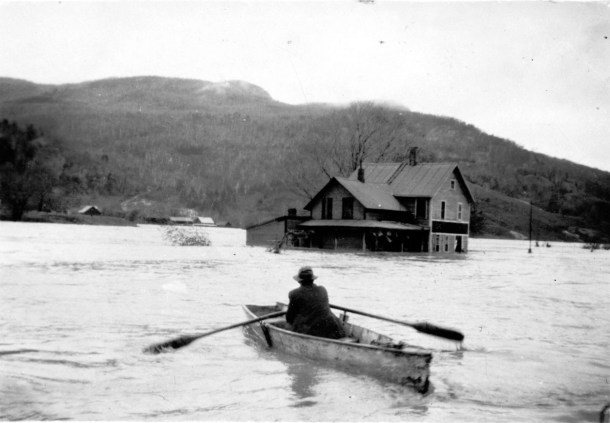
For all the misery it caused, the devastating flooding that hit Vermont in the first days of November 1927 also brought with it reason for Vermonters to be proud — proud of their fellow citizens’ resolve and perseverance. Touring the scenes of destruction on a mission from President Coolidge, U.S. Commerce Sec. Herbert Hoover commented that he had seen “Vermont at her worst, but Vermonters at their best.”
A decade later, the state’s longtime U.S. Sen. George Aiken wrote glowingly in his memoir about his fellow Vermonters’ independence: “It is this spirit of self-reliance which prompted Vermont, after the disastrous flood of 1927, to borrow money to pay for its own losses instead of suppliantly asking Congress to care for it out of the federal treasury.”
Former Lt. Gov. Consuelo Bailey remembered the time vividly in her autobiography, “Leaves Before the Wind.” Bailey described how Hoover had asked what the federal government could do for the state. “Governor (John) Weeks, of blessed memory, replied: ‘Mr. Secretary, tell the president that Vermont wants nothing. She will take care of herself. Magnificent! Winston Churchill might have said: ‘This was Vermont’s greatest hour.’ I deeply regret that today there would be an entirely different answer,” Bailey wrote in 1976.
Indeed, the image of Vermonters bravely declining outside assistance and helping their own is stirring.
Too bad it didn’t happen that way.
In their books, Aiken and Bailey were just perpetuating a myth — though one not completely divorced from reality — that Vermont was capable of fending for itself.
In reality, Gov. Weeks began beseeching the federal government for help on Nov. 6, even before the floodwaters had completely receded. Weeks phoned the White House that night, saying: “President Coolidge, I want Hoover up here to look this thing over.” Coolidge wired Weeks the next morning: “Your man Hoover is on the way.”
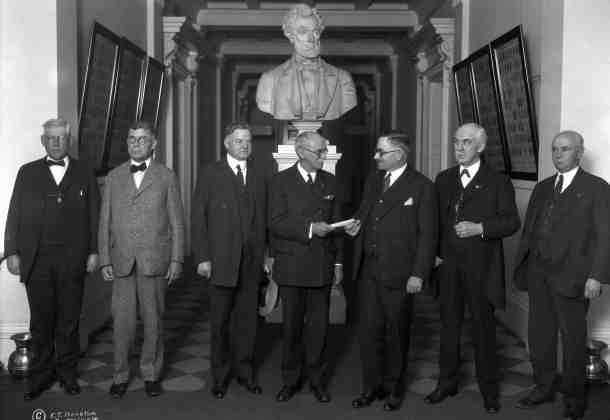
Hoover visits Vermont
Though the flood had hit his home state, Coolidge apparently felt no compunction to show his concern by rushing to tour it. He was being nothing if not consistent.
When the Mississippi overflowed its banks in March and April 1927, requests for a presidential visit flooded the White House. Mississippi’s governor wired: “I urgently request and insist that you make personal visit at this time.” A prominent Philadelphia Republican suggested Coolidge visit “some city near the flooded district. … If you did this a thrill would go through the country.”
Eight U.S. senators and four governors told him that if he visited, the public would donate more generously to the Red Cross. NBC offered to broadcast a presidential radio address asking for the public’s help. Performer Will Rogers asked Coolidge to send a “telegram that I can read at our benefit for flood sufferers tomorrow night.”
Coolidge rejected all these requests. Perhaps he felt it wasn’t his place. He sent Hoover in his stead. Hoover read the national appeal on NBC radio, but Rogers had to fend for himself.
Hoover became something of a national celebrity while leading the federal response to the catastrophic Mississippi flooding, which affected states from Illinois to Louisiana. Mississippi was hardest hit. The flood covered an area roughly the combined size of Vermont, New Hampshire, Massachusetts and Connecticut with as much as 30 feet of water. The region was home to 931,000 people, nearly 1 percent of the U.S. population at the time. The dead were never counted, though they numbered in the hundreds or perhaps thousands.
Hoover’s handling of the disaster was covered daily on the front page of the nation’s newspapers and featured regularly in newsreels. The coverage propelled Hoover to prominence and would help get him elected president in 1928.
So it was Hoover, not the native son president, who arrived two weeks after the flood and surveyed the damage to the Winooski Valley and elsewhere. Vermonters were already looking to Washington for a hand. The Burlington Free Press editorialized that Congress, which was generous to the world’s needy, could not “refuse similar appeals from our own Americans.”
When Hoover departed Vermont, he left behind a promise that the federal government would help. He suggested as much in his report to Coolidge. Hoover wrote that the cost of reconstruction was “beyond the means” of the state and its residents to bear.
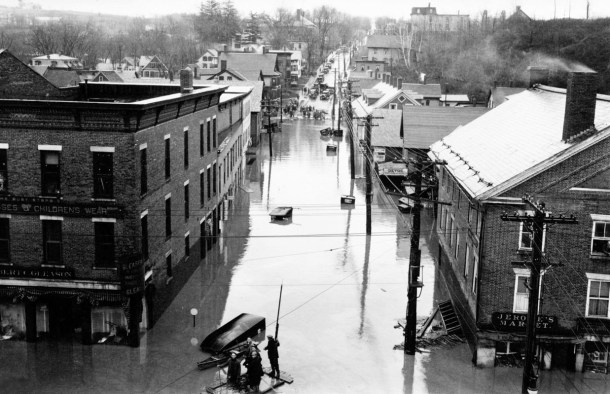
Costly cleanup
Two weeks after Hoover’s visit, Gov. Weeks called a special session of the Vermont Legislature at which he urged lawmakers to approve a bond to cover repairs to the state’s roads and bridges. Though the federal government would help, Vermonters would still have to pay the bulk of the cost.
The emergency convinced state lawmakers to abandon a couple of longstanding traditions. In approving an $8.5 million bond, they were stepping away from the state’s “pay-as-you-go” budgeting practice and taking away much of the towns’ responsibility to maintain roads and bridges. The bond would be repaid through a state flood tax. (The financial burden of rebuilding Vermont’s infrastructure, coupled with the onset of the Great Depression a few years later, spurred the Legislature to implement an income tax in 1931 to augment the statewide property tax, which previously had been the main source of state funding.)
Vermont’s Congressional delegation reluctantly appealed for federal help. “I believe that this is the first time that representatives of Vermont in the 136 years of its membership in the union have appeared before a committee of Congress asking for relief,” explained Rep. Elbert S. Brigham in 1928.
In making his appeal before Congress, Brigham said, “we are accustomed these days to think of things in terms of size. Because of this, the attention of the nation is, and has been for months, centered upon the flood disaster in the valley of the Mississippi.”
Not wanting to “minimize the terrible disaster” along the Mississippi, Brigham asked Congress to think in terms of proportion, not just scale. In terms of state wealth, “which means capacity to meet loss,” he said, Vermont had suffered damages one and a half times that of Mississippi, twice that of Arkansas and three times that of Louisiana, the three hardest-hit states.
The argument proved persuasive. Congress granted Vermont nearly $2.7 million in flood relief, which would go toward road reconstruction. The Red Cross provided another $600,000 to aid flood victims. The donations still left town governments and residents with much of the cleanup work, removing the debris littering their communities and reestablishing utilities.
Vermont’s indomitable people
The work was far from finished when Calvin Coolidge arrived to tour the state in September 1928. During that tour, the president was touched by the labors he saw Vermonters undertaking and was moved to write his famed “Vermont is a state I love” speech.
In his typically brief comments, Coolidge commented that “(i)t is gratifying to note the splendid recovery from the great catastrophe which overtook the state nearly a year ago.”
Perhaps a bit prematurely, he said, “Transportation has been restored. The railroads are in a better condition than before. The highways are open to traffic for those who wish to travel by automobile.”
He concluded his speech by saying, “I love Vermont because of her hills and valleys, her scenery and invigorating climate, but most of all because of her indomitable people. They are a race of pioneers who have almost beggared themselves to serve others. If the spirit of liberty should vanish in other parts of the Union, and support of our institutions should languish, it could all be replenished from the generous store held by the people of this brave little state of Vermont.”