

This article by Nora Doyle-Burr was first published on Oct. 2 in the Valley News.
NEWBURY, Vt. — More than 100 community members turned out for a Newbury Development Review Board hearing primarily to express their opposition to a proposed six-bed secure residential treatment facility for young people.
Their attendance at the Saturday hearing, held via Zoom and in person in the elementary school gym, was in addition to dozens of emails and other communications the board received ahead of the five-hour hearing, which the board ultimately decided to continue later this month.
As they did during online forums held last winter and at a state land use hearing in August, community members expressed concerns about the security of the facility, as well as the appropriateness of the location, given its rural nature and distance from services such as police; and the potential impact on the surrounding environment.
“This has been the most contentious project in Newbury in my 30-plus years here,” said Larry Scott, an alternate on the board who chaired the hearing.
The proposed Covered Bridge Treatment Center in Newbury would replace the former Woodside Juvenile Rehabilitation Center in Essex which closed last fall when there were no residents occupying the jail-like facility’s 30 beds and the state faced legal battles related to employees’ previous use of restraints on young people.
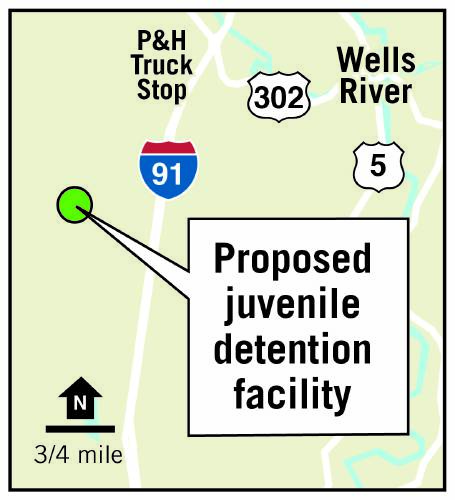
The new treatment center would sit on a 280-acre property at the end of the rural Stevens Place, which is west of Interstate 91. The property is owned by the Vermont Permanency Initiative, one of a group of nonprofits known jointly as Becket Family of Services, which is based in Orford.
It would be leased to the Vermont Department for Children and Families and operated by Becket.
It is slated to accommodate up to six boys between the ages of 11 and 17 in a former bed and breakfast.
In 2013, Becket converted the property to serve as a less restrictive 12-bed treatment center, with unlocked windows and doors.
The current plans for the 9,500-square- foot building include remodeling the basement and northern half of the main floor, adding approximately 500 square feet of interior space by enclosing an existing porch on both levels. The plans also call for approximately 4,500 square feet of fenced, outside recreational amenities and reconfiguring the parking to provide space for as many as 21 cars.
Officials have previously said they expect the renovations will total about $3.2 million and the annual operating budget for the facility will be about $3 million.
Each boy in the secure facility would be expected to stay and receive treatment there for about four months, before going to a different level of treatment either at home or another institution, state officials have said.
The facility will be staffed with up to a approximately 15 counselors, housekeepers and cooks at any one time.
The state currently lacks a facility of this kind, but there are youths who could benefit from the safe, supportive environment the project aims to create, said Jay Wolter, Becket’s president.
“I believe we can mitigate the risk,” Wolter said.
Newbury residents did not seem persuaded and many said they did not think the proposed location is appropriate.
The “Conservation Commission is against this,” Michael Thomas, the commission’s chairman, said during the public comment portion of the hearing. He said the project is “not a right fit” for the conservation district where the proposed facility would sit.
Scotch Hollow Road resident Jane Parsons Klein, a widow, said she’s fearful that one of the youths being held at the facility might escape.
“I know you say it’s very rare to have an elopement, but what if there is?” Klein said.
Board member Bobbie Jewett asked Maj. James Whitcomb, commander of the Field Force Division of the Vermont State Police, to provide an estimated response time should there be an emergency at the facility.
But, he declined, saying that response time would depend on the situation and where troopers happened to be at the time.
That’s “not something I’m prepared to give you,” he said.
Lara Saffo, chief compliance officer for Becket who formerly served as Grafton County’s chief prosecutor, said the treatment center would issue an emergency alert to neighbors and others should one of the youths escape.
She offered to have someone drive over to alert neighbors who might not have a land line, cell service or internet, and to provide area residents with a secure location for them to go to in such a situation.
But, she said the project itself will help make everyone safer.
The “best way to make all of us safe is to get those kids treatment before they hit adulthood (and to) identify the root cause of their behavior and help them heal,” Saffo said.
John Anderson, the attorney representing Becket Family Services and the Vermont Department for Children and Families who are seeking the board’s approval, sought to focus the board’s attention on a narrow range of items such as the density of the project.
“We meet all of the setback requirements very, very easily,” he said.
He also said that while the facility may increase traffic on the rural road, it might boost it from one car an hour to two or three. The traffic engineer for the project found “a number of places in the region where a very rural area has at least that amount of traffic on it,” he said.
Though Anderson said he didn’t think the Development Review Board had authority over security issues, the project’s architect and other consultants sought to assuage people’s concerns, saying that the windows and doors would be secure, there would be a 12-foot fence surrounding an outdoor recreation area and a control center outside the secure facility in which employees would monitor cameras scattered around the building.
“When kids are struggling in a crisis we want to keep them safe and we want to keep the community safe,” said Penny Sampson, a consultant for the project from the Council for Juvenile Justice Administrators, which is based in Massachusetts.
In addition to the conditional use permit from the Development Review Board, the project also is undergoing Act 250 review by the Natural Resources Review Board.
It will need to be licensed both by the Vermont Department for Children and Families and by the Agency of Education.
Neither the state’s lease of the property, nor the contract for operating the treatment center have yet been finalized, officials said on Saturday.
The Development Review Board continued its hearing to Oct. 21 at 6 p.m. at the Newbury Elementary School and via Zoom. The board asked that community members file written comments by Oct. 18.
Before the hearing ended for the day, Scott, the board alternate who chaired the meeting, said: “This is a very difficult issue.”
Nora Doyle-Burr can be reached at ndoyleburr@vnews.com or 603-727-3213.

