

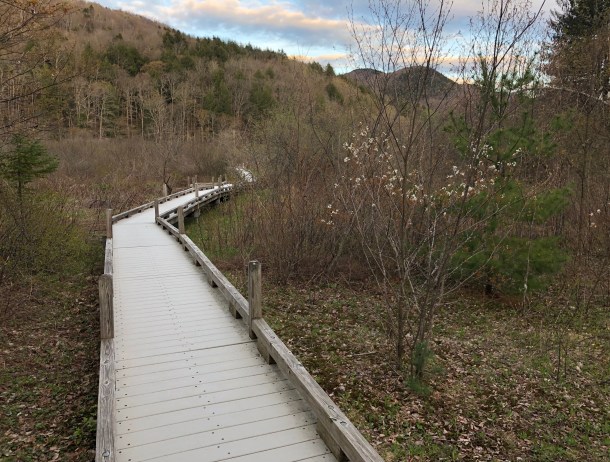
A stretch of land totaling nearly 630 acres that provides critical habitat for black bear, moose and migratory birds has been conserved in Killington, multiple organizations announced last week.
The land surrounds the Appalachian Trail for a stretch of 1.3 miles and includes existing trails for biking, hiking, snowshoeing and cross-country skiing.
The Conservation Fund, National Park Service and U.S. Forest Service jointly conserved the parcel, which the Conservation Fund purchased in 2014. That transaction included 30,000 acres of forest in Vermont, New York, New Hampshire and Maine that had previously been subject to industrial logging and was threatened by development.
The conservation project is one of Vermont’s first since the passage of the federal Great American Outdoors Act in 2020, which uses royalties from offshore oil and natural gas to maintain and conserve public land through the Land and Water Conservation Fund.
In a statement, U.S. Sen. Patrick Leahy, D-Vt., called the newly conserved land in Killington “perhaps the most important gateway to the Appalachian Trail and to the National Forest in Vermont and the region.”
Conservationists have noted that protecting land — especially where it connects what had been separated pieces of forest — could help native species adapt to climate change in Vermont. The presence and protection of forests also provide added benefits in the form of carbon sequestration and flood mitigation. Flooding is expected to become more common and intense in Vermont as climate change progresses.
“The rugged ridgeline traversed by the Appalachian Trail in the Chateauguay region is at the heart of this high-priority and vulnerable landscape of wilderness amidst an increasingly developed area of Vermont,” Sally Manikian, the Conservation Fund’s New Hampshire and Vermont representative, said in a statement.
The Green Mountain National Forest’s Appalachian Corridor management unit will manage the protected land.

