


For Clif Muller, the war in Afghanistan brought devastating news to his family’s home in Danville.
His 22-year-old son, Marine Cpl. Ian Muller, was killed in combat in Helmand Province on March 11, 2011.
“It’s so current that it’s not the easiest thing to assess,” Muller said of the rapid conclusion to the American occupation in Afghanistan. “Right now, it’s a disaster. It appears to have been very uncoordinated.”

Muller spoke to VTDigger in a telephone interview shortly after President Biden addressed the nation Monday.
“Even Biden said it went awry, which is kind of an understatement,” Muller said. “Not at all anything that we can be the least proud of.”
Muller was more supportive of the United States’ original mission in Afghanistan.
“We did have a focus in going after the perpetrators of the Twin Tower disaster,” Muller said, referring to the 9/11 terrorist attacks. He said that objective was achieved when Osama bin Laden was located and killed in May 2011, two months after his own son Ian was killed. After that, Muller said, the remaining goal of the mission in Afghanistan was misguided.
“We had some strange idea of stabilizing Afghanistan,” Muller said. “No one could. You can’t stabilize a country that’s really a bunch of tribes that are fighting against each other. It slowly spiraled to where no one knew what we were doing there.”
Muller’s son Ian was the last of four Vermonters killed in combat in Afghanistan.

Different lessons
Vermonters served in the fiercest combat and at the highest levels of the United Nations presence in Afghanistan. They draw different lessons from the collapse of the Afghan government and the takeover of the Taliban after 20 years of America’s longest war.
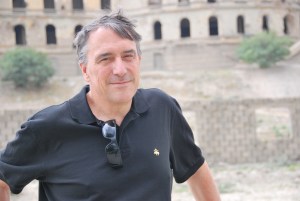
Former state senator Peter Galbraith has been talking to Afghan employees of the United Nations. He previously served as U.N. deputy special representative to Afghanistan for six months in 2009.
“They are terrified,” he said in a telephone interview Monday. “They are trying to shelter in place but Taliban have been going up and down the street asking for IDs.”
In one case, Galbraith said, a U.N. employee said his car was taken away.
Galbraith said he is trying to persuade the Biden administration to include Afghan U.N. personnel among the people the U.S. is evacuating from Afghanistan. He worked with Biden on the U.S. Senate Foreign Relations Committee from 1979 to 1993.
Galbraith said he is particularly worried about the Hazaras, a Shiite minority of Mongol origin in Afghanistan’s central highlands. The Taliban are radical Sunni Muslims. He fears they will persecute the Hazaras, who he said may have been saved from genocide by the American invasion and overthrow of the Taliban after 9/11.
“Half the mission worked,” Galbraith said of the U.S. invasion. “We intervened in support of the Northern Alliance and helped them win,” he said of the Afghans fighting the Taliban. He points out that that victory took just weeks. He said the mistake came with the next goal, the decision “to remake Afghanistan.”
“We imposed a centralized constitution in a country that is one of the most diverse,” Galbraith said.

“It is a stunning failure,” Galbraith said of the American involvement in Afghanistan. “We had a 20-year war that was declared a counterinsurgency. Counterinsurgencies require a local partner.”
That partner, the Afghan government, Galbraith said, was “corrupt, ineffective, and after three consecutive fraudulent elections, illegitimate.”
When he tried to get the U.N. to address what he calls the “massive fraud” in the U.N.-funded 2009 re-election of President Hamid Karzai, Galbraith was recalled by U.N. Secretary-General Ban Ki-moon.
A rule of law
Another Vermonter, Col. Judy Boyd of South Burlington, helped Afghans try to establish a rule of law in their country. She worked with lawyers, military police and logistics specialists supporting Afghans who prosecuted political assassinations, high-profile corruption and attacks on Americans by members of the supposedly friendly Afghan armed forces.
“It was a rewarding experience,” Boyd said in a telephone interview Tuesday. “But it was also frustrating because it was extremely dangerous for the Afghans who were part of this special court.”
Boyd said one chief Afghan prosecutor was carjacked and threatened.
“It’s disappointing to know that there are people in Afghanistan who really wanted their country to succeed and to have a rule of law in place,” Boyd said. “That’s what makes it hard to watch.”
She worries about the people she worked with because many of the people they convicted are Taliban.
“I have no idea what’s happening,” Boyd said. “I just hope they’re all alive and their families are safe.”
As the Taliban take over, she hopes that the U.S. government will make continued resources available for remote education and advice to Afghans interested in the rule of law.
National Guard
The Vermont National Guard deployed twice to Afghanistan.
Maj. Zac Fike was wounded there on Sept. 11, 2010, when he was deployed with the Guard. He received the Purple Heart.
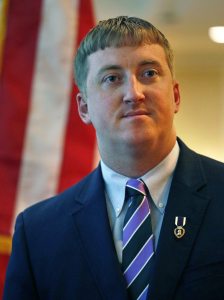
He’s currently on deployment with the Guard in the Balkans.
“Many of my fellow veterans are conflicted about the unfoldings in Afghanistan,” he wrote in an email to VTDigger on Monday. “I would implore them to focus on the positive and not allow the current outcome to define their lives.”
He expressed a defiant optimism in the face of the reversals of the last few days.
Fike, the founder of Purple Hearts Reunited, in St. Albans, said those who fought in Afghanistan accomplished three strategic goals.
First, he said, they went to counter international terrorism and bring bin Laden to justice.
“Over the last two decades, we degraded the Taliban and other extremist groups and kept future attacks from American soil,” he said.
Second, Fike said, Americans deployed to Afghanistan helped establish government infrastructure and gave the Afghan people the training and equipment they needed to establish a reputable military.
“They have the ability to succeed and we can only hope they find the fighting spirit to defend their nation in the near future,” Fike said.

Third, Fike said Americans opened the door to rights for women and girls.
“Afghan women now own businesses, became actors, singers and activists. Most importantly, some serve in the Afghan parliament,” he said. “I will remember their smiling faces and pray they find a brighter future.”

Fike, whose organization returns lost or stolen medals to veterans and military families, has another message for his fellow veterans.
“Veterans should be proud that we served when others wouldn’t,” he said. “Over the last 20 years, we were the country’s strength in war and her deterrence in peace. The positive example we set and the sacrifice we endured will be ingrained in the eyes of our children and that will live with them for a lifetime.
“I’ll be proud to say I served with some of the finest Americans of my generation and I’ll find comfort in knowing I made a difference, regardless of how some critics shape the narrative.”
And he has a message for the country.
“We must not focus on the outcome, but continue to prepare ourselves for future threats against our democracy and freedoms,” he said. “We should take advantage from the successes and the failures of Afghanistan to educate our future leaders and warriors to become a stronger nation vs. using them to further divide our country.”
‘They will be executed’
For another Vermonter, the experience in Afghanistan was brief, but also left its mark.
Dan Barkhuff was a Navy SEAL who engaged in combat in Iraq, not in Afghanistan.
Still, during a 90-day counterinsurgency assignment in Kabul in 2005, he took part in the recovery of the bodies of 19 comrades, Navy SEALs and Army Special Operations aviators killed in a battle in the Korengal Valley called Operation Red Wings. He knew 10 of them.
“My entire adult life, going to Afghanistan was my world,” Barkhuff said in a telephone interview Tuesday. He was referring not to his own short time there but to the fact that SEALs and others he knew were always going to Afghanistan.
Barkhuff said he is shocked at how fast Afghanistan fell.
“I agree with President Biden that it was time to go,” he said. “The execution of his plan was very poorly done.”
Barkhuff founded Veterans for Responsible Leadership, a South Burlington-based political action committee that has been fighting right-wing radicalization among veterans. He wants to devote that group’s resources to getting as many Afghan refugees as possible to the United States safely.
“They will be executed by the Taliban,” he said of the Afghans who worked with American forces. “I have absolutely no belief in the Taliban when they say they will be treated humanely.”
He would like to see hundreds or thousands of them settle in Vermont.
“We’ve got a history of welcoming folks,” he said. “If we are a moral nation, the right thing to do is to bring these people who risked their lives alongside us for decades.”
