

Updated at 4:22 p.m.
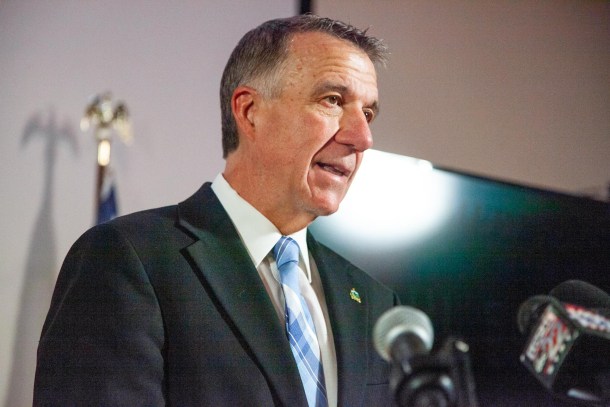
Vermont plans to begin requiring state employees at certain institutions to get vaccinated against Covid-19 or face further restrictions, Gov. Phil Scott announced at a press conference Tuesday.
The mandate would apply to prisons, the Vermont Veterans’ Home and state-owned psychiatric facilities, he said. “We have an obligation to protect the most vulnerable under our care,” he said.
The details of the mandate are still being hammered out with the Department of Human Resources, Scott said, but it would not be “forced.” He said there may be an “exit ramp” through testing or other restrictions on unvaccinated workers.
Scott said the mandate is “not something that we’re ready to impose” on other types of state workers, but his team plans to watch the data.
The governor praised businesses that have imposed vaccine mandates, particularly those that work with high-risk individuals, such as hospitals and long-term care facilities. When it comes to other sectors, he said, “taking a similar step could help with your business operations as well.”
“As a former business owner myself, I know how disruptive it can be when you find yourself short-staffed unexpectedly,” he said. “If your company doesn’t have a high vaccination rate, you could see major disruptions” if the Delta variant causes an outbreak in the company workforce.
Spike in Covid cases
The state reported 538 Covid-19 cases in the past week, up from 293 the previous week. That marked the fifth straight week in which case growth has been above 50%, according to a presentation from the Department of Financial Regulation.
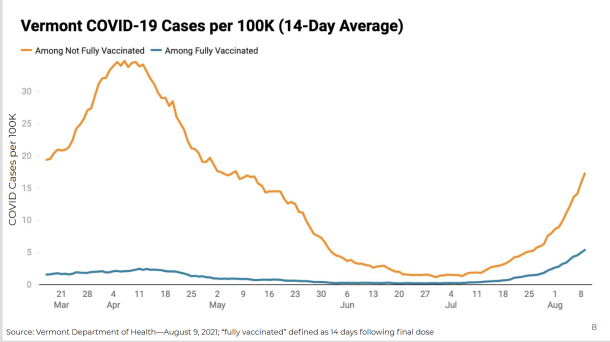
Cases are concentrated among unvaccinated people, but vaccinated Vermonters are getting sick, too. Currently, the case rate for unvaccinated Vermonters is between 15 to 20 cases per 100,000 people, compared to about 5 per 100,000 people for vaccinated Vermonters.
Health Commissioner Mark Levine said 75% of the 24 hospitalized Vermonters were unvaccinated. Roughly 25% of the general population in the state is unvaccinated. (It’s also worth noting that hospitalizations tend to be more frequent among Covid-19 cases in people over age 65, and less than 10% of that age group is unvaccinated.)

Levine emphasized the power of the vaccine to protect people from getting sick, or getting the most severe complications of the disease.
“We have a very powerful tool: vaccines that are highly effective at preventing the most serious outcomes of the Covid-19 illness, and the SARS-Cov-2 virus, including against the Delta variant,” he said.
The Delta variant has ripped through the nation, and Vermont is no different. Levine said an estimated 90% of Covid-19 cases are now connected to the Delta variant, based on a sampling of positive cases.
He said the variant was moving quickly through the unvaccinated population, causing community spread and outbreaks at camps and workplaces.
Cases are forecasted to continue to rise for the next several weeks before they come down, said Mike Pieciak, commissioner of the Department of Financial Regulation. He pointed to data from other countries that suggests the Delta variant tends to peak after seven to nine weeks — although the analysis did not include what restrictions were in place in those countries.
In Vermont, case rates were particularly high in Chittenden, Orleans and Essex counties. Hospitalizations have risen in recent weeks, from an average low of 1.64 in mid-June to 12.29 average hospitalizations now.
News organizations throughout the country have begun to report an increase in hospitalized children, but Levine said no children are hospitalized in Vermont. It’s unclear if the age distribution of hospitalizations has changed in the latest rise in cases.
Three more deaths have been reported in August, bringing the total to 263.
State leaders: Get tested, get vaccinated
Human Services Secretary Mike Smith said Vermont testing sites have reported a rise in demand, driving the state to bring in EMS workers at some testing sites and expand the hours of a few.
Even as the number of tests is increasing, the Covid positivity rate of tests in Vermont is also rising. The state reported a one-day positivity rate above 5%, the first time that has happened since March 2020. The seven-day average remains around 3% to 4%.
During Tuesday’s press conference, Smith reviewed the current testing recommendations: People who are unvaccinated should quarantine and get tested if they have any exposure to a positive case. Vaccinated people do not have to, but can get tested if they have exposure, Smith said.
Regardless of vaccination status, everyone should quarantine and get tested if they experience symptoms of Covid, Smith said.
Demand for vaccinations has also increased slightly. Another 2,700 Vermonters were vaccinated this week, roughly 400 per day, an increase of 12% over the previous week. But the rate remains far below its peak of roughly 1,600 per day.
Levine began his presentation with a simple theme: “Vaccinations, vaccinations, vaccinations.”
“Please know that when we urge you to get your shot — it’s because as a physician, as a human being, I don’t want you to get sick. I don’t want you to end up in the hospital, and I certainly don’t want you to die,’ he said. “Getting your shot is also very important if we’re going to be able to slow the spread and protect those who are not yet able to be vaccinated.”
Other topics
- Scott said he hasn’t yet read a report on a recent investigation of the Vermont National Guard, which found that a “good old boy” network persists among its ranks, and that the organization failed to adequately track instances of sexual abuse.
“I have a great deal of faith in Gen. (Gregory) Knight; he’s made this his mission,” Scott said, referring to the Guard’s adjutant general. “You know, culture doesn’t change overnight. But he is doing his best to change that culture. And I think he’s made great strides in that regard. He’ll continue to be transparent and honest and open, as he did with his press conference he had the other day, and this report will continue to be somewhat of a living document, and we’ll continue to look at the data and make sure that we’re doing all we can.”
Asked if he was surprised to hear that the old boy network is still alive, Scott said, “Culture is very difficult to change in every regard. So it’s unfortunate. I’m disappointed. But I’m not surprised.”
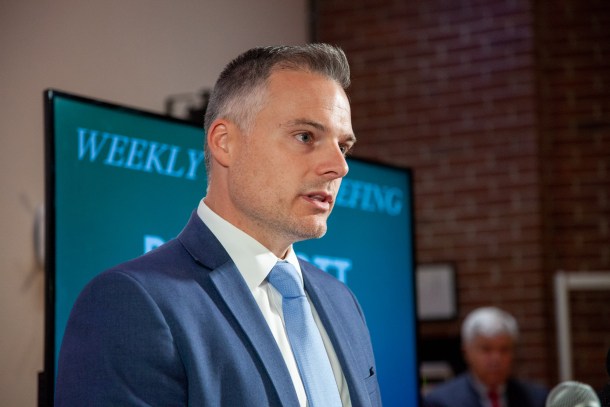
- Federal benefits that added $300 a week to unemployment benefits will expire Sept. 4, said Michael Harrington, commissioner of the Vermont Department of Labor. The end of that program will affect about 10,000 people, he said.
That includes Pandemic Unemployment Assistance, established by Congress to help people who aren’t eligible for traditional unemployment insurance — including business owners, self-employed workers and independent contractors.
The extra benefits played an important role in providing temporary assistance to Vermonters during the pandemic, Harrington said.
Now, his agency is working to help people move back into the job market, he said, with 8,800 jobs available on its JobsLink site. Staff members are calling people on unemployment to make sure they know about the support services that are available to help them. He also noted that many businesses are struggling to hire enough people.
“The end of these programs could be difficult for some,” Harrington said. “We want to help these folks get back to work as soon as possible,” and he invited individuals and employers to contact the labor department by phone or email.
Correction: An earlier version of this story misidentified Adjutant General Gregory Knight.
