

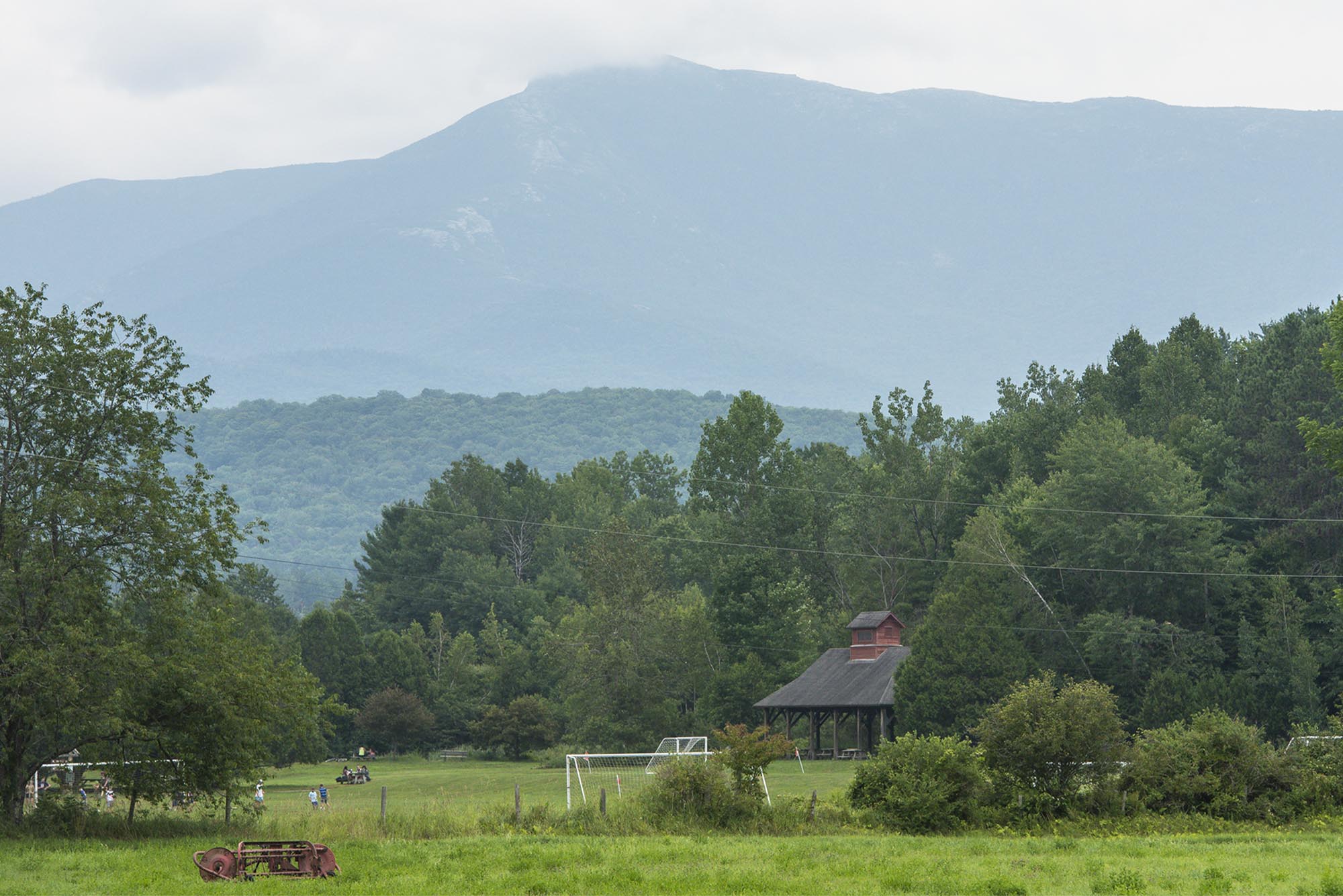
Manitoba, Canada, may be nearly 1,500 miles from Vermont, but the smoke billowing from a string of fires there is degrading air quality throughout the state, posing a number of health risks for Vermonters.
“Poor air quality can cause issues for people with respiratory issues and chronic conditions, so it’s important for people to pay attention to what’s going on,” said Ben Truman, spokesperson for the Vermont Department of Health. “If there are air quality alerts, people should stay inside and close windows if it’s not too hot.”
A combination of atmospheric conditions has brought haze, smoke and overall poor air quality to New England, while states closer to the source of the smoke — such as Minnesota and Michigan — are remaining relatively clear.
Dr. Dan Jaffe, a professor of physical sciences at the University of Washington, says a combination of wind patterns, the unusually large size of the fires, and Vermont mountains that trap smoke in valleys have combined to deliver poor air quality to the state.
Nearly 5 million acres of forest are burning throughout Canada, with 2 million acres alone burning in Manitoba. The province borders the U.S. states of North Dakota and Minnesota.
“You couldn’t be a better bull’s-eye; the winds are coming straight from Manitoba to Vermont,” Jaffe said. “The White Mountains and the Green Mountains are probably making it worse too.”
Forest fires always send smoke up into the atmosphere, but because these fires are so big, the smoke is reaching the boundary layer — the portion of the earth’s atmosphere between 3,000 and 6,000 feet in elevation. When the smoke reaches the boundary layer, the jetstream — a prevalent wind pattern in North America — carries that smoke east.
Through a series of complex meteorological processes, the smoke particles then descend below the boundary layer in certain conditions. Mountain ranges often contribute to pulling smoke back down to ground level.
“It is not unusual for smoke to pass over your head and not impact your air quality — that’s really common — and I suspect that’s what’s happening in some places between Vermont and the smoke,” Jaffe said.
So, will Vermont see smoke every summer from the raging wildfires that have become common to our west? Jaffe thinks that’s unlikely.
“This is a bit of an unusual alignment of the huge fires in Manitoba and the winds that are just bringing it right to you,” he said. While climate change will bring more fires to the western United States and Canada in the coming years, he said, Vermont itself probably won’t have more forest fires than usual, and smoke will develop when wind patterns and large fires line up — as they have this summer.
Jaffe believes Vermonters should resign themselves to more poor air quality in the coming months.
“For the rest of this summer, it’s pretty likely Vermont will see smoke on and off, just because those Manitoba fires are so large they won’t be contained. There is nothing that’s going to put those fires out until we get rain in the fall,” he said.
An important health consideration for Vermonters is the impact of smoke particles from far away fires. Sheryl Magzamen, an assistant professor of epidemiology at Colorado State University who studies the health impacts of wildfire smoke, said that, as smoke particles age, their chemical composition changes. That is something air quality indexes don’t take into account. Typically, these indexes measure the mass of smoke in a unit of air. However, air that contains older smoke particles could be more harmful than the same concentration of younger smoke particles.
“We hypothesize that older smoke particles are actually more harmful to breathe in,” Magzamen said.
Another issue is that in places like Vermont, where no fires are actually burning, sometimes people aren’t aware that the air quality is bad because they can’t smell or see a fire.
Being aware of smoke conditions is an important step to remain healthy during fire season, Jaffe said.
“I’m pretty active and I’m outside a lot,” said Jaffe, who lives in Seattle, where summer months often bring smoke, “but when we get smoke and we get to an AQI of around 100, I won’t go outside and bike anymore. It’s not a good idea for me to do that.”
Magzamen agreed: “It’s kind of normal to check the weather before you go outside and plan your day, so we’re trying to get people to check the air quality as well.”
When air quality is poor because of wildfire smoke, it is common to see an increase in asthma-related emergency room visits and hospitalizations, and of other respiratory illnesses. It can be dangerous for high-risk populations to be outside for extended periods of time on days with poor air quality.
Magzamen said babies who are in utero during wildfire season typically weigh less than babies who are not exposed to wildfire smoke in utero.
“If you’re outside for more than an hour when the AQI is above 100, I’d recommend wearing an N95 mask,” Jaffe said.
Magzamen said communities should provide safe places for people to go to breathe clean air during prolonged periods of bad air quality. She encouraged people living in affected areas to check on their neighbors and keep asthma and other respiratory medication close by.
“A lot of the lessons we learn during heat waves definitely apply during smoke as well,” Magzamen said.
