

The INVEST in America Act, the $715 billion surface transportation reauthorization bill passed by the House of Representatives Wednesday, includes $20 million for four infrastructure projects in Vermont.
“We all know our roads, bridges, rail and water systems are crumbling and outdated,” said U.S. Rep. Peter Welch, D-Vt. in a press release. “It is long overdue for Congress to take the bold steps necessary to rebuild our communities by investing in resilient and sustainable infrastructure projects.”
The bill marks the first time in years that Congress has earmarked funding for infrastructure in any state, including Vermont, according to Michele Boomhower, the director of policy, planning and intermodal development for the Vermont Agency of Transportation.
“We are typically only receiving about 60% of the funds that we need to keep the [highway and bridge] system in the state of good repair, so this type of additional investment is really important for the state,” Boomhower said.
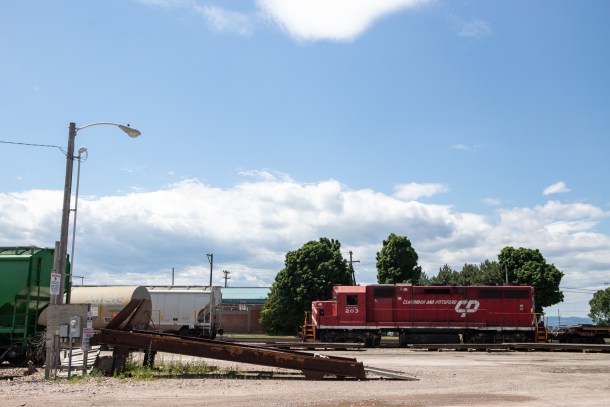
The bill includes four member-designated projects in Vermont — $4.75 million for intersection reconstruction in Barre, $5.4 million for a connector in Essex, $7.6 million for bridge rehabilitation in Hartford and, crucially, $2.25 million for the Railyard Enterprise Project in Burlington.
However, while the House has approved the measure, it may face tough sledding in the U.S. Senate.
The $2.25 million for the Railyard Enterprise Project would cover the design and permitting phases for building the Pine and Battery Street connector through the railyard and divert traffic away from the King and Maple streets area, a neighborhood with primarily low-income, Black and brown residents.
The Vermont Racial Justice Alliance has been campaigning for the city to prioritize the railyard project to offset disproportionate impacts on the neighborhood expected from the Champlain Parkway.
The planned parkway would stretch 2.8 miles from the unfinished Shelburne Road Interstate 89 interchange to downtown Burlington, through the King and Maple streets neighborhood. The parkway is meant to improve traffic flow between downtown Burlington and the South End of the city.
However, the plan would increase traffic 37% in the King and Maple streets area while decreasing traffic 72% in the higher-income, whiter neighborhood between Home and Flynn avenues, according to data from the Federal Highway Administration, Vermont Transportation Agency and Burlington Public Works Department.
Mark Hughes, the co-founder and executive director of Justice For All and Vermont Racial Justice Alliance coordinator, said bifurcating the neighborhood would have a huge social cost and dramatically lower the value of houses in this already low-income area. Increasing traffic would create more risk to pedestrians in a neighborhood where few have cars. The project would also raise the risk of environmental threats like air pollution, according to Hughes.
“It’s an issue of environmental justice where Black and brown folks are hurt first and worst in these communities,” Hughes said. “It comes at the expense of Black and brown bodies.”
Hughes says the Champlain Parkway project is part of a long history of “transportation violence” to Black and brown communities across the country. When highway planners designed the interstate system in the 1950s, they routed highways through Black and brown neighborhoods, often on purpose.
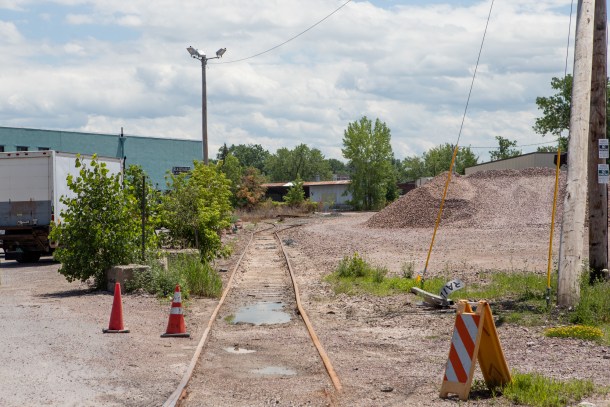
Justice for All and the Pine Street Coalition and Innovation Center, are advocating for what they call the “Champlain RIGHTway,” in which the city would build the Railyard Enterprise Project first as part of the parkway and avoid building through the King and Maple streets neighborhood altogether.
One study found that the Railyard Enterprise Project connector could divert as much as 59% of traffic from the King and Maple streets neighborhood and mitigate much of the parkway’s impact.
“This artery would be extremely helpful in addressing congestion that exists in a way that achieves racial justice as well as transportation objectives,” Welch said.
The INVEST Act would quintuple the funding currently available for the Railyard Enterprise Project and significantly accelerate construction, according to Welch.
Should the $2.25 million make it through the Senate, Boomhower estimates that construction would begin in 2025. Previous estimates placed the start of construction as late as 2028. The connector is projected to cost $20 million in total, 80% of which will come from federal funds, 10% from the state and 10% from the city.
The Burlington mayor’s office is developing a coordinated schedule for the various construction projects planned or underway in the city, including the Railyard Enterprise Project and the Champlain Parkway, which is projected to break ground in 2022.
Under the overall plan, the city would coordinate work on the different segments of the parkway and the connector so that the railyard construction could start before or at the same time as some parts of the parkway. That approach would reduce negative impacts on any one neighborhood, according to Burlington Mayor Miro Weinberger.
Weinberger expects to ask the city council to approve the coordinated schedule within the next few months.
Now that the House has passed the INVEST Act, it will have to reconcile with the surface transportation bill working its way through the Senate, where Welch anticipates it will face serious challenges from Republicans.
“We are cautiously optimistic about this,” Boomhower said. “[But] we certainly don’t count on anything coming from Washington until the votes are cast and the bills are signed.”
