


Burlington City Council election races are heating up.
Four council seats are up for election come Town Meeting Day, March 2, and three have contested, animated races. The results may reinforce support for the swift decision-making style of the Progressive majority, or show that voters want a new direction.
Progressives Jack Hanson, East District, and Perri Freeman, Central District, are both up for reelection. Hanson is unopposed, but Freeman is being challenged by Tiki Archambeau, a former chair of the Burlington Progressive Party who has become disillusioned by the current party’s leadership style.
The North District seat opened up when Democratic Councilor Franklin Paulino announced he wouldn’t be running again. Keinan Christianson, who is running as a D/P, is gunning for the seat alongside Mark Barlow, who is running as an independent with an ideology more aligned with Democratic members.
Longtime Democratic Councilor Joan Shannon is being challenged in her South District race. Political newcomer Grace Ahmed, who won the Progressive nomination but is running as an independent, hopes her advocacy for “regular” Burlingtonians resonates with voters.
The dynamics of these races reflect the tensions that have emerged between the two factions of the left that make up the city’s political power structure. In Burlington, the Republican Party is essentially nonexistent, with no Republicans currently on the city council. So, the Progressives and Democrats essentially provide the city with a two-party system — those on the farther left advocate for political activism that prioritizes the most marginalized; the more moderate liberals mostly agree that reform is needed at a more deliberate pace.
Central District
Archambeau, 50, is running to unseat Freeman, 29, because he takes issue with their leadership style. (Freeman uses gender-neutral pronouns.) He views Freeman as too advocacy-oriented.
“My approach is one of pragmatism,” Archambeau said. “I’ll hear both sides. But somewhere in there I want to look for truth. I want to look for what’s just.”

He said he thinks Freeman has sometimes only listened to the advocates on a particular issue and not other stakeholder groups that should equally have a say in policy. He pointed to the contentions around the council’s decision to cut 30% of the Burlington Police Department over the summer as an example.
He doesn’t believe Freeman, or other Progressive councilors, adequately included police and other stakeholders’ opinions on the decision to unilaterally cut the department. He would have preferred that an assessment take place to determine how many officers the city needs and how the city could create alternative positions, such as mental health support staff, to fortify the police department.
Archambeau was chair of the Burlington Progressive Party from 2003 to 2005 and again from 2012 to 2014. He is also a public works commissioner. He said he still identifies with progressivism but he doesn’t agree with what he views as the party’s newfound blind loyalty to advocacy organizations.
“I’m all about raising underrepresented voices to the same level, just not at the cost of everyone else,” Archambeau said. He doesn’t think the council can facilitate collaboration or buy-in on policies when certain groups feel excluded.
If elected, Archambeau wants to reform police use-of-force policies and further empower the citizen oversight Police Commission. He supports giving Burlington’s code enforcement “more teeth” to better serve renters and wants to encourage the building of CityPlace, the long-stalled downtown development project.
Freeman disagrees with Archambeau’s characterization that they don’t collaborate with various stakeholders on policy.
“I would say that I am really open to hearing and talking to folks from all across the political spectrum,” Freeman said. “I definitely do come from a social movement background but I don’t see how we’re going to move past status quo unless we have social movements calling for more equity and better systems.”

Freeman thinks it’s “unfortunate” that those who view Progressive-led policy changes as sudden don’t recognize that urgent decision-making is needed for those who have been historically disenfranchised. Freeman pointed to data that has consistently shown that Black people are disproportionately stopped by police and experience force at the hands of police as an example for this urgency.
The decision to cut police department staffing wasn’t a mistake, Freeman said. They don’t think the council needed to study how many officers Burlington needs or if alternative policing methods are better because they point to research that shows the 74-officer cap reflects the size of police forces in similar cities.
If reelected, Freeman wants to continue shaping the proposal for an independent police oversight board that has investigatory and disciplinary power — an idea vetoed by Mayor Miro Weinberger this winter.
They also want to continue addressing economic inequality in Burlington. Freeman said they want to keep pushing their “Just Economy” charter change, which would institute a city minimum wage, an income tax on residents who earn more than $125,000 and a property transfer tax on homes that sell for $500,000 and above. Freeman said this proposal will likely change — they’re open to raising the income tax to residents who make $200,000 or $500,000 a year.
But the principle for progressive taxation — tax those with more to support policies for those who have less, like affordable housing — would remain the same.
North District
This isn’t the first time Kienan Christianson, 32, has run for Burlington’s North District City Council seat. In 2019, the local attorney ran as an independent with Progressive backing against Democrat Franklin Paulino, who won the race.

Now he’s running again, this time claiming endorsements from both the Progressive and Democratic parties. It was a tactic that raised some eyebrows after he effectively blocked citizen oversight Police Commission member Kerin Durfee from entering the race as a Democrat when she sought the Democratic nomination.
Voters chose to give Christianson the endorsement, even though he had already gained the Progressive nomination a few days earlier. During a recent debate between Christianson and opponent Mark Barlow, 58, who is running as an independent, one caller asked why Christianson would “deny” a Black woman such as Durfee an opportunity to share her perspective in this race.
Christianson told VTDigger that he thinks it’s an “insult to voters” to suggest that he’s stifling competition by seeking both nominations. He said he thinks if voters had a problem with him seeking the Democratic nomination, they wouldn’t have chosen him.
He said he’s always identified as a progressive Democrat. He thinks being a “fusion candidate” will help him build collaboration across the parties, if he’s elected to the council. As for denying a Black woman a spot on the ballot, Christianson said he would also represent a marginalized community’s interests as a gay man on the council. He also pointed out that there’s no stopping anyone from running as an independent.
“There is not a lot of LGBTQ representation on the council,” he said. “And there’s not a lot of LGBTQ representation generally speaking.”
If elected, Christianson said he wants to prioritize financial support for the Burlington School District as it moves high school students from their old building, where PCB chemicals were found, to its new downtown location in the former Macy’s department store. He also wants to reform the way students are weighted in Burlington after a study found that districts aren’t equitably receiving funding specifically for students from marginalized backgrounds.
Barlow said he’s running because he’s unhappy with some of the decisions the Progressive majority has made on the council. Barlow is co-founder and chief technology officer of SBBNet, a software company.
He’s specifically displeased with the police department cuts. He’s alarmed by the sudden attrition of officers that has led to the possible loss of police overnight coverage. He said he supports reforming the police but thinks there should have been more planning before cuts were made.
He also didn’t agree with Freeman’s proposal, which didn’t pass, to raise taxes for those making more than $125,000 a year. He also has concerns about the just cause eviction Town Meeting Day ballot item, which would protect tenants from being evicted without breaking a lease or state law. Christianson supports the just cause ballot item.
Barlow said he’s running as an independent to avoid party constraints or expectations. But he does see himself caucusing more with the Democrats. He said he thinks Christianson will align himself with the Progressive majority — an idea that Christianson himself rejects. Christianson said he’ll align with Democrats but said he also doesn’t want to limit himself to a specific party.
“In the interest of more balance and more voices on the council, I would say that I would provide that more effectively than Kienan would,” Barlow said.
If elected, Barlow said he would prioritize the city’s Covid-19 response and policies that support economic development in Burlington’s downtown. He did not cite a specific policy proposal for either priority.
South District
The historically Democratic South District has been represented by Joan Shannon since 2003. She’s withstood challenges before and if she’s supported again, this would be the eighth time she’s won reelection.
But challenger Grace Ahmed, 40, is banking on a changing tide. She’s said she’s running simply because people asked her to — and because she disagrees with Shannon on policies that are framing much of Town Meeting Day, such as police staffing levels.
(Shannon said she did not have time to discuss her candidacy with VTDigger for this article.)
Ahmed is a graduate student studying data science and complex systems. She also spends her time homeschooling her children and has a background in social service work. Her disagreements with Shannon’s voting record “go back pretty much as far as I can remember,” Ahmed said.
Ahmed said this summer’s Battery Park protests over alleged police brutality made her think that people were ready for change. And issues of policing are some of her highest priorities in this race. She said she supported Freeman’s proposal for an independent police oversight board that would have the power to investigate and discipline the police.
The board was approved by the council for a charter change vote before it was vetoed by the mayor. Shannon voted against it. She expressed concerns that the council didn’t look into other oversight models, and that the board had no proposed budget, no proposed training structure or parameters around what kind of complaints it would investigate.
Ahmed also supports the council’s decision to cut police officers because it was a measure that a large portion of the community called for. She said “it’s hard to believe” that the Burlington police couldn’t shift staffing to provide proactive overnight coverage — during a time when on average zero to one call will come in — if that’s something the community wants. Acting Police Chief Jon Murad has been adamant that, with the staff he currently has, proactive patrol cannot be conducted safely.
“It’s the police chief’s responsibility to figure out how to deploy officers,” Ahmed said. “It seems like coming up with a plan that doesn’t work, and then being like, ‘Well, that plan doesn’t work,’ is maybe not maybe not the best-faith effort in improving things.”
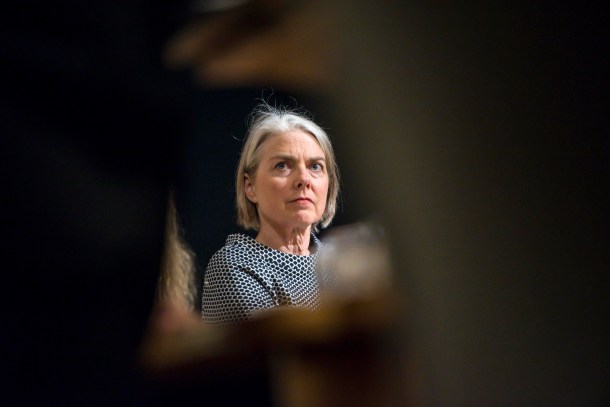
According to Shannon’s campaign website, she wants Burlington to fund expert-driven research to identify the police reforms that are right for Burlington. To achieve fair, impartial and accountable policing, she said Burlington, with the help of the state, should build out social services so that issues handled by those organizations don’t fall to the police.
Ahmed said she’s running to bring more power back to “regular people” in Burlington.
“Regular people in Burlington is renters. Regular people in Burlington is quite low to moderate income. Regular people in Burlington is not necessarily folks who show up and take leadership positions,” Ahmed said.
But she admitted she doesn’t necessarily fall into these “regular people” categories. Ahmed is a homeowner and a landlord, like Shannon. She said she wants to be a “nagging voice” on the council to remind members that the city’s leaders are often unlike the average people of the city.
During a council race debate with Ahmed, hosted by Town Meeting TV, Shannon said she’s running because she has a “deep love” for the community and to keep her dissenting voice present in the body’s leadership.
“I have a reputation for speaking directly and plainly, telling the story of what happens at the city council. You would lose my voice at the table which, as of late is often a voice of dissent. And the council would be more homogenous in thought,” Shannon said. “And I do want to emphasize that it is important to, even when you don’t win, to represent another viewpoint at the table. And fortunately sometimes I do win. But it is important to have diversity of thought.”
