


Although the Vermont Legislature has new leaders at the top, the lawmakers leading its policy committees look very similar to the last session.
New House Speaker Jill Krowinski, D-Burlington, and Senate President Pro Tem Becca Balint, D-Windham, made few changes among the chairs of the Legislature’s 25 legislative panels.
Only three committees have new leaders in the 2021-22 biennium: the Senate Education Committee, now chaired by Sen. Brian Campion, D-Bennington; the House Appropriations Committee, led by Rep. Mary Hooper, D-Montpelier; and the House Transportation Committee, led by Rep. Diane Lanpher, D-Vergennes.
Committee chairs exert great influence in Vermont’s Statehouse. The leaders decide which legislation gets consideration and which doesn’t, schedule testimony, and advance bills through the legislative process.
In the House, 10 of the chamber’s 14 committees are now led by women.
In the Senate, four of the 11 committees now have female chairs. Only 10 of Vermont’s 30 senators are women.
Sen. Phil Baruth, D-Chittenden, the former chair of Senate Education, stepped down.
“I had been on there 10 years and had never served on a different afternoon committee,” Baruth said. “I just felt like it was time to move on.”
Baruth is now on the influential Senate Appropriations Committee, which writes the state budget, and is vice chair of the Senate Judiciary Committee.
Campion, the senator taking over the Education Committee, served on the education panel for two years, and was on the House Education Committee when he was a representative.
Campion’s committee will oversee the state’s education system as it transitions amid the pandemic. Some schools are operating all in-person, others are remote or toggling back and forth in a hybrid system.
Gov. Phil Scott said in his inaugural address Thursday that he wanted all students to be learning in the classroom again by the end of the school year, and possibly as soon as April. Campion said his committee will look into those plans.
“I think we need to do our due diligence and see if that’s actually doable and start to talk to folks to see what that would look like, and if we were to move toward that goal, what would we need to do together to get there,” Campion said.
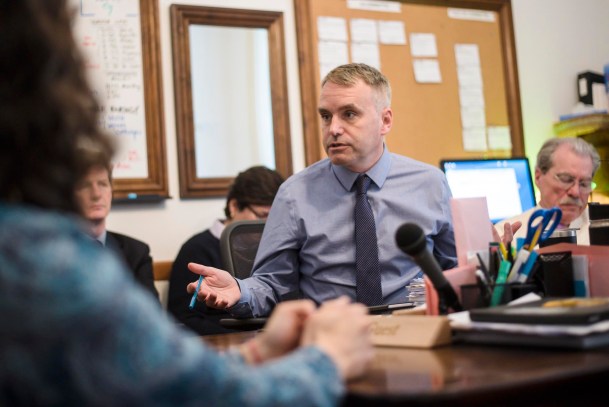
He wants to make sure that schools have the resources to deal with Covid-19 and remote learning. And, like other Democrats, he says lawmakers should look at ways to expand access to affordable child care.
In the House, Hooper, a former mayor of Montpelier who has been in the House since 2009, was appointed chair of Appropriations after previous chair, Rep. Kitty Toll, D-Danville, decided not to run for reelection.
Hooper has been on House Appropriations for the past seven years. This year, she said her committee will navigate the budgeting process “in a climate of real complexity and lots of uncertainty.” State revenues are strained from the pandemic, and it’s unclear how much federal aid may be on the way.
Hooper said budget priorities include those laid out by Krowinski, the House speaker, who wants to expand access to broadband and child care amid the pandemic.
She said the committee will pay “deep attention to the state college system,” which has endured major financial woes in the last year, and she is particularly interested in how state officials solve the “deep need for Vermonters to have affordable housing.”
“My interest is that, in any of the work that we do, we pay attention to building back better,” Hooper said.
On the House Transportation Committee, Lanpher succeeds Rep. Curt McCormack, D-Burlington, who decided to step down as chair. Lanpher has been on the transportation committee for six years, and on House Appropriations for the last six years.
The Transportation Committee handles transportation-related policy and spending, and plays an important role in overseeing climate change measures.
“When something fits, it fits usually all the way around, and this is a really appropriate fit for me and, I think, the committee,” Lanpher said of her appointment.
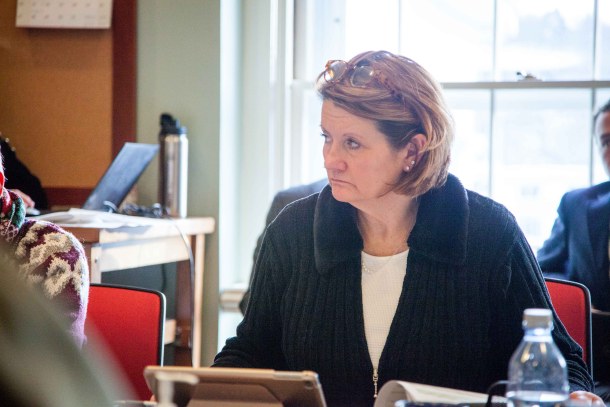
Lanpher said one of her committee’s priorities will be determining how leftover and incoming federal Covid-19 relief dollars should be spent. The recent Covid-19 relief package passed by Congress includes more than $80 million in transportation-related funding, for example.
“We’re going to need to understand what’s been used, how was it used, what’s coming, how is it going to be allocated,” Lanpher said.
McCormack, who was the committee chair for the last two years, said that he would rather serve simply as a member. A rep for 21 years, he previously chaired the House Natural Resources Committee.
When he’s not a chair, he said, he has more time to pursue his own legislative priorities. He pointed to legislation he sponsored and which the governor signed in 2017 setting state standards for energy-efficient homes and commercial and industrial appliances.
“I did my best work when I was not a chair,” he said. “I did my best work when the chair was a friend of mine, and agreed with me, agreed with what I was trying to do. But that person did not have time to do those things, as I didn’t.”
