


How does one abide by a pandemic stay-at-home order if they don’t have a home?
How can you quarantine when you’re couch surfing between friends and family? When shelters shutter during the winter months because social distancing is impossible between cots, where do those experiencing homelessness go next?
These are the questions VTDigger has set out to answer from the very beginning of the pandemic when it became apparent in March that our world was about to drastically change — and impact our most vulnerable community members the most.
We were one of the first news organizations in the state to cover the news that homeless shelters were shuttering and the state was rushing to rehouse those who needed a space to isolate. The state essentially solved homelessness in a matter of weeks by housing people in motels and hotels across the state. Since then, only a handful of Vermonters experiencing homlessness have tested positive for Covid-19.
We’ve been on the frontlines of policy conversations and tracking how millions of dollars were being allocated to support affordable housing programs and homeless shelters. And we’re still asking questions about how this money will be used and where hundreds of Vermonters who are relying on the state’s support for motel housing will go when the pandemic ends.
The year 2020 has revealed some of the ugliest equity disparities our communities have sometimes averted its gaze to in times of general prosperity.
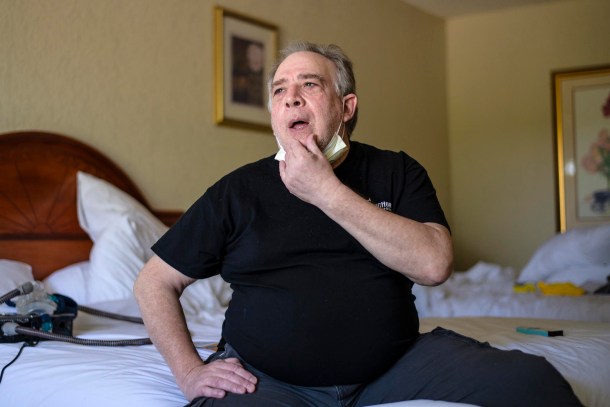
As a reporter, I’m extremely grateful to Victor Guyette — a resident of the South Burlington Holiday Inn turned homeless shelter — for allowing Vermonters a look into his temporary home to share the good and the bad of motel living.

I was struck by the resilience of Pamela Williams, another Holiday Inn resident, who reminded our community how documents, like a stolen Social Security card, can be so difficult to obtain for those without consistent housing in order to find work.
My thanks also extends to Emily, a domestic violence escapee found homeless, who told readers about how she balances her gratitude for the affordable housing she secured with the recognition that there are so many others who won’t be as lucky with their vouchers due to Vermont’s tight housing market.
During a time when so many Vermonters are experiencing the cruelty of this pandemic’s economic effects, it’s foolish to say there’s a silver lining here. But it can’t be ignored that Vermont has seen a historic investment in housing as a result of Covid-19.
For the affordable housing and homeless shelter organizations of Vermont, the millions they’ve received in aid to build affordable housing or renovate matches the state’s 2017 $34 million housing bond — one of the most significant investments the state has made in affordable housing.
Of the state’s $1.25 billion in coronavirus federal aid, $34 million went to the Vermont Housing and Conservation Board to build new housing and improve housing for the homeless. In total $87 million of that $1.25 billion went to housing needs in Vermont, including rental assistance and landlord renovation programs — that’s a figure almost three times the 2017 housing bond.

With this money, the Champlain Housing Trust and homeless shelter Anew Place has been able to buy up properties to expand beds and affordable housing units. These new properties, including others across the state, will provide lasting support far beyond this pandemic.
However, these are only one-time funds. And this aid isn’t enough. Even with the enormous influx the state has received for housing development, there are still more people in need than the number of motel rooms available and the number of affordable units expected to come online.
The state is assuring Vermonters they won’t be left behind.
Now that there is an end in sight, how will those experiencing homelessness be supported through this transition?
One thing is for sure — we’ll be there asking questions.
