


Tarnished Badge is a three-part series that looks at credibility questions raised by Vermont prosecutors about law enforcement officials. Part 1 explains why prosecutors file so-called “Brady letters” and other documents when a law enforcement officer’s credibility is questioned. Part 2 examines why some Vermont prosecutors have filed more cases against officers than others. Part 3 looks at what happened to the officers named and where some of them are now.
For some officers, it’s the end of a career. Others can be shown the door at one police department and then pop up at another.
In a few cases, dishonest cops have not only kept their jobs, they’ve taken top posts in their agencies even after appearing on a prosecutor’s list questioning their credibility or receiving a “Brady” or “Giglio” letter, which in law enforcement is the equivalent of a scarlet letter.
Prosecutors provide defense attorneys with information about a police officer whose credibility is in question. In the past five years, the ramifications have been as varied as the circumstances that put the officers’ jobs on the line.
There is one case referred to as the “egging incident.” Another centers on issuing parking tickets to drivers pulled over for speeding.
There are allegations of cheating on exams at the Vermont Police Academy, stealing from evidence rooms and hurling racial slurs.
Each of the 28 incidents uncovered by VTDigger in public records requests had consequences for the officers involved, though the results varied wildly.
At a time when police conduct is under scrutiny nationwide, the credibility cases have particular relevance. For some cops, being the subject of a Brady letter or being put on a Giglio list has meant turning in their badge when prosecutors refuse to take their cases.
(Brady letters and Giglio lists are named after court decisions that require prosecutors to turn over “exculpatory” information to defendants when prosecuting a case.)
Washington County State’s Attorney Rory Thibault said a Brady letter may not necessarily end a police career, but it can undermine a cop’s credibility.
He described it as the “nuclear option” for prosecutors.
“You can guarantee if there is a letter like that, that during the course of a deposition the defense counsel is going to ask about it,” Thibault said. “Sometimes the explanation is satisfactory and you move along; other times it’s a bigger deal.”
Rutland Town Police Chief Ed Dumas, Northfield Police Chief John Helfant, and Fair Haven Police Chief William Humphries have each received letters or made it onto lists no officer wants to be associated with.
Each remains the top law enforcement officer in his community.
Thibault sent a letter last year alerting defense lawyers to issues involving Helfant’s credibility. The questions arose from a drug case and whether proper consent had been obtained to conduct a search. The prosecutor eventually tossed that drug case because he couldn’t square information in an affidavit from Helfant with what the body cam video revealed.
Helfant denied any wrongdoing and later told VTDigger he obtained the consent needed to conduct the search.
“The audio recording does not pick it up, but I heard it,” he said.
Thibault asked the Vermont Attorney General’s Office to investigate the matter, plus another drug case and search involving Helfant that was dropped for a similar reason.
Attorney General TJ Donovan said recently that he will not file criminal charges against Helfant related to those cases. However, he referred the matter to the Vermont Criminal Justice Training Council to review whether any unprofessional conduct occurred and what if any sanctions should be imposed, which could include decertification as a law enforcement officer.
“We think it is the right call to bring it for that secondary administrative review,” Donovan said. “I was certainly troubled by it,” the attorney general said. His office looked into whether the case involved offenses such as false swearing and neglect of duty. “At the end of the day, there was insufficient evidence to prove that.”
Helfant, in an email, said he was “pleased” with the attorney general’s decision not to file criminal charges.
“I also expected it,” Helfant stated, “as I knew and it was my contention from the beginning of this investigation that I had not committed any crimes or policy violations.”
Thibault has since sent a letter to the town of Northfield stating that his office would “decline case referrals” from Helfant that are for nonviolent or less serious cases.
“The presumptive declination or acceptance of cases,” the prosecutor added, “may be overcome based upon review of such evidence or consideration of credible statements of other officers/witnesses, consistent with the interests of justice and particular circumstances of each case.”
As for cases from Helfant involving the most serious charges, Thibault wrote, “my office will presumptively accept such cases for prosecution on the basis of victim impact, public safety risk, and likelihood that the victim/witness testimony is more dispositive to the case than the testimony of a law enforcement witness.”
The egging incident
Dumas, the Rutland Town police chief, was working with the Rutland City Police Department several years ago when he was called on to interview a group of teenagers who had egged a person’s house.
Dumas told the homeowner the identities of the teens who had participated in the egging, including one whose father was another Rutland City police officer.
Initially, the homeowner agreed to allow the teens to “work off the damage” on their own and did not pursue charges. But when one of the teens disputed the cost of the damage, the homeowner had a change of heart, wanted to press charges and accused Dumas of covering up for the other officer’s child.
“Dumas, who had entered the incident in the RCPD database, was reprimanded for not having completed his report immediately following the investigation,” according to a prosecutor’s account of the incident. “Dumas explained that, because he thought the homeowner and the juveniles’ parents had reached a resolution, he moved on to more serious cases.”
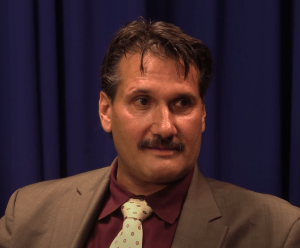
In an interview, Dumas said he put information about the case in a filing cabinet but didn’t complete a report at the time because he thought the issues had been resolved.
“I didn’t try to cover up anything, I didn’t lie; my paperwork was tardy,” he said.
Later, Dumas said, he found out that Rutland County State’s Attorney Rose Kennedy had put him on the Giglio list because of the incident.
“How do you get off Giglio?’” Dumas said he asked Kennedy. “I don’t think I need to be on there. I didn’t do anything wrong.”
He was told he should have used a Rutland County restorative justice program for the teenagers.
“That’s how Giglio works, I guess,” he said. “I guess none of us can make any mistakes in our career.”
One prosecutor makes the call, he said. “It’s a lot of power for one person to wield.”
Independent review?
Several prosecutors and others in law enforcement say county prosecutors shouldn’t have the authority to issue Brady or Giglio letters because they work so closely with police. Some officials say an independent agency should have that power, and information about bad cops should be kept in a centralized database to prevent problem officers from hopping to jobs in another county.
Dumas is not only the Rutland Town police chief, he is also part of the Special Investigative Unit of the Rutland County Child First Advocacy Center that investigates child abuse cases.
His case shows a Giglio letter doesn’t have to be a career ender.
Kennedy, the Rutland County state’s attorney, said she sees no problem with Dumas’ role as a special investigator.
“I issued the Giglio letter in an abundance of caution,” the prosecutor said, adding she has “a lot of confidence” in Dumas.
“I felt it was the right thing to do to disclose the egging incident,” Kennedy said. “I certainly don’t have any question about his credibility and would not hesitate to put him on the stand and use him as a witness in a very serious case.”
Speeding or parking?
Another case, which involved ticketing, again shows that it’s not necessarily the conduct that’s the problem but the explanation afterward that can lead to questions of credibility.
The Giglio listing for Fair Haven Police Chief William Humphries also names Poultney Constable Dale Kerber.
According to Kennedy’s entry, Humphries and Kerber inaccurately reported Vermont civil violation complaints in 2018 while working on Vermont Governor’s Highway Safety Program grant time.
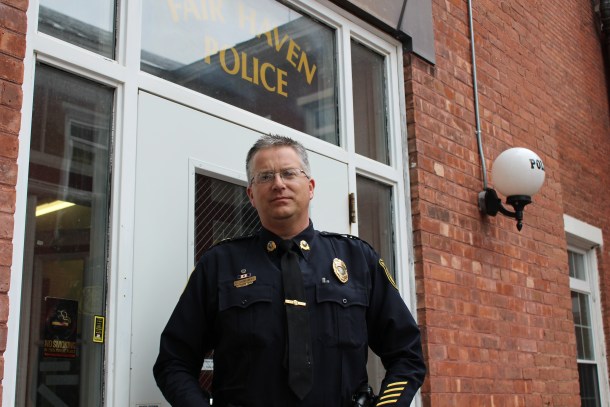
Humphries said in an interview that in some traffic stops he issued parking tickets, which typically can range from $25 to $50, providing an alternative to higher-priced speeding tickets that carry points that could attach to a person’s driver’s license.
“The chief explained to me that he did not wish to give higher fines for all offenses and instead offered some individuals lesser parking tickets,” Kennedy reported. “The concern from the commissioner was not in the discretion of the officers, but in the inaccuracy of their reports.”
After an investigation, both the Fair Haven and Poultney departments were removed from the grant program for a time and then placed on probation for six months in 2019.
Humphries said he was never notified that he was on a Giglio list, though Kennedy told him she would alert defense attorneys about the incident.
Humphries and Kerber both appear on a list of Rutland County officers with “Giglio issues” provided to VTDigger by Kennedy.
“It was a reporting error; it wasn’t something that was done maliciously,” Humphries said. He doesn’t believe either he or Kerber should be on the list. “We’re going to continue to do our job and we’re going to continue to treat people fairly.”
Kennedy said while Humphries and Kerber have each had a credibility issue, she will continue to take cases from them and has confidence in their ability to be truthful.
‘I gave him a shot’
Not everyone who gets a letter or makes a list has stayed in law enforcement.
Damon Angelo was a Rutland City Police officer five years ago when Kennedy learned he had allegedly used a racial slur while talking to other officers about car stops.
According to documents obtained from Kennedy, Angelo “joked about pulling a ‘nig’ out of a car even without probable cause.”
“Since being aware of the ‘joke,’” the documents stated, the state’s attorney’s office “has refused to prosecute any matters in which Angelo is the investigating officer unless everything reported is corroborated by another individual or other evidence.”
Angelo resigned from the Rutland Police Department after that incident. He went on to work as an officer in Castleton and later submitted a case to Kennedy, the Rutland County prosecutor who flagged him earlier.
In reviewing police camera footage, Angelo’s account of the traffic stop and interaction with the suspect did not match up with the video, according to Kennedy.
“At that point,” Kennedy wrote in the document, her office “stopped prosecuting all cases by Angelo.”
Kennedy’s decision appears to have ended Angelo’s career. Castleton Police Chief Peter Mantello said Angelo hasn’t been a member of the force for over a year. Angelo could not be reached for comment, and Mantello said he no longer is working in law enforcement.
Mantello said he believed in “second chances,” and was willing to hire Angelo after he was placed on the Giglio list while working in Rutland City.
“I gave him a shot,” the police chief said.
But Mantello said when the camera footage from the traffic stop didn’t match Angelo’s account, that second chance was over.
“It was a mutual thing,” Mantello said. “He left, realizing that if you lose your credibility in police work, you’re pretty much out of it.”
